Facial Recognition Market

Facial Recognition Market by Offering (Hardware, Software Solutions, Services), Application (Security & Access Control, Finance & Payments, Marketing), Vertical (BFSI, Government, Retail & E-commerce) and Region - Global Forecast to 2031




OVERVIEW
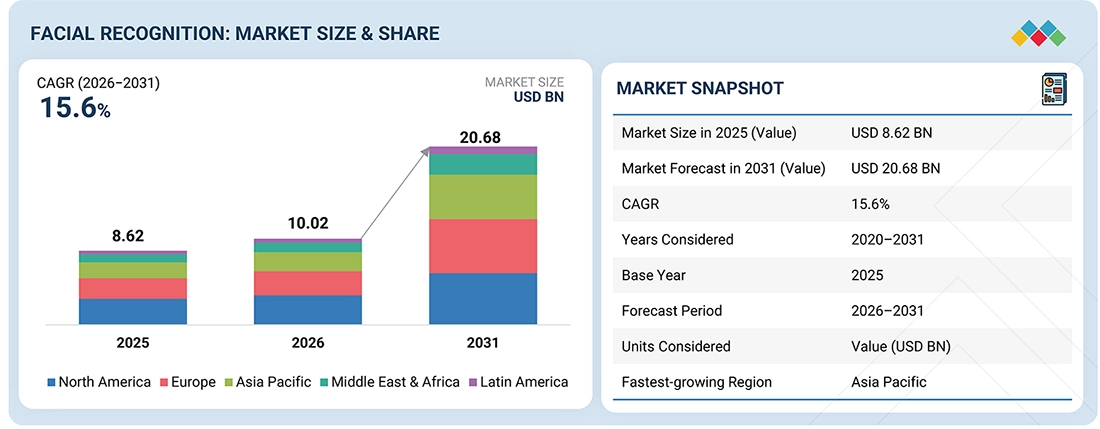
Source: Secondary Research, Interviews with Experts, MarketsandMarkets Analysis
The facial recognition market is projected to reach USD 20.68 billion by 2031 from USD 10.02 billion in 2026, at a CAGR of 15.6% from 2026 to 2031. The increase in security concerns and the growing necessity of surveillance systems are prompting widespread adoption of facial recognition technology in public places, critical infrastructure, and businesses to facilitate real-time threat detection and identity verification. At the same time, improvements in facial recognition technology, machine learning technology, and AI technology have significantly improved the accuracy, efficiency, and scalability of facial recognition technology, allowing widespread adoption in different environments, including low light environments.
KEY TAKEAWAYS
-
BY REGIONNorth America accounted for the largest market share of 34.2% in 2026.
-
BY OFFERINGThe software solutions segment is expected to dominate the market in 2026.
-
BY DEPLOYMENT MODEThe cloud segment is expected to register the highest CAGR of 16.8% during the forecast period.
-
BY ORGANIZATION SIZEThe SMEs segment will grow the fastest with the highest CAGR.
-
BY APPLICATIONThe security and access control segment is expected to have a significant market share of 46.9%.
-
BY VERTICALThe transportation & utilities segment will grow the fastest during the forecast period.
-
COMPETITIVE LANDSCAPE - KEY PLAYERSNEC, AWS, and FacePhi are leading players in the facial recognition market, offering AI-driven biometric platforms for identity verification, authentication, and analytics with strong cloud integration and high accuracy.
-
COMPETITIVE LANDSCAPE - STARTUPS/SMEsClearview AI, Veridium, and Corsight AI are emerging innovators providing specialized facial recognition solutions focused on real-time identification, privacy-centric authentication, and advanced analytics for security and digital identity use cases.
The growing trend of integrating facial recognition technology with cloud computing and edge computing is allowing faster processing and real-time decision-making at scale. Organizations are utilizing these capabilities to facilitate smooth authentication, prevent fraud, and enhance business efficiency. As regulatory environments continue to grow and develop, vendors are integrating privacy-enhancing technology into their offerings to enhance user trust and facilitate widespread adoption in public and private sector environments.
TRENDS & DISRUPTIONS IMPACTING CUSTOMERS' CUSTOMERS
The facial recognition market is going through a major transformation. The market is moving from traditional hardware-centric solutions to artificial intelligence-based, cloud-native solutions. The evolving use cases in BFSI, government, and healthcare, along with advancements in deep learning technology and edge computing, are redefining the revenue streams. Organizations are looking for secure, touchless, and real-time identity verification solutions. This has led to the adoption of scalable, intelligent facial recognition solutions in diverse digital ecosystems.
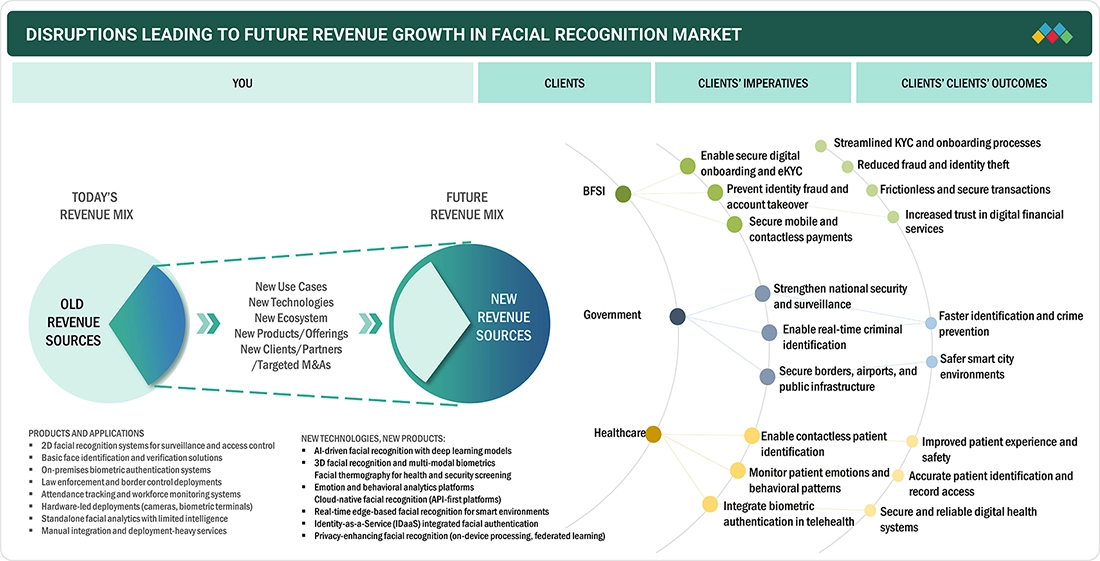
Source: Secondary Research, Interviews with Experts, MarketsandMarkets Analysis
MARKET DYNAMICS

Level
-
Growth in security concerns and rise in need for robust surveillance systems

-
Advancements in facial recognition algorithms using AI and ML


Level
-
Rise in false positives and negatives


Level
-
Integration of facial recognition in mobile devices for authentication and security

-
Emerging use cases/applications in various sectors


Level
-
Vulnerability to hacking and rising deep fakes

Source: Secondary Research, Interviews with Experts, MarketsandMarkets Analysis
Driver: Growth in security concerns and rise in need for robust surveillance systems
The growing emphasis on public safety and business security is driving the adoption of facial recognition technology for real-time surveillance and identification. As per Retail Technology Review, December 2024, NEC is one of the companies with its facial recognition technology being used in large-scale environments such as retail businesses and public areas for high-accuracy surveillance. Corsight AI is also helping to achieve real-time identification in crowded areas, which is indicative of the growing dependency on AI-based surveillance.
Restraint: Rise in false positives and negatives
Despite the advancements in facial recognition technology, there have been issues with accuracy, especially in real-world scenarios. A report by Wired, cited in 2025, states that there have been issues with facial recognition technology, especially in scenarios involving Clearview AI, which have resulted in incorrect identifications and have caused wrongful actions. This demonstrates the issues with facial recognition technology and the lack of trust in facial recognition systems, especially in law enforcement agencies.
Opportunity: Integration of facial recognition in mobile devices for authentication and security
The increasing use of facial recognition technology in mobile and digital platforms has created tremendous opportunities in the market. LinkedIn industry insights, October 2025, states that facial recognition technology, including Amazon Rekognition and Microsoft Azure Face, has been integrated into many applications to ensure secure login and payments. Additionally, companies like FacePhi have made it possible to carry out biometric authentication in mobile devices, which has enabled the creation of a seamless and frictionless identity verification process in the financial industry.
Challenge: Vulnerability to hacking and rising deep fakes
The rise of deepfakes and synthetic identities has created a challenge to facial recognition systems. There were regulatory penalties imposed on Clearview AI, as reported by Reuters, regarding improper data usage, as updated in September 2024. This has created challenges to data security and data misuse issues. There has been an increased investment in liveness detection and anti-spoofing solutions, but AI-based attack modes continue to challenge the robustness of facial recognition systems.
FACIAL RECOGNITION MARKET: COMMERCIAL USE CASES ACROSS INDUSTRIES
| COMPANY | USE CASE DESCRIPTION | BENEFITS |
|---|---|---|
 |
NEC deployed its AI-powered biometric facial recognition platform (NEC I:Delight) for Star Alliance across major airports such as Munich and Frankfurt. The solution enables seamless passenger identity verification at check-in, security, and boarding touchpoints, replacing manual document verification with a unified biometric system. | Faster and seamless passenger processing, enhanced airport security, reduced fraud risks, and improved customer experience through contactless travel. |
 |
Amazon Rekognition was implemented by Aella Credit to enable facial verification for digital loan approvals. The solution uses real-time image capture and AI-based comparison with government-issued IDs to authenticate users via mobile applications, addressing identity verification challenges in emerging markets. | Faster loan approvals, improved financial inclusion, reduced identity fraud, and efficient customer onboarding through automated verification. |
 |
Cognitec integrated its facial recognition technology into Nero’s photo management software to automatically detect and group images of the same individual across large photo libraries. The system uses AI-based facial matching to organize and tag images without manual effort. | Significant time savings in photo organization, improved user experience, automated image sorting, and enhanced accuracy in identifying individuals across datasets. |
Logos and trademarks shown above are the property of their respective owners. Their use here is for informational and illustrative purposes only.
MARKET ECOSYSTEM
The ecosystem of facial recognition technology consists of different hardware, software, and service providers that work in collaboration to provide end-to-end solutions in the domain of facial recognition technology. Hardware companies specialize in providing capture devices, software companies specialize in developing artificial intelligence-based recognition algorithms, and service companies specialize in integration, identity verification, and services. The ecosystem of facial recognition technology is diverse and provides scalable, secure, and real-time solutions for industries such as BFSI, government, and healthcare.
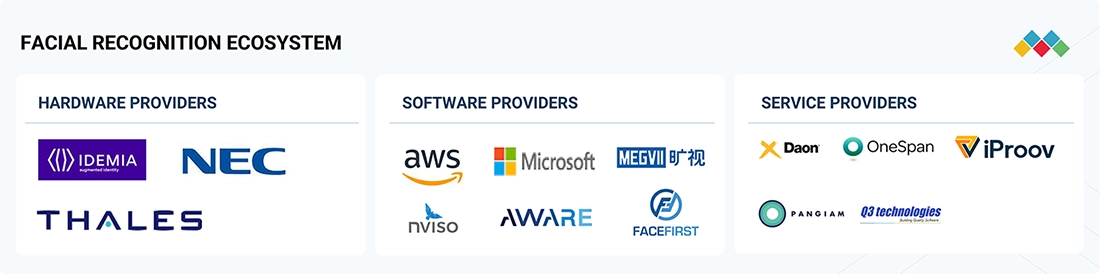
Logos and trademarks shown above are the property of their respective owners. Their use here is for informational and illustrative purposes only.
MARKET SEGMENTS
Source: Secondary Research, Interviews with Experts, MarketsandMarkets Analysis
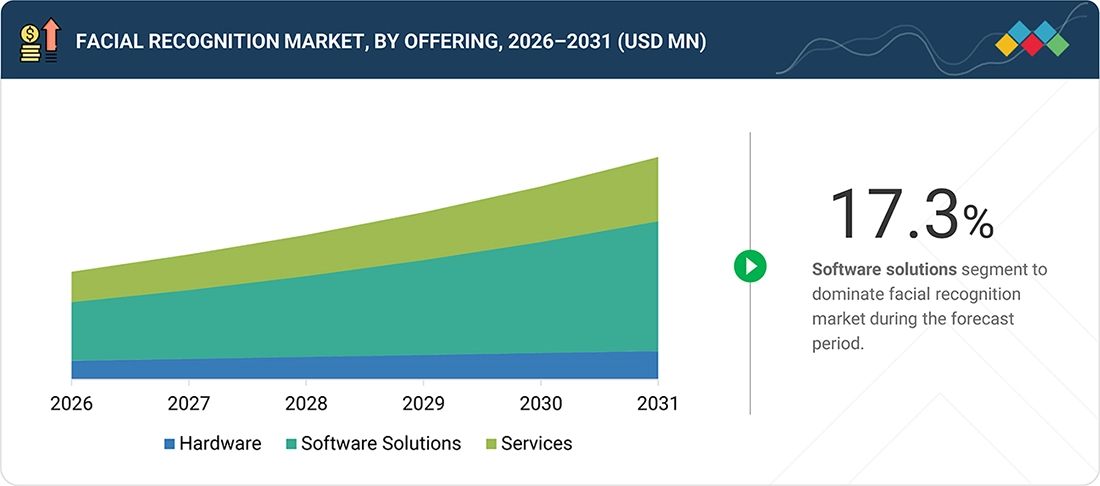
Facial Recognition Market, by Offering
The software segment has the largest share in the facial recognition market, driven by its potential in facilitating AI-based identification, analysis, and integration with other technologies. In February 2025, NEC revealed that its facial recognition software secured the highest rank in worldwide accuracy tests, indicating a growing requirement for enhanced algorithms. Companies such as AWS and Microsoft are advancing their facial recognition APIs in the cloud, which helps in scalable implementation, real-time analysis, and integration with other applications in BFSI, retail, and government segments.
Facial Recognition Market, by Deployment Mode
On-premises remains a dominant mode of deployment, especially in organizations dealing with critical information, which demand high levels of control over their infrastructure. In October 2024, government and defense entities still relied on on-premises biometric systems to cater to their data sovereignty and security needs, according to Thales. On-premises biometric systems are critical in environments where high levels of latency, data privacy, and regional regulatory compliance are required, such as in border control, law enforcement, and critical infrastructure monitoring.
Facial Recognition Market, by Organization Size
Large organizations drive the adoption of facial recognition technology due to their high security requirements and capacity for investing in the latest biometric solutions. According to FacePhi, in January 2025, large financial institutions are increasingly implementing facial recognition technology for digital onboarding and fraud prevention purposes. Large organizations are utilizing end-to-end biometric solutions for multiple touchpoints of interaction to provide secure authentication and a better customer experience in a global digital landscape.
Facial Recognition Market, by Application
Security and access control is the largest application, which is fueled by the requirement for trusted and contactless identity verification. According to IDEMIA, the application of facial recognition technology for access control is already widespread in airports, enterprises, and public infrastructure as of March 2025. Facial recognition technology is important in the field of access control because it can facilitate smooth access while minimizing the reliance on physical means and enhancing security with its real-time identification and monitoring.
Facial Recognition Market, by Vertical
The government segment has the largest market size due to widespread adoption in surveillance systems, border control, and national identity schemes. According to NEC, in 2024, NEC’s facial recognition technology was used in various smart city and law enforcement projects around the world. Facial recognition technology is being used by governments to improve public safety and enable real-time criminal recognition and identification, thus becoming a key element in digital government and national security strategies.
REGION
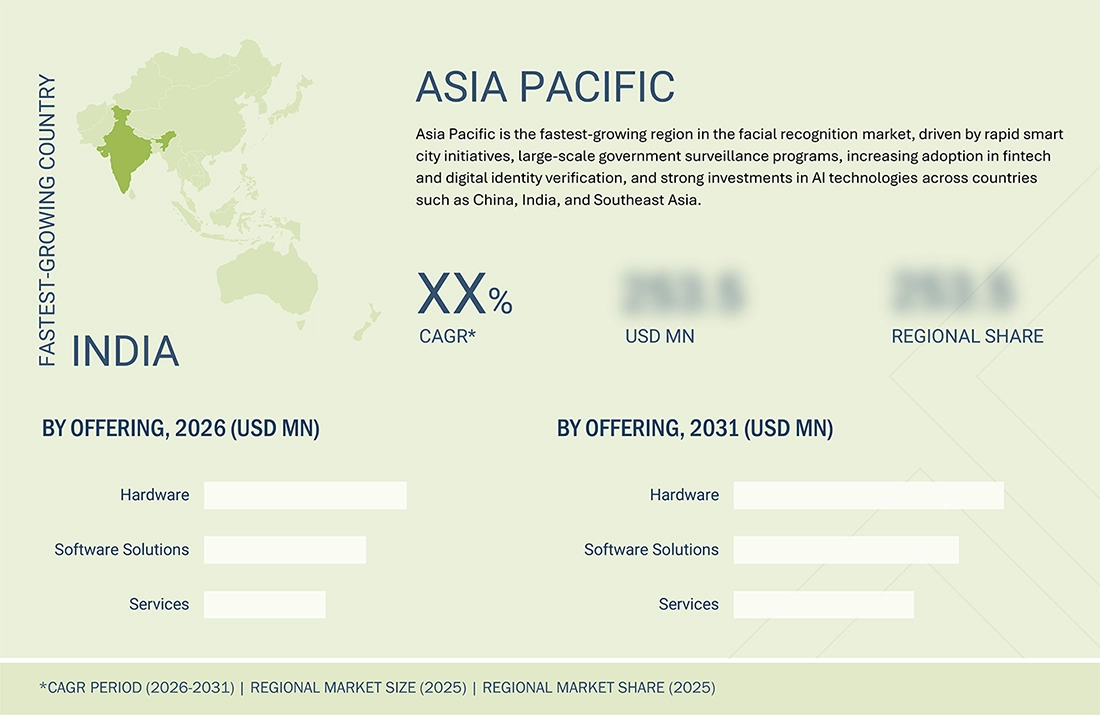
Asia Pacifc to be fastest-growing region in global facial recognition market during forecast period.
Asia Pacific is the fastest-growing region in the facial recognition market due to rapid urbanization, expanding smart city initiatives, and strong government investments in surveillance and digital identity programs. Countries such as China, India, and Southeast Asian nations are accelerating adoption across public safety, banking, and transportation sectors. According to NEC, in 2024, large-scale deployments across airports and smart infrastructure projects highlight the region’s growing demand for AI-driven biometric solutions.
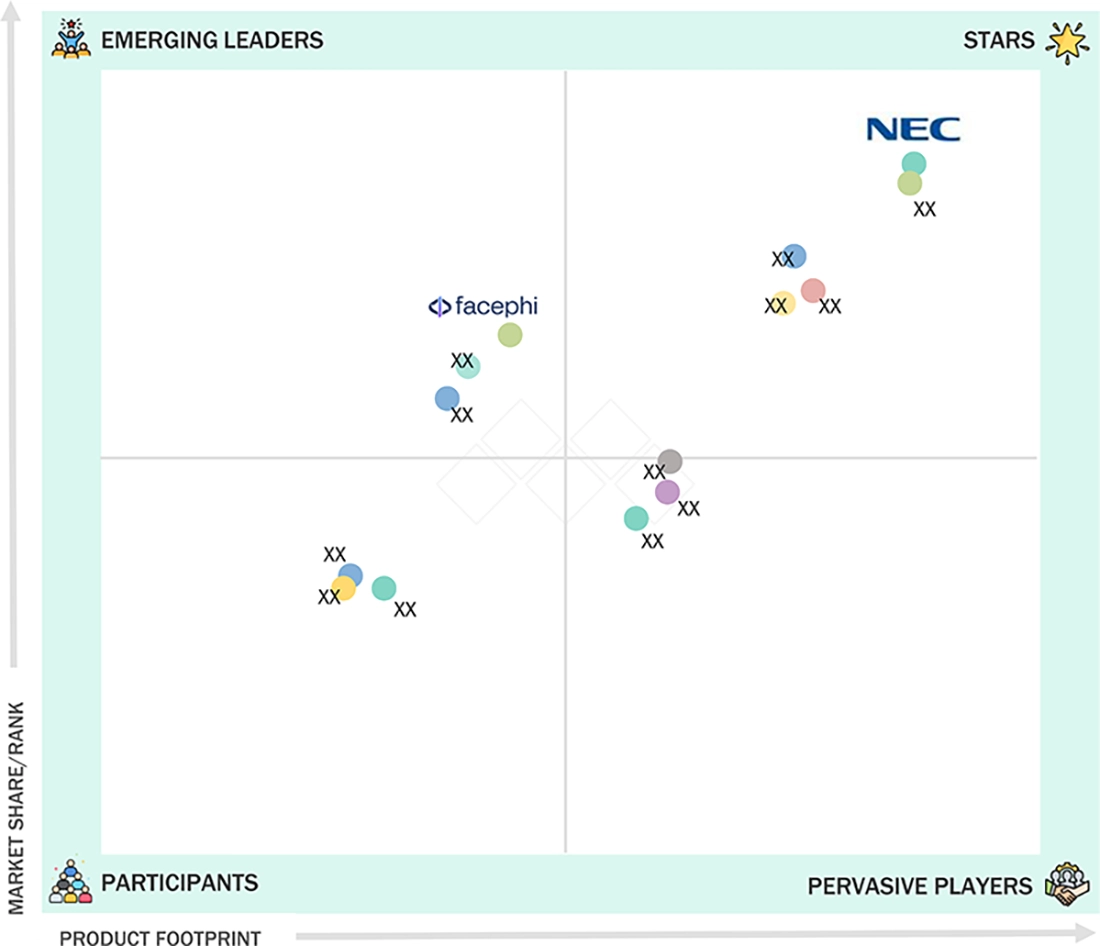
FACIAL RECOGNITION MARKET: COMPANY EVALUATION MATRIX
NEC (Key Player) is a leader in the facial recognition industry due to its highly accurate AI-based biometric solutions used in various large-scale government, aviation, and public safety environments. FacePhi (Emerging Leader) is a growing player in the industry due to its mobile-centric facial recognition and digital identity verification solutions in various banking and fintech environments.
Source: Secondary Research, Interviews with Experts, MarketsandMarkets Analysis
KEY MARKET PLAYERS
- NEC (Japan)
- Microsoft (US)
- Thales (France)
- AWS (US)
- IDEMIA (France)
- Aware (US)
- Daon (US)
- Megvii (China)
- FacePhi (Spain)
- Herta Security (Spain)
- OneSpan (US)
- Q3 Technologies (India)
- Neurotechnology (Lithuania)
- Cognitec (Germany)
- Ayonix (Japan)
MARKET SCOPE
| REPORT METRIC | DETAILS |
|---|---|
| Market Size in 2025 (Value) | USD 8.62 Billion |
| Market Forecast in 2026 (Value) | USD 10.02 Billion |
| Market Forecast in 2031 (Value) | USD 20.68 Billion |
| Growth Rate | CAGR of 15.6% during 2026-2031 |
| Years Considered | 2025-2031 |
| Base Year | 2025 |
| Forecast Period | 2026-2031 |
| Units Considered | Value (USD Billion) |
| Report Coverage | Revenue forecast, company ranking, competitive landscape, growth factors, and trends |
| Segments Covered |
|
| Regions Covered | North America, Europe, Asia Pacific, Middle East & Africa, Latin America |
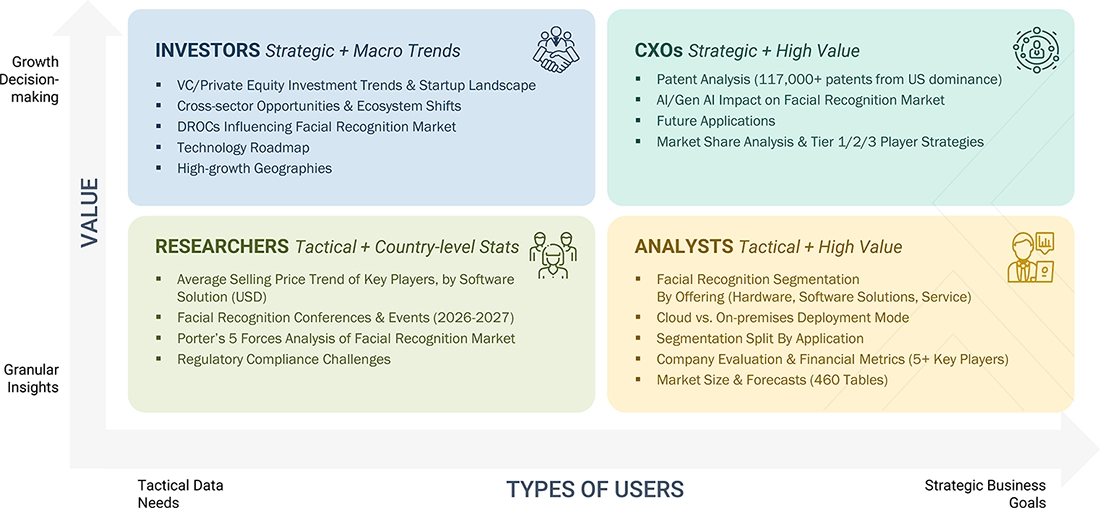
WHAT IS IN IT FOR YOU: FACIAL RECOGNITION MARKET REPORT CONTENT GUIDE
DELIVERED CUSTOMIZATIONS
We have successfully delivered the following deep-dive customizations:
| CLIENT REQUEST | CUSTOMIZATION DELIVERED | VALUE ADDS |
|---|---|---|
| Leading Solution Provider (US) | Product Analysis: Facial Recognition Matrix providing an in-depth comparison of leading vendors’ offerings, including face identification and verification, facial analytics, liveness detection, emotion recognition, and attribute recognition capabilities. The analysis also covers AI/ML model accuracy, real-time processing, cloud and edge deployment support, API integration, scalability, compliance features, and deployment flexibility across cloud, hybrid, and on-premises environments. | Stronger understanding of competitive positioning in the facial recognition market, product capabilities across identification, authentication, and analytics use cases, AI model performance, deployment flexibility, and integration strengths—supporting strategic investments, vendor selection, and long-term digital identity and biometric security strategies. |
| Leading Service Provider (EU) | Company Information: Detailed profiling and evaluation of additional facial recognition vendors and service providers (up to 5), covering biometric authentication solutions, digital identity platforms, facial analytics capabilities, liveness detection technologies, managed services, regulatory compliance (GDPR and privacy frameworks), global presence, and strategic partnerships across sectors such as BFSI, government, and healthcare. | Comprehensive perspective of the evolving facial recognition landscape, highlighting growing adoption of contactless biometrics, increasing demand for digital identity verification, rising importance of privacy-preserving technologies, and vendor differentiation through AI accuracy, real-time processing, and scalable biometric platforms. |
RECENT DEVELOPMENTS
- September 2025 : FacePhi entered a strategic partnership with Eastnets to build a global fraud prevention ecosystem, combining biometric facial recognition with compliance and anti-money laundering capabilities. This aims to enhance digital identity verification and fraud detection across financial institutions and regulated industries.
- March 2025 : iProov collaborated with the UK Home Office to test advanced facial recognition technology for vehicle passenger identification at border crossings. The solution enables real-time biometric verification of individuals inside vehicles, improving security and operational efficiency at ports while supporting automated border control initiatives.
- September 2024 : NEC launched a new facial recognition system capable of authenticating individuals in motion, processing up to 100 people per minute in high-traffic environments such as airports. The solution enhances real-time identification accuracy and reduces congestion, supporting large-scale deployment in transportation hubs.
Table of Contents
 Exclusive indicates content/data unique to MarketsandMarkets and not available with any competitors.
Methodology
Secondary research was conducted to collect information useful for this technical, market-oriented, and commercial study of the facial recognition market. The next step involved validating these findings, assumptions, and sizing with industry experts across the value chain using primary research. Different approaches, including top-down and bottom-up methods, were employed to estimate the total market size. After that, the market breakup and data triangulation procedures were used to estimate the market size of the segments and subsegments of the facial recognition market.
Secondary Research
During the secondary research process, various secondary sources were consulted to identify and collect information relevant to the study. The secondary sources included annual reports, press releases, investor presentations of facial recognition vendors, forums, certified publications, and whitepapers. The secondary research was mainly used to obtain key information about the industry’s supply chain, the total pool of key players, market classification and segmentation according to industry trends to the bottom-most level, regional markets, and key developments from both market- and technology-oriented perspectives, all of which were further validated by primary sources.
Primary Research
In the primary research process, various primary sources from both the supply and demand sides were interviewed to obtain qualitative and quantitative information for this report. The primary sources from the supply side included various industry experts, including chief executive officers (CEOs), vice presidents (VPs), marketing directors, technology and innovation directors, and related key executives from various key companies and organizations operating in the facial recognition market.
In the market engineering process, top-down and bottom-up approaches were extensively used, along with several data triangulation methods, to perform market estimation and forecasting for the overall market segments and subsegments listed in this report. Extensive qualitative and quantitative analysis was performed on the complete market engineering process to list key information/insights throughout the report.
After the complete market engineering process (including calculations for market statistics, market breakups, market size estimations, market forecasts, and data triangulation), extensive primary research was conducted to gather information and verify & validate the critical numbers arrived at. The primary research was also conducted to identify the segmentation types, industry trends, competitive landscape of facial recognition market players, and key market dynamics, such as drivers, restraints, opportunities, challenges, industry trends, and key strategies.
BREAKDOWN OF PRIMARY INTERVIEW PARTICIPANTS
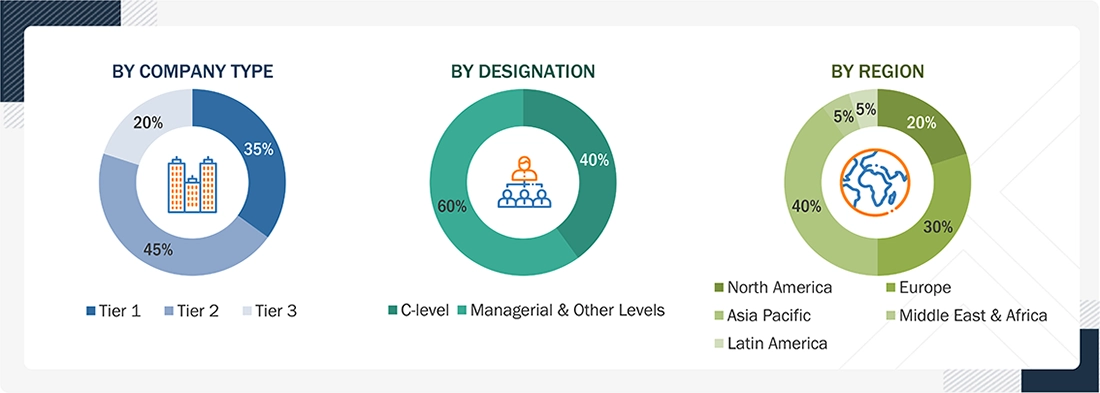
Note: Tier 1 companies receive revenues higher than USD 10 billion; Tier 2 companies' revenues range between USD 1 and 10 billion; and Tier 3 companies' revenues range between USD 500 million and USD 1 billion. Other designations include sales, marketing, and product managers.
To know about the assumptions considered for the study, download the pdf brochure
Market Size Estimation
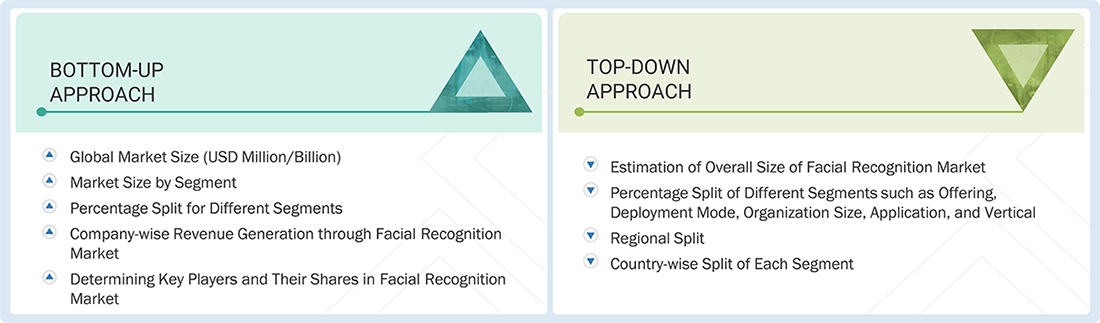
Top-down and bottom-up approaches were employed to estimate and validate the size of the facial recognition market, as well as the size of various dependent sub-segments within the overall facial recognition market. The research methodology used to estimate the market size includes the following details: critical players in the market were identified through secondary research, and their market shares in the respective regions were determined through primary and secondary research. This entire procedure involved studying the annual and financial reports of the top market players, and extensive interviews were conducted with key industry leaders, including CEOs, VPs, directors, and marketing executives, to gather valuable insights.
All percentage splits and breakdowns were determined using secondary sources and verified through primary sources. All possible parameters that affect the market covered in this research study were accounted for, viewed in extensive detail, verified through primary research, and analyzed to get the final quantitative and qualitative data. This data was consolidated and added to detailed inputs and analysis from MarketsandMarkets.
BOTTOM-UP AND TOP-DOWN APPROACHES
Data Triangulation
The market was split into several segments and subsegments after arriving at the overall market size using the market size estimation processes explained above. The data triangulation and market breakup procedures were employed, wherever applicable, to complete the overall market engineering process and arrive at the exact statistics of each market segment and subsegment. The data was triangulated by studying various factors and trends from both the demand and supply sides.
Market Definition
Facial recognition is finding an individual's identity in public places by detecting facial characteristics, such as eyes, eyebrows, nose, mouth, chin, and ears.
Key Stakeholders
- Chief Technology and Data Officers
- Business Analysts
- Information Technology (IT) Professionals
- Government Agencies
- Investors and Venture Capitalists
- Small and Medium-sized Enterprises (SMEs) and Large Enterprises
- Third-party Providers
- Consultants/Consultancies/Advisory Firms
- Automation Tool Vendors
- OEMs
Report Objectives
- To describe and forecast the security testing market by offering, deployment mode, organization size, application, vertical, and region from 2026 to 2031, and analyze the various macroeconomic and microeconomic factors that affect market growth
- To forecast the market size of five major regions: North America, Europe, Asia Pacific, the Middle East & Africa, and Latin America
- To analyze the subsegments of the market concerning individual growth trends, prospects, and contributions to the overall market.
- To provide detailed information related to the primary factors (drivers, restraints, opportunities, and challenges) influencing the growth of the facial recognition market.
- To analyze opportunities in the market for stakeholders by identifying high-growth segments of the facial recognition market.
- To profile the key players of the facial recognition market and comprehensively analyze their market size and core competencies.
- Track and analyze competitive developments, such as product launches, mergers and acquisitions, partnerships, agreements, and collaborations in the global facial recognition market.
Available customizations:
With the given market data, MarketsandMarkets offers customizations based on company-specific needs. The following customization options are available for the report:
GEOGRAPHIC ANALYSIS
- Further breakup of the Asia Pacific market into countries contributing to the rest of the regional market size.
- Further breakup of the North American market into countries contributing to the rest of the regional market size.
- Further breakup of the Latin American market into countries contributing to the rest of the regional market size
- Further breakup of the Middle East & African market into countries contributing to the rest of the regional market size
- Further breakup of the European market into countries contributing to the rest of the regional market size
Company information
- Detailed analysis and profiling of additional market players (up to 5)
Key Questions Addressed by the Report
What is the projected size of the Facial Recognition Market by 2031?
The global Facial Recognition Market is projected to grow from USD 10.02 billion in 2026 to USD 20.68 billion by 2031, at a CAGR of 15.6% during the forecast period.
What are the key factors driving the growth of the Facial Recognition Market?
Market growth is driven by increasing security concerns, rising demand for surveillance systems, and advancements in AI and machine learning that improve recognition accuracy and scalability.
Which application holds the largest share of the Facial Recognition Market?
The security and access control application is expected to account for the largest market share, representing 46.9% of the market in 2026.
Who are the leading companies in the Facial Recognition Market?
Key players in the Facial Recognition Market include NEC, AWS, and FacePhi, which offer AI-driven biometric platforms for identity verification, authentication, and analytics.
What opportunities are creating new growth prospects for the Facial Recognition Market?
Major opportunities include the integration of facial recognition into mobile devices for authentication and security, along with expanding use cases across multiple industry sectors.


Personalize This Research
- Triangulate with your Own Data
- Get Data as per your Format and Definition
- Gain a Deeper Dive on a Specific Application, Geography, Customer or Competitor
- Any level of Personalization
Let Us Help You
- What are the Known and Unknown Adjacencies Impacting the Facial Recognition Market
- What will your New Revenue Sources be?
- Who will be your Top Customer; what will make them switch?
- Defend your Market Share or Win Competitors
- Get a Scorecard for Target Partners

Custom Market Research Services
We Will Customise The Research For You, In Case The Report Listed Above Does Not Meet With Your Requirements
Get 10% Free CustomisationTESTIMONIALS
- CANADA Facial Recognition Market
- US Facial Recognition Market
- UK Facial Recognition Market
- GERMANY Facial Recognition Market
- FRANCE Facial Recognition Market
- ITALY Facial Recognition Market
- CHINA Facial Recognition Market
- JAPAN Facial Recognition Market
- INDIA Facial Recognition Market
- BRAZIL Facial Recognition Market
- MEXICO Facial Recognition Market
- Rest Of Europe Facial Recognition Market





Growth opportunities and latent adjacency in Facial Recognition Market