
Digital Railway Market

Digital Railway Market by Solution (Remote Optimization & Scheduling, Remote Monitoring, Analytics, Network Management, Predictive Maintenance, Security), Application (Rail Operation Management, PIS, Asset Management) - Global Forecast to 2031




OVERVIEW
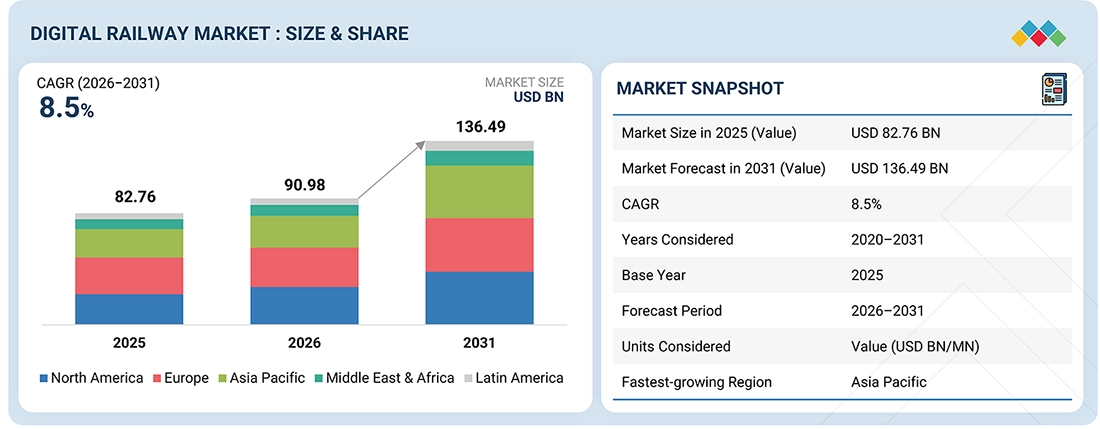
Source: Secondary Research, Interviews with Experts, MarketsandMarkets Analysis
The digital railway market is projected to reach USD 136.49 billion by 2031, from USD 90.98 billion in 2026, with a CAGR of 8.5%. The market is growing quickly as operators work to modernize infrastructure and improve the passenger experience. With a strong focus on seamless connectivity and better safety, railways are adopting smart technologies to reshape how transit works. This shift is opening up major opportunities in areas like predictive maintenance and real-time tracking, helping operators address issues before they turn into delays. The impact is smoother operations, a smaller environmental impact, and a more reliable and enjoyable journey for passengers.
KEY TAKEAWAYS
-
By SolutionThe predictive maintenance segment is expected to record the highest CAGR of 12.3% during the forecast period.
-
By ServiceThe managed services segment is expectted to grow at the fastest rate from 2026 to 2031.
-
By ApplicationThe PIS segment is expected to lead the market during the forecast period.
-
By RegionAsia Pacific is the fastest-growing region in the digital railway market.
-
Competitive Landscape Key PlayerSiemens, Cisco, Alstom, Wate, and Hitachi were identified as star players in the digital railway market, given their strong market share and product footprint.
-
Competitive Landscape Startup/SMEZedas, R2P, Tego, Konux, and Simpleway have distinguished themselves among startups and SMEs in the digital railway market.
The digital railway market is driven by global urbanization and a shift toward smart infrastructure. Key factors include the use of AI-powered signaling and IoT diagnostics, which optimize track capacity and improve safety. This change boosts efficiency for operators while lowering maintenance costs. It also creates profitable opportunities for technology providers to implement cloud-based traffic management.
TRENDS & DISRUPTIONS IMPACTING CUSTOMERS' CUSTOMERS
The digital railway market offers a transformative opportunity to shift away from traditional hardware sales toward recurring, service-driven revenue. Today, as rail operators, transit authorities, and freight companies face pressure to maximize network capacity and lower operational costs, the demand for smart, connected solutions is growing rapidly. This transition is driven by a genuine need for predictive maintenance, integrated network management, and sustainable practices that meet modern environmental goals. By adopting these digital advancements, rail providers can deliver punctual transit, create a more seamless passenger experience, and ensure uninterrupted supply chains.
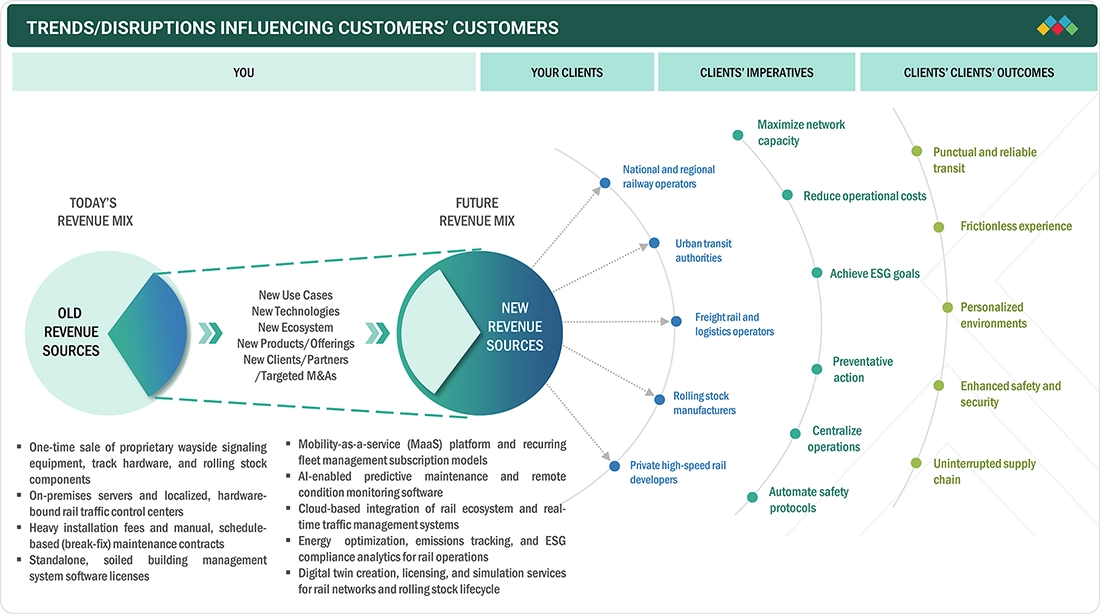
Source: Secondary Research, Interviews with Experts, MarketsandMarkets Analysis
MARKET DYNAMICS

Level
-
Surge in passenger volume over past few years

-
Rapid adoption of IoT in railways


Level
-
Lack of strong railway infrastructure in underdeveloped countries

-
High initial cost of deployment


Level
-
Need for advanced transportation infrastructure

-
Rise of autonomous trains


Level
-
Increased threat of cyberattacks amid digitalization of railway systems

-
Inadequate IT infrastructure and shortage of skilled personnel

Source: Secondary Research, Interviews with Experts, MarketsandMarkets Analysis
Driver: Surge in passenger volume over past few years
The growing number of passengers worldwide is a key driver of the digital railway market. As cities continue to expand, traditional rail networks are becoming more crowded and have limited room to grow. Digital railway solutions, such as advanced signaling, automated fare collection, and real-time passenger information systems, are improving scheduling, increasing train capacity, and enhancing the commuter experience without major physical infrastructure upgrades. By digitizing operations, transit authorities can better manage rising demand and ensure that millions of daily passengers travel safely, on time, and comfortably, while making the most of the rolling stock they already own.
Restraint: High initial cost of deployment
A major reason digital railway technologies aren't more widely used is their high upfront cost. Upgrading aging rail infrastructure to modern digital standards requires expensive hardware, advanced software platforms, and specialized communication networks, such as IoT sensors and high-speed broadband. Transit operators also need to invest in employee training and system integration to ensure smooth operation with physical assets. For many regional or budget-constrained railway authorities, these high upfront costs make modernization very difficult.
Opportunity: Rise of autonomous trains
The launch of self-driving trains is a game-changer for tech companies in the digital railway industry. As the sector steadily moves toward Driverless Train Operation (DTO) and Unattended Train Operation (UTO), demand is growing for technologies such as artificial intelligence, machine learning, and advanced sensor fusion, including LiDAR and radar. Digital solution providers are uniquely positioned to deliver mission-critical software, reliable communication networks, and robust control systems to ensure safety and autonomy. This shift creates highly profitable new revenue streams and drives innovation in intelligent traffic management and predictive maintenance.
Challenge: Increased threat of cyberattacks amid digitalization of railway systems
As rail transport evolves from an isolated, self-contained system to a smart IoT environment, the potential risks that could pose threats increase exponentially. The vulnerability created by real-time infrastructure operations, cloud-based solutions, and interconnections with passengers creates room for malevolent intentions. Ensuring safety from attacks such as ransomware, data leaks, or operational control is no easy task..
DIGITAL RAILWAY MARKET: COMMERCIAL USE CASES ACROSS INDUSTRIES
| COMPANY | USE CASE DESCRIPTION | BENEFITS |
|---|---|---|
 |
Rail operators use Siemens Mobility's Railigent X application suite and IoT connectivity tools to keep track of and take care of their physical assets. The platform uses sensors and digital twin technology to keep an eye on the state of rolling stock and rail infrastructure in real time, predicting when parts will break before they do. | Maximized system availability | Condition-based predictive maintenance | Lower overall lifecycle costs |
 |
Rail networks have used Huawei's Smart Railway Solutions to make communication and infrastructure security more digital. The system uses AI, smart cameras, and vibration-sensing optical fibers to keep an eye on the railway's perimeter all the time for intruders, damage to the tracks, and environmental dangers. | Enhanced physical security | 50% increase in inspection efficiency | Highly reliable operational communication |
 |
Rail operators have started using Alstom's HealthHub platform and TrainScanner solution to improve their old maintenance processes. This system uses 3D cameras, lasers, and AI-based analytics to automatically check the technical condition of trains (like wheels and brake pads) as they pass by, turning raw data into useful health indexes. | Extended component life | Up to 25% savings on lifecycle costs | Improved train reliability and availability |
Logos and trademarks shown above are the property of their respective owners. Their use here is for informational and illustrative purposes only.
MARKET ECOSYSTEM
The digital railway market is growing rapidly because it brings together global technology leaders, rail experts, and telecom giants in a highly collaborative environment. This diverse ecosystem includes leading solution providers such as Siemens and Cisco, which are helping modernize how trains operate. At the same time, major network providers such as AT&T and Nokia ensure that communication systems remain secure and reliable. Specialized rail asset security companies play a key role in protecting critical infrastructure, adding another layer of safety. Supported by government initiatives, industry standards, and innovative startups, this strong network of partners works closely together. As a result, rail transportation worldwide is becoming safer, more efficient, and fully connected for the future.
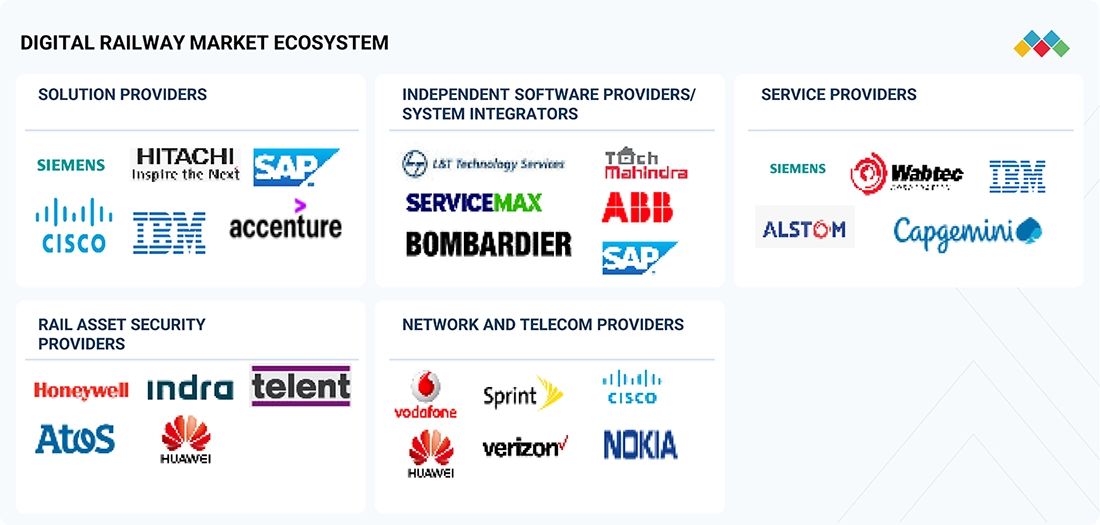
Logos and trademarks shown above are the property of their respective owners. Their use here is for informational and illustrative purposes only.
MARKET SEGMENTS
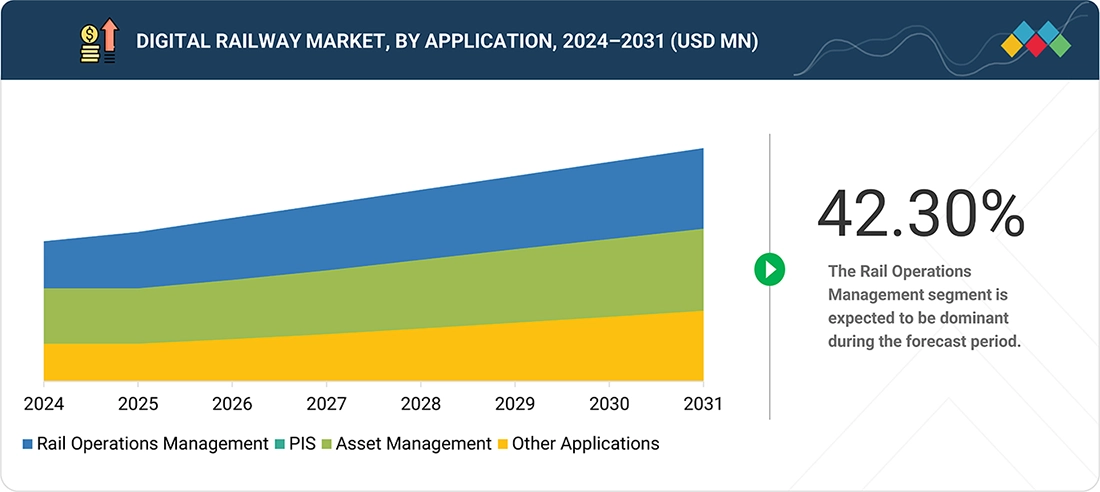
Source: Secondary Research, Interviews with Experts, MarketsandMarkets Analysis
Digital Railway Market, By Solution
The digital railway solutions segment is largely driven by remote monitoring, the fastest-growing area. This growth stems from the urgent need to reduce train downtime and prevent mechanical failures. By using IoT sensors, operators can predict when maintenance is needed. This leads to fewer operational disruptions and improved passenger safety. A key factor is aging railway infrastructure, which requires smart upgrades. Additionally, AI-driven predictive analytics offers significant opportunities to optimize asset lifecycles, making the railway system more efficient and cost-effective.
Digital Railway Market, By Service
In the services sector, managed services are the fastest-growing segment of the digital railway market. This growth reflects the fact that many rail organizations lack the in-house IT expertise to manage complex digital networks. Managed services deliver stable systems, meet regulatory requirements, and enable rapid troubleshooting. A key driver is the shift to cloud-based rail operations, which require continuous monitoring. As a result, there are significant opportunities for third-party IT vendors to provide comprehensive cybersecurity and network management. This allows rail operators to focus on their core transportation operations.
Digital Railway Market, By Application
The passenger information system (PIS) is the fastest-growing application segment because more commuters want real-time transit updates. Its growing use reflects the need to improve the passenger experience and safety. This leads to greater customer satisfaction through better journey planning and live train tracking. A major factor is the global trend of urbanization, which underscores the importance of smart city integration. In the future, there are great opportunities to combine personalized travel alerts and multimodal transit data into unified digital platforms, transforming the railway system.
REGION
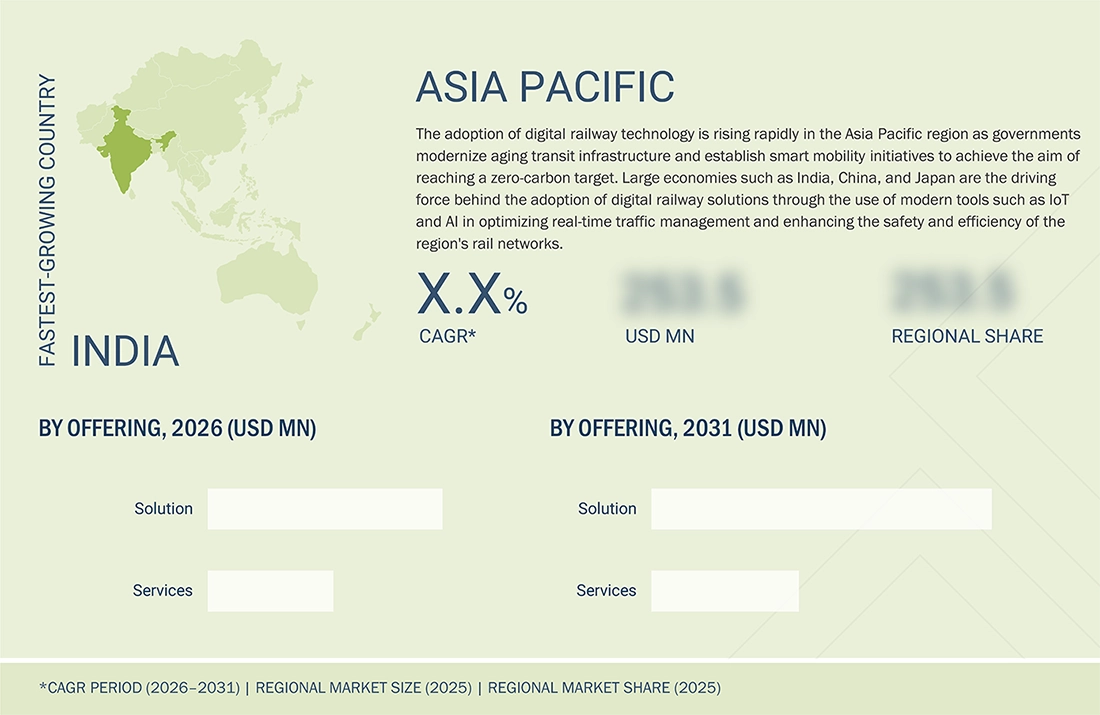
Asia Pacific to be fastest-growing region during forecast period
The Asia Pacific digital railway market is growing rapidly as governments prioritize infrastructure modernization and zero-carbon sustainability. To meet increasingly complex passenger and freight demands, rail operators are adopting IoT and AI to transform their networks. Currently, route optimization and scheduling are the top priorities. By implementing AI for dynamic routing and real-time conflict resolution, operators can safely maximize their network capacity. A prime example of this shift is Hitachi’s January 2026 launch of the “HMAX” AI suite, which empowers regional networks to autonomously streamline daily operations, scheduling, and infrastructure management.
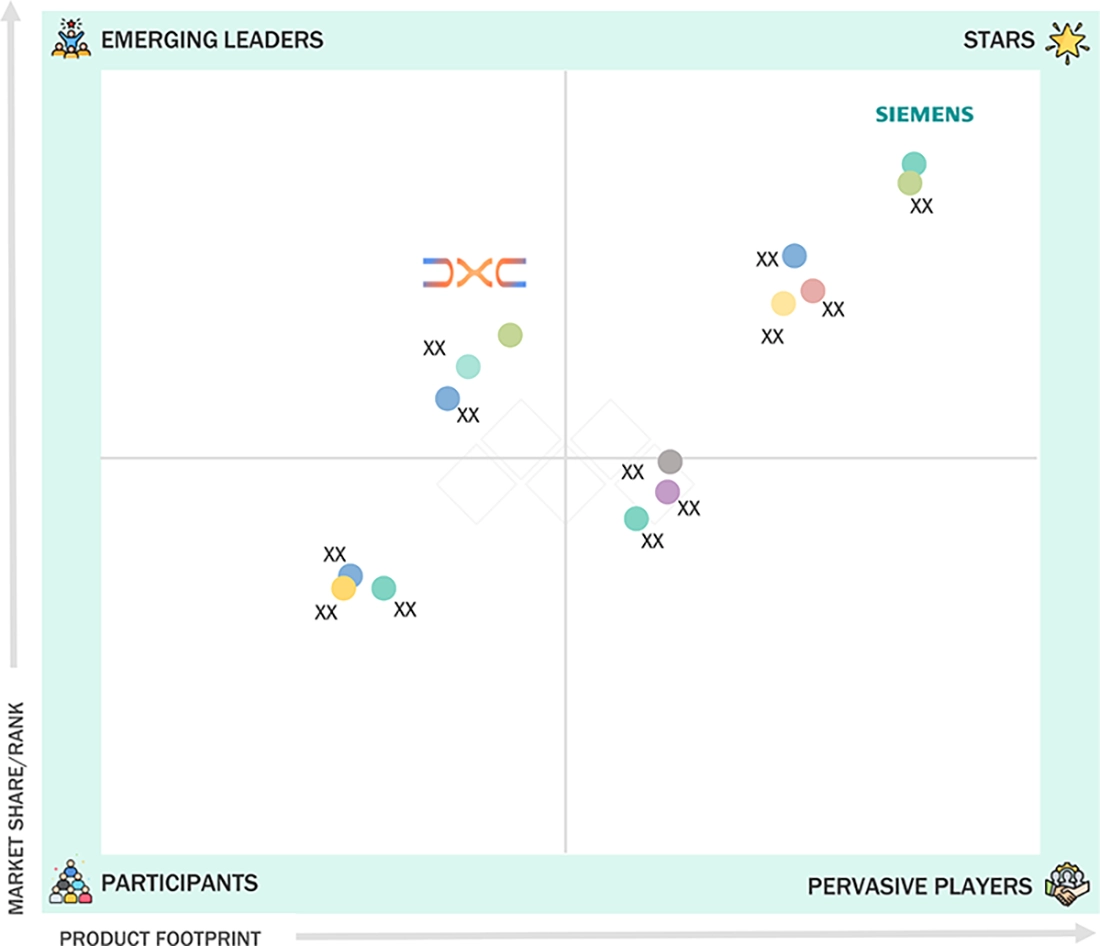
DIGITAL RAILWAY MARKET: COMPANY EVALUATION MATRIX
In the digital railway market, Siemens (Star) holds a leading position in the matrix, supported by its comprehensive smart transit solutions, extensive global footprint, and advanced systems that significantly enhance passenger safety and reduce travel delays. DXC Technology (Emerging Leader) is expanding its presence through modern digital transformation services and data capabilities, which show potential to move upward as demand grows for connected rail infrastructure.
Source: Secondary Research, Interviews with Experts, MarketsandMarkets Analysis
KEY MARKET PLAYERS
- Siemens (Germany)
- Cisco (US)
- Hitachi (Japan)
- Wabtec (US)
- Alstom (France)
- IBM (US)
- ABB (Switzerland)
- Huawei (China)
- Fujitsu (Japan)
- DXC (US)
- Honeywell (US)
- Indra (Spain)
- Nokia (Finland)
- Atkins (UK)
- Toshiba (Japan)
- Televic (Belgium)
- Advantech (Taiwan)
- ZEDAS (Germany)
- R2P (Germany)
- Simpleway (Czech Republic)
- Tego (US)
- Passio Technologies (US)
- Delphisonic (US)
- Konux (Germany)
- Machines With Vision (UK)
- EKE-Electronics (Finland)
- Aitek S.P.A. (Italy)
- CloudMoyo (US)
- RailTel (India)
MARKET SCOPE
| REPORT METRIC | DETAILS |
|---|---|
| Market Size in 2025 (Value) | USD 82.76 BN |
| Market Forecast in 2031 (Value) | USD 136.49 BN |
| Growth Rate | CAGR of 8.5% from 2026 to 2031 |
| Years Considered | 2020–2031 |
| Base Year | 2025 |
| Forecast Period | 2026–2031 |
| Units Considered | Value (USD BN/MN) |
| Report Coverage | Revenue forecast, company ranking, competitive landscape, growth factors, and trends |
| Segments Covered |
|
| Regions Covered | North America, Europe, Asia Pacific, Middle East & Africa, Latin America |
WHAT IS IN IT FOR YOU: DIGITAL RAILWAY MARKET REPORT CONTENT GUIDE
DELIVERED CUSTOMIZATIONS
We have successfully delivered the following deep-dive customizations:
| CLIENT REQUEST | CUSTOMIZATION DELIVERED | VALUE ADDS |
|---|---|---|
| Global Railway Solutions Provider | Regional Analysis: • Further breakdown of the North American digital railway market • Further breakdown of the APAC digital railway market, including signaling, rail analytics, onboard connectivity, and asset monitoring | • Identifies high-growth regional opportunities in smart signaling, predictive maintenance, and train-to-ground connectivity. • Supports tailored market entry and investment decisions based on regional digital rail adoption, infrastructure modernization, and regulatory priorities. |
| Company Information | Detailed profiling and strategic analysis of up to 5 emerging digital railway technology vendors across software, signaling, communications, and rail data platforms | • Expands competitive intelligence across the evolving digital rail ecosystem, helping clients assess technology positioning and partnership potential. • Reveals market gaps in automation, remote monitoring, passenger information systems, and railway cybersecurity, supporting differentiation and targeted growth. |
RECENT DEVELOPMENTS
- April 2026 : Hitachi Rail secured a contract in Portugal to develop a new Specific Transmission Module (STM) to support the transition to the European Train Control System (ETCS) Level 2. This solution will enable interoperability between legacy and modern signaling systems, ensuring seamless operations during the transition phase and strengthening digital rail infrastructure across the network.
- April 2026 : Siemens Mobility and Hitachi Rail have been prequalified to supply advanced obstacle detection systems (ODS) for fully automated GoA4 operations in Copenhagen’s S-Bahn. This innovation enhances safety and supports cost-effective deployment of driverless train operations, marking a significant step toward automation in digital railway ecosystems.
- March 2026 : Siemens Mobility demonstrated the Nordic region’s first automated train drive with ETCS and ATO in Finland, showing how digital signaling and train automation can improve capacity, punctuality, and energy efficiency on mainline rail.
Table of Contents
 Exclusive indicates content/data unique to MarketsandMarkets and not available with any competitors.
Methodology
The research study involved four major activities in estimating the digital railway market size. Extensive secondary research has been done to collect important information about the market and peer markets. The next step has been to validate these findings and assumptions and size them with the help of primary research with industry experts across the value chain. Both top-down and bottom-up approaches have been used to estimate the market size. Post which, the market breakdown and data triangulation have been adopted to estimate the market sizes of segments and sub-segments.
Secondary Research
The market size of companies offering digital railway solutions and services was arrived at based on secondary data available through paid and unpaid sources. It was also arrived at by analyzing the product portfolios of major companies and rating the companies based on their performance and quality.
In the secondary research process, various sources were referred to for identifying and collecting information for this study. Secondary sources included annual reports, press releases, and investor presentations of companies; white papers, journals, and certified publications; and articles from recognized authors, directories, and databases. The data was also collected from other secondary sources, such as Data Science Journal, Institute of Electrical and Electronics Engineers (IEEE) Journals and magazines, and Journal/forums for ML, AI India magazine, Customer Experience magazine, and other magazines. The railway investment spending of various countries was extracted from respective sources. Secondary research was used to obtain key information related to the industry’s value chain and supply chain to identify key players based on solutions, services, market classification, and segmentation according to offerings of major players, industry trends related to solutions, services, applications, and regions, and key developments from both market- and technology-oriented perspectives.
Primary Research
In the primary research process, various sources from the supply and demand sides were interviewed to obtain qualitative and quantitative information for the report. The primary sources from the supply side included CEOs, CTOs, COOs, VPs, MDs, technology and innovation directors, and related key executives from various companies and organizations operating in the digital railway market.
Primary interviews were conducted to gather insights, such as market statistics, data on revenue collected from software and services, market breakups, market size estimations, market forecasts, and data triangulation. Stakeholders from the demand side, such as CIOs, CFOs, CSOs, and the installation team of end users who use digital railway, were interviewed to understand buyers’ perspectives on suppliers, products, service providers, and their current usage of digital railway solutions and services, which is expected to affect the overall digital railway market growth.
BREAKDOWN OF PRIMARIES
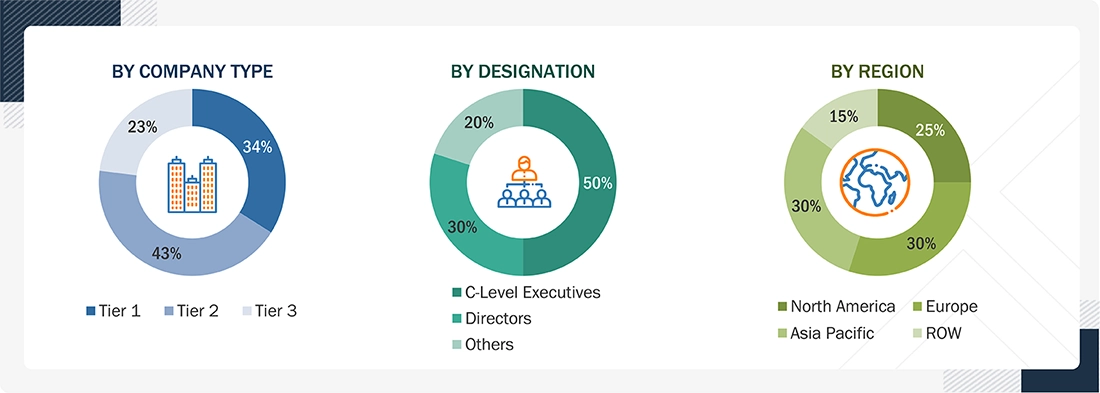
Note 1: Tier 1 companies have revenues of more than USD 10 billion; tier 2 companies’ revenue ranges from USD 1 billion to USD 10 billion; and tier 3 companies’ revenue ranges from USD 500 million to USD 1 billion
To know about the assumptions considered for the study, download the pdf brochure
Market Size Estimation
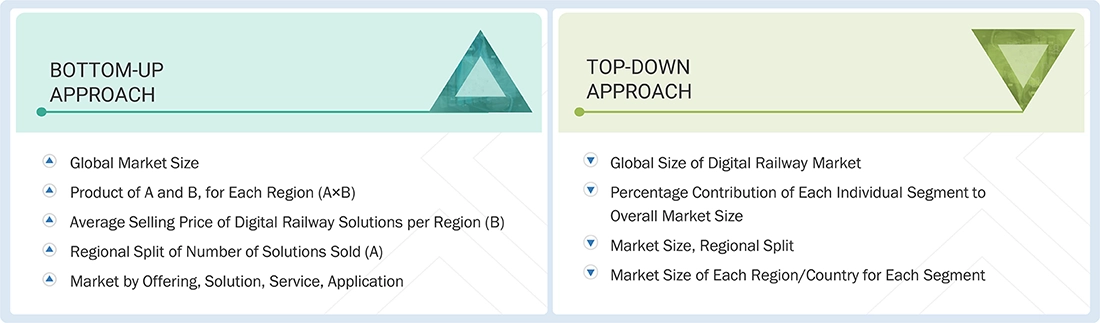
In the market engineering process, the top-down and bottom-up approaches were used along with multiple data triangulation methods to estimate and validate the size of the digital railway market, as well as other dependent submarkets. The research methodology used to estimate the market sizes includes the following:
- Focusing on top-line investments and spending in the ecosystems.
- Tracking the recent and upcoming developments, including investments, R&D activities, product launches, collaborations, mergers and acquisitions, and partnerships, as well as forecasting the market size based on these developments and other critical parameters.
- Conducting multiple discussions with key opinion leaders to learn about the diverse types of authentications and brand protection offerings used, and the applications for which they are used, to analyze the breakdown of the scope of work carried out by major companies.
- Segmenting the market based on applications, wherein the applications are to be used, and deriving the size of the global application market.
- Segmenting the overall market into various market segments.
- Validating the estimates at every level through discussions with key opinion leaders, such as CXOs, directors, and operations managers, as well as domain experts at MarketsandMarkets.
Digital Railway Market : Top-Down and Bottom-Up Approach
Data Triangulation
After arriving at the overall market size from the above estimation process, the digital railway market has been split into several segments and sub-segments. To complete the overall market engineering process and arrive at the exact statistics for all segments and sub-segments, data triangulation and market breakdown procedures have been used, wherever applicable. The data has been triangulated by studying various factors and trends from both the demand and supply sides. The digital railway market size has been validated using top-down and bottom-up approaches.
Market Definition
Digital railway is the integration and deployment of technologies, such as IoT, AI, analytics, cloud, and cybersecurity, to improve the safety, performance, and reliability, enabling smarter utilization of the railway infrastructure. Digital railway harness technologies to improve rail operations, ticketing, passenger experience, workforce management, and asset management.
Key Stakeholders
- Digital railway vendors
- Network and System Integrators
- Cloud Service Providers
- Digital Railway Infrastructure Providers
- Digital Railway Support Service Providers
- Digital Railway Companies
- National Railway Governing Authorities/Regulators/Bodies
- Independent Software Vendors
- Value-added Resellers and Distributors
- Consultancy Firms and Advisory Firms
- Regulatory Agencies
- Governments
Report Objectives
- To define, describe, and forecast the digital railway market by solution, service, application, and region
- To provide detailed information related to major factors (drivers, restraints, opportunities, and industry-specific challenges) influencing the market growth
- To analyze opportunities in the market and provide details of the competitive landscape for stakeholders and market leaders
- To forecast the market size of segments for five main regions: North America, Europe, Asia Pacific, the Middle East & Africa, and Latin America
- To profile the key market players and provide a comparative analysis based on their business overviews, regional presence, product offerings, business strategies, and key financials, and illustrate the competitive landscape of the market
- To track and analyze competitive developments, such as product launches, deals, other developments, and R&D activities in the market
Available customizations:
With the given market data, MarketsandMarkets offers customizations per the company’s specific needs. The following customization options are available for the report:
Regional Analysis
- Further breakup of the Asia Pacific market into countries contributing 75% to the regional market size
- Further breakup of the North American market into countries contributing 75% to the regional market size
- Further breakup of the Latin American market into countries contributing 75% to the regional market size
- Further breakup of the Middle East & African market into countries contributing 75% to the regional market size
- Further breakup of the European market into countries contributing 75% to the regional market size
Company Information
- Detailed analysis and profiling of additional market players (up to five)
Need a Tailored Report?
Customize this report to your needs
Get 10% FREE Customization
Customize This ReportPersonalize This Research
- Triangulate with your Own Data
- Get Data as per your Format and Definition
- Gain a Deeper Dive on a Specific Application, Geography, Customer or Competitor
- Any level of Personalization
Let Us Help You
- What are the Known and Unknown Adjacencies Impacting the Digital Railway Market
- What will your New Revenue Sources be?
- Who will be your Top Customer; what will make them switch?
- Defend your Market Share or Win Competitors
- Get a Scorecard for Target Partners

Custom Market Research Services
We Will Customise The Research For You, In Case The Report Listed Above Does Not Meet With Your Requirements
Get 10% Free CustomisationTESTIMONIALS

Still Researching the
Digital Railway Ecosystem?
See the competitors, opportunity evaluation, and growth signals shaping it - Instantly!
Generate 15+ consulting-grade strategic intelligence outputs - from competitor analysis to board-ready strategy decks, tailored to your Digital Railway growth question.






Growth opportunities and latent adjacency in Digital Railway Market