Pharmaceutical Inspection Machines Market

Pharmaceutical Inspection Machines Market by Component (Vision Inspection, X-Ray, Checkweigher, Metal Detector, Software), Type (Manual, Automatic), Packaging Type (Syringe, Blister, Bottle), and Formulation (Parenteral, Oral) - Global Forecast to 2031



PHARMACEUTICAL INSPECTION MACHINES MARKET SIZE, SHARE & GROWTH SNAPSHOT
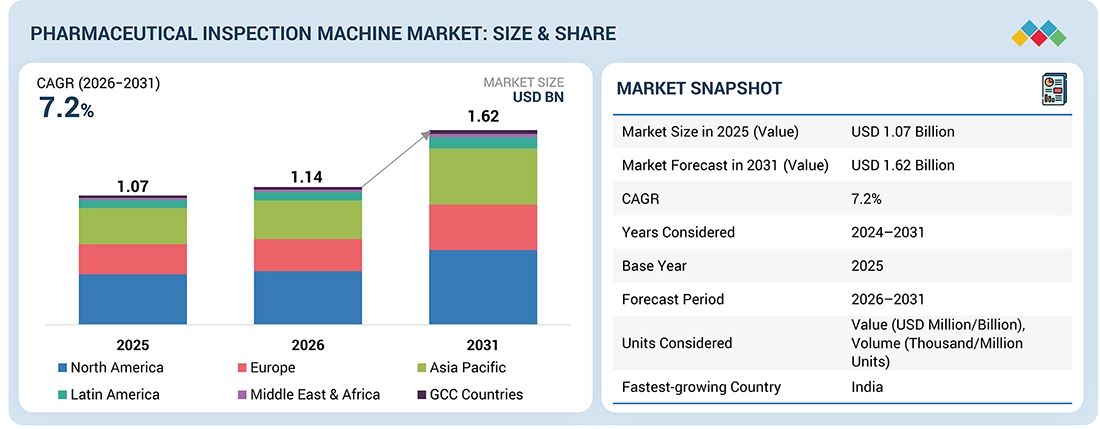
Source: Secondary Research, Interviews with Experts, MarketsandMarkets Analysis
The global pharmaceutical inspection machines market is projected to grow from USD 1.14 billion in 2026 to USD 1.62 billion by 2031, at a CAGR of 7.2% during the forecast period. The market was valued at USD 1.07 billion in 2025. The increasing focus on pharmaceutical product quality and regulatory compliance is a major factor driving demand for pharmaceutical inspection machines. Pharmaceutical manufacturers face strict quality requirements to ensure product safety and prevent defects, contamination, and packaging errors. Growing production volumes of injectables, biologics, tablets, and sterile products have increased the need for precise and high-speed inspection solutions across manufacturing lines. As a result, companies are investing in advanced inspection technologies integrated with machine vision, AI, and automation capabilities to improve detection accuracy and operational efficiency. Furthermore, increasing regulatory scrutiny and the need to minimize product recalls are encouraging manufacturers to adopt sophisticated inspection systems. This trend is expected to sustain long-term demand for pharmaceutical inspection machines, particularly in regions with expanding pharmaceutical manufacturing infrastructure and increasing investments in smart production technologies.
KEY TAKEAWAYS
-
MARKET SNAPSHOT:
Base Year Market Size (2025): USD 1.07 Billion
Current Market Size (2026): USD 1.14 Billion
Forecast Market Size (2031): USD 1.62 Billion
CAGR (2026–2031): 7.2% -
SEGMENT LEADERSHIP:
Regional Outlook: India is set to register the highest CAGR of 8.6% during the forecast period.
Product Leader: Conventional pharmaceutical inspection machines are estimated to lead the market, accounting for a share of 93.0% in 2026.
Automation Leader: Fully automated machines are expected to record a higher CAGR during the forecast period.
Packaging Leader: Ampoules & vials are projected to record a higher CAGR during the forecast period.
Formulation Leader: Oral formulation is estimated to record a higher CAGR during the forecast period.
End User Leader: Pharmaceutical companies are likely to register the highest CAGR during the forecast period. -
MARKET OUTLOOK & COMPETITIVE LANDSCAPE:
Antares Vision Group (Italy), Stevanato Group (Italy), Körber AG (Germany), Mettler-Toledo (Switzerland), and Syntegon Technology (Germany) were identified as star players in the pharmaceutical inspection machines market, as they emphasize innovation and possess broad industry coverage along with strong operational and financial strength.
Optel Group (Canada), CMP Pharma S.R.L. (Italy), and Jekson Vision (India) are among the key startups and SMEs due to their strong product portfolios and business strategies.
The rapid growth of pharmaceutical manufacturing in emerging economies is boosting the Pharmaceutical Inspection Machine market. Governments and private stakeholders in regions like Asia Pacific, Latin America, and parts of the Middle East & Africa are investing in production facilities and advanced quality control systems to enhance efficiency and compliance. This increased spending and adoption of automation technologies are driving demand for inspection machines. Additionally, industry initiatives and regulatory standards are pushing manufacturers to implement intelligent inspection technologies. Consequently, underserved regions are seeking cost-effective and reliable inspection solutions, creating opportunities for innovative, scalable products that meet evolving industry needs.
TRENDS & DISRUPTIONS IMPACTING CUSTOMERS' CUSTOMERS
The pharmaceutical inspection machines market is evolving from conventional standalone inspection systems toward intelligent, automated, and AI-enabled quality assurance platforms that support pharmaceutical manufacturing and packaging operations. Rising demand for stringent regulatory compliance, defect-free production, and high-speed inspection capabilities is reshaping customer expectations across pharmaceutical and biotechnology facilities. Digital ecosystems integrating machine vision, artificial intelligence, robotics, data analytics, and real-time monitoring are accelerating adoption. As manufacturers increasingly prioritize precision, product safety, and operational efficiency, companies are focusing on smart inspection technologies, software-driven analytics, strategic collaborations, and integrated quality control solutions. The shift toward Industry 4.0, connected manufacturing environments, and advanced inspection automation is further driving innovation across pharmaceutical production processes.
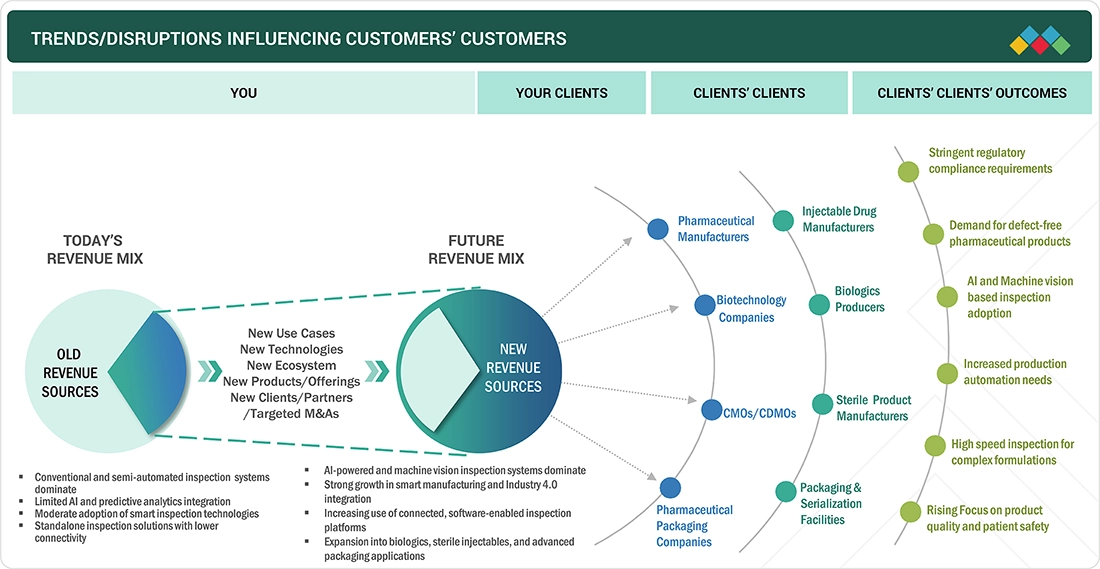
Source: Secondary Research, Interviews with Experts, MarketsandMarkets Analysis
MARKET DYNAMICS

Level
-
Increasing adoption of AI- and machine vision-based inspection systems

-
Rising pharmaceutical manufacturing output globally


Level
-
High implementation and maintenance costs of advanced inspection systems

-
Stringent regulatory requirements and complex validation processes


Level
-
Growing development of cost-effective and AI-driven inspection solutions

-
Increasing adoption of Industry 4.0 and smart manufacturing technologies


Level
-
Rising adoption of used and refurbished inspection equipment

-
Limited adoption of advanced inspection systems in developing regions

Source: Secondary Research, Interviews with Experts, MarketsandMarkets Analysis
Driver: Increasing adoption of AI- and machine vision-based inspection systems
The growing integration of artificial intelligence, deep learning, and machine vision technologies is significantly driving demand for pharmaceutical inspection machines. Traditional inspection systems relied on rule-based detection methods that struggled with complex defects and product variations. AI-enabled inspection systems can identify subtle abnormalities, improve detection accuracy, and continuously optimize performance through data-driven learning. Advanced imaging technologies support real-time analysis for detecting particulate contamination, cosmetic defects, fill-level inconsistencies, and packaging errors. These systems help reduce false rejection rates while improving operational efficiency and product quality. As pharmaceutical manufacturers increasingly prioritize automation and precision, adoption of intelligent inspection technologies continues to accelerate across production facilities.
Restraint: High implementation and maintenance costs of advanced inspection systems
Advanced pharmaceutical inspection machines require substantial capital investment due to the integration of sophisticated imaging systems, AI software, robotics, and automation technologies. In addition to high acquisition costs, ongoing expenses related to software upgrades, maintenance, validation, and system integration increase the total cost of ownership. Small and mid-sized manufacturers often face budget constraints that limit investment in advanced inspection technologies, particularly in emerging markets. These financial barriers can slow market adoption despite the operational benefits offered by modern systems.
Opportunity: Growing adoption of Industry 4.0 and smart manufacturing
The increasing shift toward Industry 4.0 and connected manufacturing environments presents significant growth opportunities for pharmaceutical inspection machine providers. Smart factories increasingly require integrated inspection systems capable of real-time monitoring, predictive analytics, and automated quality control. Connected inspection platforms can improve traceability, production visibility, and process optimization. As pharmaceutical manufacturers modernize facilities and invest in digital transformation initiatives, demand for intelligent inspection technologies is expected to increase significantly.
Challenge: Rising adoption of used and refurbished inspection equipment
Many pharmaceutical manufacturers, particularly in cost-sensitive and emerging markets, are increasingly opting for refurbished inspection machines due to lower upfront costs. While these systems provide a cost-effective alternative, they often lack advanced capabilities and may not comply with evolving quality standards and technological requirements. Growing preference for refurbished equipment creates pricing pressure for manufacturers of new inspection systems and may impact the adoption of advanced technologies across the market.
PHARMACEUTICAL INSPECTION MACHINES MARKET: COMMERCIAL USE CASES ACROSS INDUSTRIES
| COMPANY | USE CASE DESCRIPTION | BENEFITS |
|---|---|---|
 |
Develops AI-enabled pharmaceutical inspection systems for vials, ampoules, syringes, and packaging lines, focusing on defect detection, serialization, and quality assurance | High inspection accuracy | Advanced AI analytics | Improved product quality | Regulatory compliance |
 |
Provides automated inspection solutions for injectable drugs, cartridges, syringes, and pharmaceutical containers with integrated machine vision technologies | Precision inspection | Enhanced patient safety | Reduced defect rates | High-speed performance |
 |
Offers pharmaceutical inspection and automation solutions for packaging and production processes with integrated digital technologies | Increased productivity | Process optimization | Smart manufacturing integration |
 |
Delivers vision inspection and product quality systems for contamination detection, packaging inspection, and pharmaceutical manufacturing operations | Reliable quality control | Reduced recalls | Operational efficiency |
 |
Provides machine vision systems, barcode readers, and AI-powered inspection technologies for pharmaceutical manufacturing, packaging inspection, and defect detection applications | High inspection accuracy | AI-enabled analytics | Improved traceability | Enhanced operational efficiency |
Logos and trademarks shown above are the property of their respective owners. Their use here is for informational and illustrative purposes only.
MARKET ECOSYSTEM
The ecosystem map of the overall pharmaceutical inspection machines market comprises key stakeholders involved across product development, manufacturing, quality assurance, distribution, and end-use operations. It includes inspection equipment and technologies such as machine vision systems, AI software, sensors, robotics, cameras, conveyor systems, and data analytics platforms, along with associated software and services. Manufacturers in this ecosystem focus on research, product innovation, system integration, validation, and commercialization of inspection solutions. Companies operate through in-house manufacturing facilities and collaborations with pharmaceutical firms, automation providers, and contract manufacturing organizations (CMOs/CDMOs). Distributors, industrial automation suppliers, and system integrators support market expansion across regions. Research and development activities involve technology providers, academic institutions, and innovation centers working on AI algorithms, imaging accuracy, and advanced automation capabilities. Regulatory authorities ensure compliance with stringent pharmaceutical quality and safety standards. End users include pharmaceutical manufacturers, biotech companies, sterile injectable producers, and packaging facilities, representing the primary demand drivers within the ecosystem.
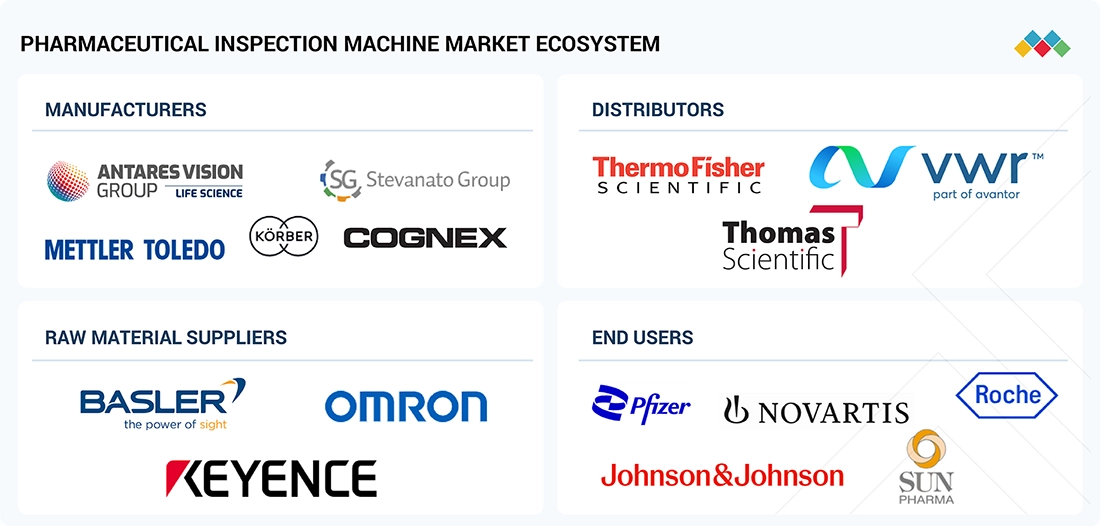
Logos and trademarks shown above are the property of their respective owners. Their use here is for informational and illustrative purposes only.
MARKET SEGMENTS
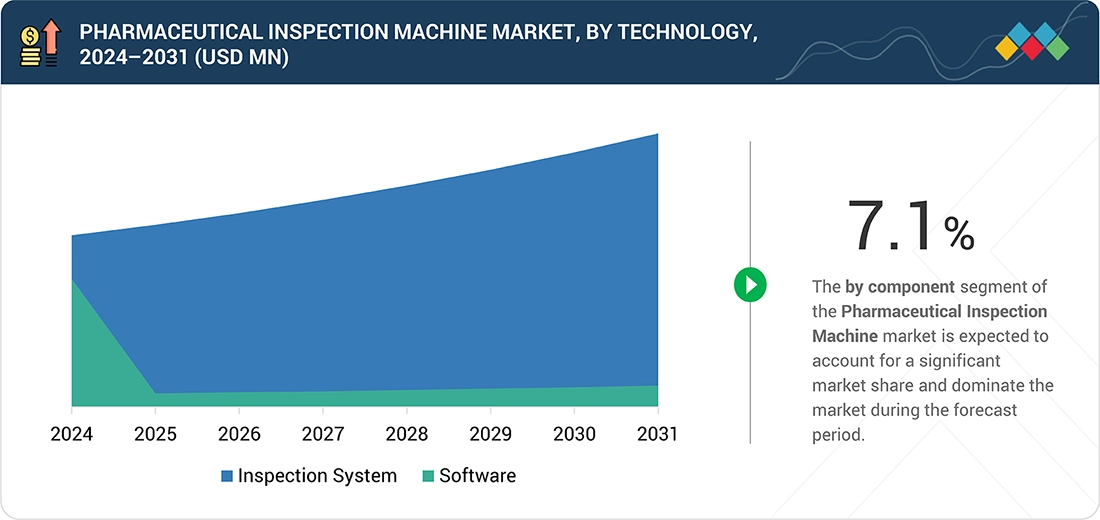
Source: Secondary Research, Interviews with Experts, MarketsandMarkets Analysis
Pharmaceutical Inspection Machines Market, by Component
Inspection systems account for a significant share of the pharmaceutical inspection machine market due to the increasing need for accurate defect detection and quality assurance. Technologies such as vision inspection systems, X-ray systems, particle inspection systems, leak detection systems, checkweighers, and metal detectors are widely adopted across pharmaceutical manufacturing lines. These systems help identify contamination, packaging defects, fill-level variations, and product inconsistencies with high precision. Growing integration of AI, machine vision, and automation technologies is further enhancing inspection accuracy and operational efficiency, driving strong demand across pharmaceutical facilities.
Pharmaceutical Inspection Machines Market, by Type
Fully automated inspection systems are increasingly gaining adoption due to their ability to deliver high-speed inspection, minimize manual intervention, and improve productivity. Pharmaceutical manufacturers are investing in automated systems to reduce human error, enhance quality assurance, and comply with stringent regulatory requirements. Semi-automated and manual systems continue to maintain demand among small-scale manufacturers due to lower investment requirements. However, increasing focus on smart manufacturing and operational efficiency is accelerating the transition toward automation.
Pharmaceutical Inspection Machines Market, by Packaging Type
Ampoules, vials, syringes, blister packs, and bottles represent major packaging formats requiring inspection across pharmaceutical manufacturing operations. Sterile injectable products, biologics, and high-value drug products require advanced inspection systems to detect particulate contamination, cosmetic defects, leakage, and packaging errors. Increasing production of prefilled syringes and complex packaging formats is creating demand for specialized inspection solutions. Growing focus on product safety and regulatory compliance continues driving adoption across packaging applications.
Pharmaceutical Inspection Machines Market, by Formulation
Oral formulations, parenteral products, and biologics require different inspection approaches due to variations in product characteristics and quality requirements. Tablets, capsules, oral solutions, injectables, and biologics require inspection for defects, contamination, and packaging inconsistencies. Injectable and parenteral formulations particularly account for a significant market share due to stringent quality standards and contamination risks. Increasing production of complex formulations and biologic drugs continues driving demand for advanced inspection systems.
Pharmaceutical Inspection Machines Market, by End User
Pharmaceutical companies, biotechnology firms, and CROs/CDMOs account for a major share of the pharmaceutical inspection machine market due to growing manufacturing activities and quality requirements. These organizations increasingly invest in advanced inspection technologies to improve product integrity, reduce recalls, and comply with regulatory standards. Expansion of pharmaceutical outsourcing and increasing production capacities are further supporting market growth across end-user segments.
REGION
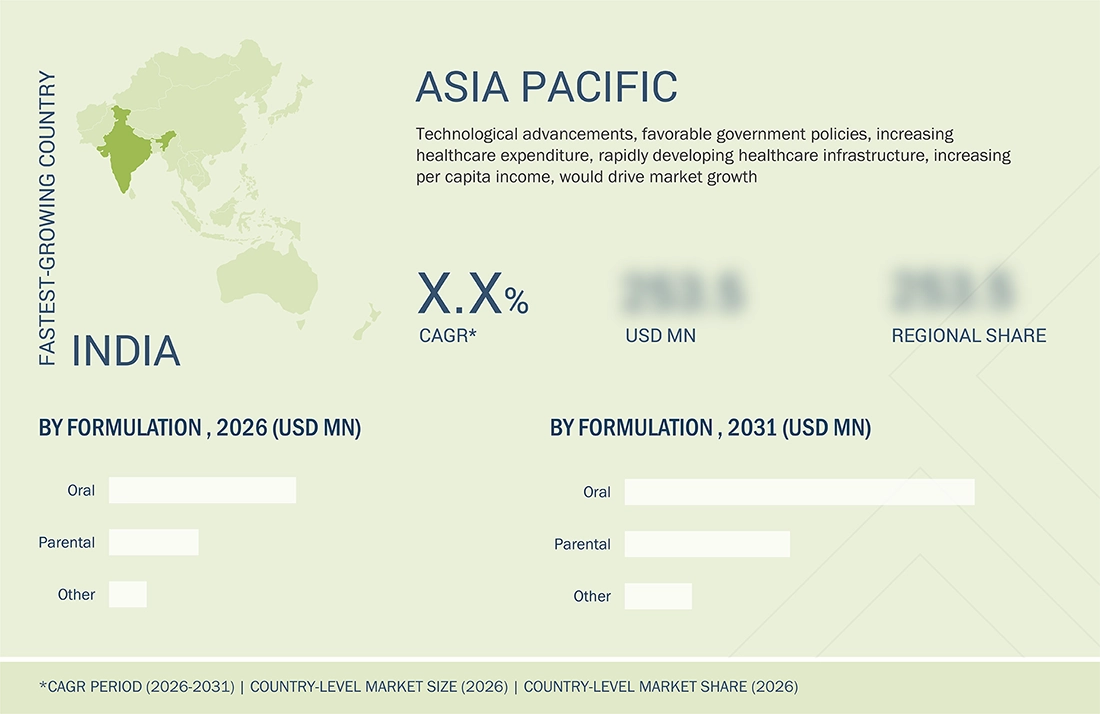
APAC to be the Fastest-Growing Region in Pharmaceutical Inspection Machines Driven by Manufacturing Expansion
Healthcare and pharmaceutical manufacturing infrastructure across Asia Pacific is rapidly evolving, driven by industrial expansion and increasing investments in pharmaceutical production capabilities. Countries such as India, China, Japan, and South Korea are investing heavily in new manufacturing facilities, smart factories, and quality control systems. The establishment of advanced pharmaceutical plants and the increasing adoption of automation technologies are improving production efficiency and compliance standards. Additionally, private investments and government initiatives are accelerating the modernization of pharmaceutical manufacturing ecosystems. The growth of tier-2 and tier-3 industrial hubs is particularly significant, expanding pharmaceutical production beyond traditional centers. With improved infrastructure comes increasing deployment of automated quality assurance systems, including pharmaceutical inspection machines. This expansion of pharmaceutical manufacturing capabilities is driving consistent demand for inspection technologies, making it a key contributor to the region’s market growth.
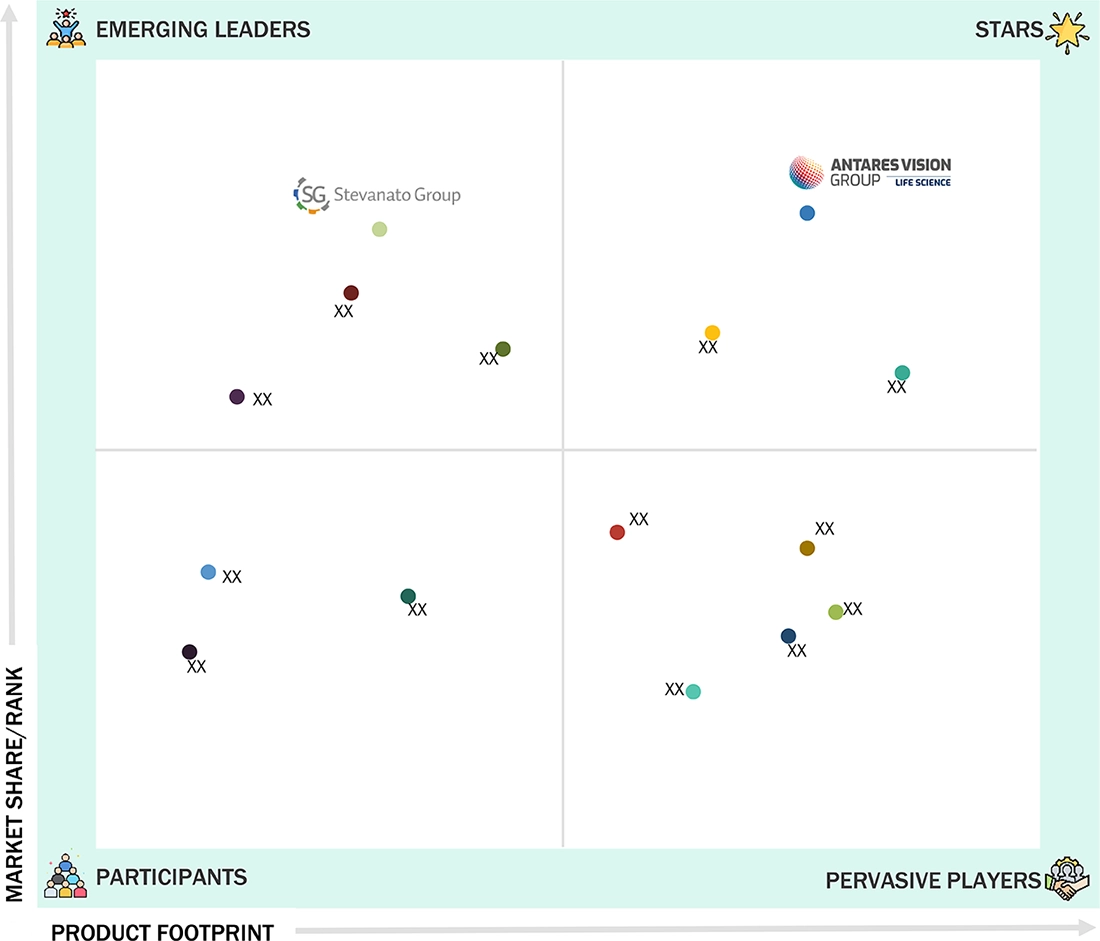
PHARMACEUTICAL INSPECTION MACHINES MARKET: COMPANY EVALUATION MATRIX
In the pharmaceutical inspection machines market, Antares Vision Group is positioned as a Star Player due to its extensive product portfolio, strong technological capabilities, and broad global footprint. The company offers comprehensive inspection, track-and-trace, and quality control solutions across pharmaceutical production lines, enabling end-to-end product integrity and regulatory compliance. Its continued investments in digital inspection technologies, AI-enabled solutions, strategic acquisitions, and partnerships strengthen its competitive position. With a well-established presence across multiple regions and a diversified customer base, Antares Vision maintains strong market influence and demonstrates leadership through innovation and scale. Stevanato Group is recognized as an Emerging Leader because of its rapidly expanding capabilities and increasing market presence in pharmaceutical inspection and packaging solutions. The company is strengthening its position through continuous innovation, investments in advanced inspection technologies, and strategic business expansion initiatives. Its focus on integrated solutions for drug containment, visual inspection systems, and pharmaceutical manufacturing support allows it to gain traction in the market. Although still expanding compared to established leaders, Stevanato’s growing technological expertise, expanding geographic reach, and increasing investments position it as a company with strong future growth potential.
Source: Secondary Research, Interviews with Experts, MarketsandMarkets Analysis
KEY MARKET PLAYERS
- Körber AG (Germany)
- Mettler Toledo (US/Switzerland)
- Cognex Corporation (US)
- Stevanato Group (Italy)
- Antares Vision S.p.A. (Italy)
- Optel Group (Canada)
- Syntegon Technology GmbH (Germany)
- Jekson Vision (India)
- ACG (India)
- Brevetti CEA S.p.A. (Italy)
- Roquette Frères (France)
- Toflon Life Science (China)
- Prodieco (Ireland)
- WIPOTEC GmbH (Germany)
- CMP Pharma S.R.L. (Italy)
- Keyence Corporation (Japan)
- Cassel Messtechnik GmbH (Germany)
- Thermo Fisher Scientific Inc. (US)
- Loma Systems (UK)
- VITRONIC Dr.-Ing. Stein Bildverarbeitungssysteme GmbH (Germany)
- Minebea Intec GmbH (Germany)
- Marchesini Group S.p.A. (Italy)
- N.K.P. Pharma Pvt. Ltd. (India)
- Span Systems (India)
MARKET SCOPE
| REPORT METRIC | DETAILS |
|---|---|
| Market Size Value in 2025 (Value) | USD 1.07 Billion |
| Revenue Forecast in 2031 (Value) | USD 1.62 Billion |
| Growth Rate | 7.2% |
| Years Considered | 2024–2031 |
| Base Year | 2025 |
| Forecast Period | 2026–2031 |
| Units Considered | Value (USD BN), Volume (Thousand Units) |
| Report Coverage | Revenue Forecast, Company Ranking, Competitive Landscape, Growth Factors, and Trends |
| Segments Covered |
|
| Regions Covered | North America, Europe, Asia Pacific, Latin America, Middle East & Africa, GCC Countries |
WHAT IS IN IT FOR YOU: PHARMACEUTICAL INSPECTION MACHINES MARKET REPORT CONTENT GUIDE
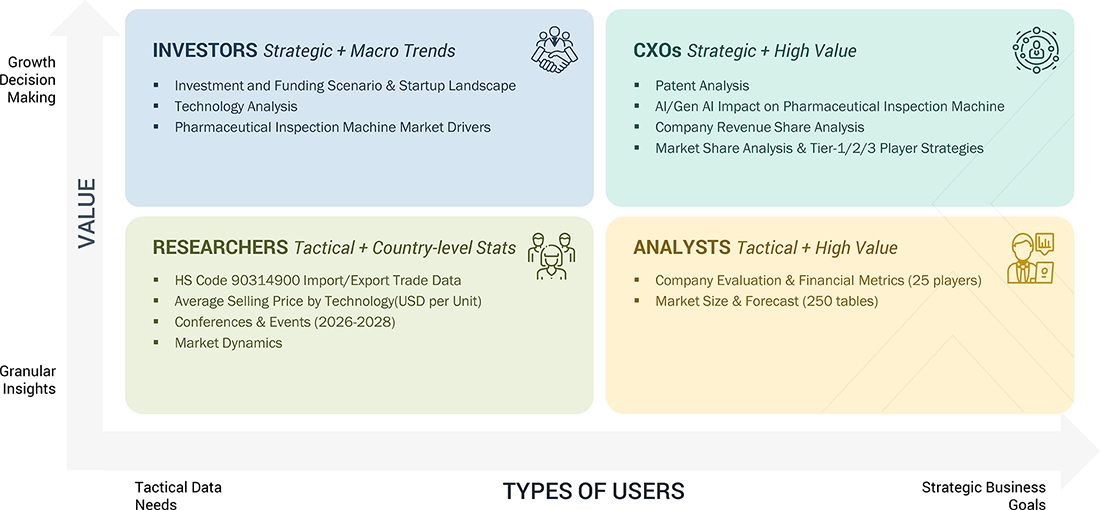
DELIVERED CUSTOMIZATIONS
We have successfully delivered the following deep-dive customizations:
| CLIENT REQUEST | CUSTOMIZATION DELIVERED | VALUE ADDS |
|---|---|---|
| Product Analysis | Comparative analysis of pharmaceutical inspection machine technologies by type, including vision inspection systems, X-ray inspection systems, particle inspection systems, leak detection systems, checkweighers, and automated inspection platforms, along with evaluation across applications such as injectables, biologics, tablets, capsules, syringes, vials, and packaging inspection | Assessment of inspection accuracy, defect detection capability, AI and machine vision integration, throughput performance, automation level, maintenance requirements, compliance capability, and cost efficiency to support optimal product selection and operational performance |
| Company Information | Detailed profiles of leading pharmaceutical inspection machine manufacturers including Antares Vision Group, Stevanato Group, Körber AG, Mettler-Toledo, and Cognex Corporations, covering product portfolios, inspection technologies, regulatory capabilities, geographic presence, partnerships, and recent developments | Competitive benchmarking across key players highlighting positioning by technological innovation, product performance, pricing strategies, automation capabilities, and focus areas such as sterile injectables, packaging inspection, and smart manufacturing solutions |
| Geographic Analysis | In-depth regional assessment of the global pharmaceutical inspection machine market covering North America, Europe, Asia Pacific, Latin America, and Middle East & Africa, with analysis of pharmaceutical manufacturing infrastructure, regulatory environment, and automation adoption trends | Country-level market sizing, CAGR forecasts, pharmaceutical production trends, biologics manufacturing growth, regulatory analysis, healthcare expenditure, and demand outlook across key markets such as the US, Germany, China, Japan, and India |
RECENT DEVELOPMENTS
- June 2024 : Körber AG launched the DE.SY.RE 1000 high-speed inspection machine for syringes and cartridges. The system can inspect up to 1,000 containers per minute using advanced imaging and gentle handling technology to reduce false rejects and improve production efficiency.
- March 2025 : Antares Vision Group expanded its AI-enabled visual inspection portfolio to improve defect detection, quality assurance, and pharmaceutical production efficiency.
- January 2025 : Stevanato Group strengthened its automated visual inspection capabilities for injectable products and prefilled syringes to support high-precision pharmaceutical manufacturing.
- September 2024 : Syntegon Technology introduced an enhanced automated visual inspection solution for pharmaceutical vials and injectable products, designed to improve defect detection accuracy, throughput, and compliance with stringent quality standards.
Table of Contents
 Exclusive indicates content/data unique to MarketsandMarkets and not available with any competitors.
Methodology
The study involved major activities in estimating the current market size for the pharmaceutical inspection machines market. Exhaustive secondary research was done to collect information on the market. The next step was to validate these findings, assumptions, and sizing with industry experts across the value chain using primary research. Different approaches, such as top-down and bottom-up, were employed to estimate the total market size. After that, the market breakup and data triangulation procedures were used to estimate the market size of the segments and subsegments of the Pharmaceutical inspection machine market.
Secondary Research
This research study involved the wide use of secondary sources, directories, databases such as Dun & Bradstreet, Bloomberg Businessweek, Factiva, whitepapers, and companies’ house documents. Secondary research was undertaken to identify and collect information for this extensive, technical, market-oriented, and commercial study of the Pharmaceutical inspection machine market. It was also used to obtain important information about the top players, market classification, and segmentation according to industry trends to the bottom-most level, geographic markets, and key developments related to the market. A database of the key industry leaders was also prepared using secondary research.
Primary Research
In the primary research process, various supply- and demand-side sources were interviewed to obtain qualitative and quantitative information for this report. Primary sources from the supply side included industry experts such as CEOs, VPs/Managing Directors, Marketing Heads/Directors, Sales Directors, Marketing/Sales Managers, Regional/Area Sales Managers, Export/Import Heads/Managers, and Other Pharmaceutical inspection machine Market Related Personnel from various companies and organizations operating in the Pharmaceutical inspection machine market. Primary sources from the demand side included Law Enforcement Agencies, Vice Presidents, C-level Executives, Department Heads, Enterprises, Individuals, Supply Management Team of Hospitals, Clinic Personnel, and Laboratory Technicians.
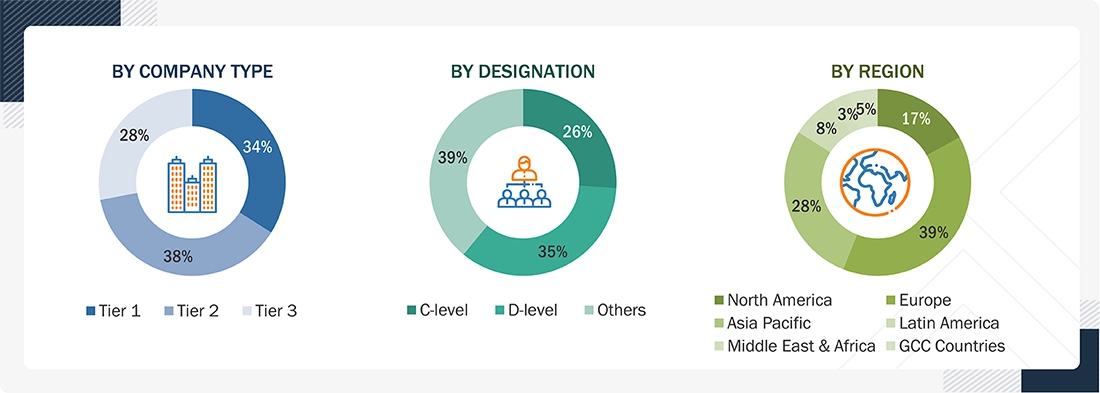
Note 1: C-level primaries include CEOs, COOs, CTOs, and VPs.
Note 2: Other primaries include sales, marketing, and product managers.
Note 3: Companies are classified into tiers based on their total revenue. As of 2025: Tier 1 = >USD 1 billion, Tier 2 = USD 500 million to USD 1 billion, and Tier 3 = <USD 500 million
To know about the assumptions considered for the study, download the pdf brochure
Market Size Estimation
Both top-down and bottom-up approaches were used to estimate and validate the total size of the Pharmaceutical inspection machine market. These methods were also used extensively to estimate the size of various subsegments in the market. The research methodology used to estimate the market size includes the following:
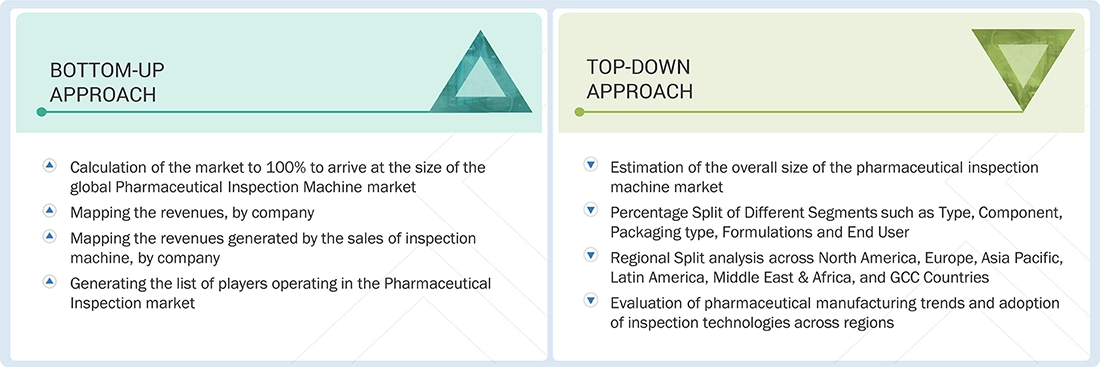
Data Triangulation
The entire market was split into five segments when the market size was determined. Data triangulation and market breakdown processes were used where necessary to complete the entire market engineering process and arrive at precise statistics for all segments.
Approach to derive the market size and estimate market growth.
Using secondary data from paid and unpaid sources, the market rankings for the major players were determined following a thorough analysis of their sales of pharmaceutical Inspection machines. Due to data restrictions, the revenue share in certain cases was determined after a thorough analysis of the product portfolio of big corporations and their individual sales performance. This information was verified at each stage by in-depth interviews with professionals in the field.
Market Definition
Pharmaceutical inspection machines are advanced systems used to detect defects, contamination, and quality issues in pharmaceutical products during manufacturing and packaging. They inspect products such as vials, ampoules, syringes, blister packs, and tablets for particulate contamination, cosmetic defects, fill-level variations, packaging errors, and container integrity issues using technologies like machine vision, sensors, robotics, and AI to ensure product quality, regulatory compliance, and patient safety.
Key Stakeholders
- Drip irrigation manufacturers
- Irrigation equipment importers and exporters
- Drip irrigation traders, distributors, and suppliers
- Precision agriculture and smart irrigation technology providers
- Irrigation infrastructure developers and EPC contractors
- Government regulatory agencies
- Food and Agriculture Organization (FAO)
- United States Department of Agriculture (USDA)
- Environmental Protection Agency
- Department for Environment, Food and Rural Affairs
- International Commission on Irrigation and Drainage
- World Bank
- Asian Development Bank
Report Objectives
MARKET INTELLIGENCE
- Determining and projecting the size of the drip irrigation market by dripper/emitter type, crop type, component, and application
- Identifying the attractive opportunities in the market by determining the largest and fastest-growing segments
- Providing detailed information about the key factors influencing market growth (drivers, restraints, opportunities, and industry-specific challenges)
- Providing the regulatory framework and market entry process related to the drip irrigation market
- Analyzing the micromarkets with respect to individual growth trends, prospects, and their contribution to the total market
Available customizations:
With the given market data, MarketsandMarkets offers customizations according to company-specific scientific needs.
The following customization options are available for the report:
PRODUCTS ANALYSIS
- Products Matrix, which gives a detailed comparison of the service portfolio of each company.
GEOGRAPHIC ANALYSIS
With the given market data, MarketsandMarkets offers customizations according to company-specific scientific needs.
- Further breakdown of the Rest of Europe drip irrigation market into key countries.
- Further breakdown of the Rest of Asia Pacific drip irrigation market into key countries.
- Further breakdown of the Rest of South America drip irrigation market into key countries.
COMPANY INFORMATION
- Detailed analyses and profiling of additional market players (up to five)


Personalize This Research
- Triangulate with your Own Data
- Get Data as per your Format and Definition
- Gain a Deeper Dive on a Specific Application, Geography, Customer or Competitor
- Any level of Personalization
Let Us Help You
- What are the Known and Unknown Adjacencies Impacting the Pharmaceutical Inspection Machines Market
- What will your New Revenue Sources be?
- Who will be your Top Customer; what will make them switch?
- Defend your Market Share or Win Competitors
- Get a Scorecard for Target Partners

Custom Market Research Services
We Will Customise The Research For You, In Case The Report Listed Above Does Not Meet With Your Requirements
Get 10% Free CustomisationTESTIMONIALS

JAYANT RAJPUROHIT
Director of Market Insights, Data and Analytics
SFI Health,
Leading Pharmaceutical Companywww.sfihealth.com/

We at SFI Health approached MarketsandMarkets for an Opportunity Assessment on "Incidence and Prevalence of Focus Indications" as we wanted to know the most attractive HCPs like Physician, Functional MD, Naturopath and Pharmacist. The project was critical for us to ensure our focus on the right target which would enable sustainable growth and profitability for SFI Health. The business insights provided exceeded our expectations and we were extremely impressed. The team at MarketsandMarkets is highly professional and detail oriented and very well understood our business needs. MarketsandMarkets offers a unique combination of expertise and dedicated engagement model. We identified 2 new products to be launched in coming months, based on the research findings provided by MarketsandMarkets. We are happy with the services and would strongly recommend MarketsandMarkets to my peers in the industry.

BEATRIZ DE LA CALLE
Head of Commercial Analytics
Qualicaps,
Leading Pharmaceutical Companywww.qualicaps.com/

We partnered with MarketsandMarkets for an assessment study on hard empty capsules. The team was extremely professional in understanding our business requirements and we received timely responses to all our queries. The market intelligence and the recommendations has met our business requirements. We were extremely impressed to see the final study results; it really exceeded our expectations. The market intelligence offered by MarketsandMarkets, and clarity on next steps will help us achieve our business objective for the Year 2021. We are happy with the services and would strongly recommend MarketsandMarkets to my peers in the industry.

Bob Williams,
Senior Director Business Development & Innovation
Bracco Diagnostics Inc.,
Italian Multinational in life sciences sector and a World Leader in imaging diagnosticsimaging.bracco.com/us-en
We were pleased with targeted insights that MarketsandMarkets identified from a custom study on the 'Radiation Dose Management Solutions Market'. Your team identified and characterized the market participants as well as underlying trends accurately. This study was useful to Bracco in formulating business strategies for our dose monitoring product lines and we thank MarketsandMarkets for the job well done.
Cody Coonradt,
Market Development and Strategy Manager
3M Health Information Systems,
Leader in Health care Coding, Payment & Analytics Solutions.www.3m.com/3M/en_US/health-information-systems-us
The value for our organization comes from three things: depth of research, specificity of segments and being easy to work with. As important as the first two are, the third can't be underestimated. MarketsandMarkets, maybe more than any other research vendor, wants to know what is top of mind for our team and what big questions we are grappling to answer.
Their customer first approach and high value engagement model, have given us great analysis and excellent value for money





Growth opportunities and latent adjacency in Pharmaceutical Inspection Machines Market