
Industrial Valves Market Size, Share & Analysis

Industrial Valve Market by Valve (Globe, ball, butterfly, solenoid, plug, spring, tank vent, pinch, gate, diaphragm, pilot, check, safety, needle, relief), Size (<1",1"-6", 6"-25",25"-50", >50"), Media (Liquid, Gas, Slurry) -Global Forecast to 2032




OVERVIEW
Source: Secondary Research, Interviews with Experts, MarketsandMarkets Analysis
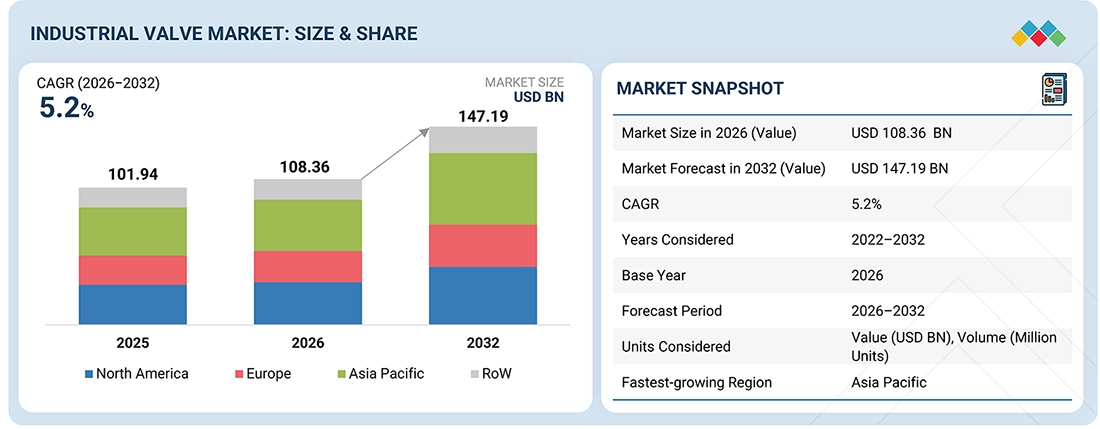
The industrial valve market is projected to reach USD 147.19 billion by 2032 from USD 108.36 billion in 2026, at a CAGR of 5.2%. The market is expanding due to the increasing adoption of industrial valves across industries such as energy, oil & gas, chemicals, water & wastewater treatment, and power generation, which is driving the demand for reliable flow control and pressure regulation solutions. As organizations focus on ensuring safety, regulatory compliance, and operational efficiency, the deployment of industrial valves is increasing to enable process control, leakage prevention, isolation, and continuous flow monitoring. Additionally, advancements in smart valve technologies and integration with IIoT- and AI-based systems are further supporting market growth by improving valve diagnostics, response time, predictive maintenance, and overall system performance.
KEY TAKEAWAYS
-
INDUSTRIAL VALVE MARKET, BY REGIONBy region, Asia Pacific accounted for the largest market share of 35.1% in 2025, and it is also likely to record the highest CAGR of 5.7% during the forecast period owing to the industrial expansion, energy projects, chemical processing, and water infrastructure developments.
-
INDUSTRIAL VALVE MARKET, BY VALVE TYPEBy valve type, in 2025, linear valves held a larger market share (61%) than rotary valves as linear valves are widely used in throttling, pressure control, safety, and flow regulation applications.
-
INDUSTRIAL VALVE MARKET, BY SAFETY VALVE TYPEBy safety valve type, spring safety valves are likely to hold the largest market share due to their wide use in boilers, pipelines, refineries, reactors, storage tanks, and power plants. Rupture disc valves are likely to record the highest growth rate, supported by rising demand for fast-acting pressure relief in critical and high-pressure industrial applications.
-
INDUSTRIAL VALVE MARKET, BY VALVE SIZEBy valve size, 1" to 6" valves are expected to capture the largest market share of 33% in 2032.
-
INDUSTRIAL VALVE MARKET, BY PRESSURE RANGEBy pressure range, up to 50 bar valves are expected to hold the largest market share, supported by wide use in water & wastewater treatment, power, chemicals, and general industrial process applications.
-
INDUSTRIAL VALVE MARKET, BY MEDIA TYPEBy media type, the liquid segment is expected to dominate the market, supported by strong demand across water treatment, oil & gas, chemicals, food & beverages, and power generation sectors.
-
INDUSTRIAL VALVE MARKET, BY MATERIALBy material, steel valves are expected to dominate the market in 2032, while plastic valves are likely to register the highest CAGR during the forecast period.
-
INDUSTRIAL VALVE MARKET, BY FUNCTIONBy function, on-off valves are likely to dominate the market in 2032, supported by isolation and shut-off demand.
-
INDUSTRIAL VALVE MARKET, BY COMPONENTActuators are likely to lead the component segment driven by increasing industrial automation, expansion of oil & gas and water treatment infrastructure, and growing adoption of smart manufacturing technologies.
-
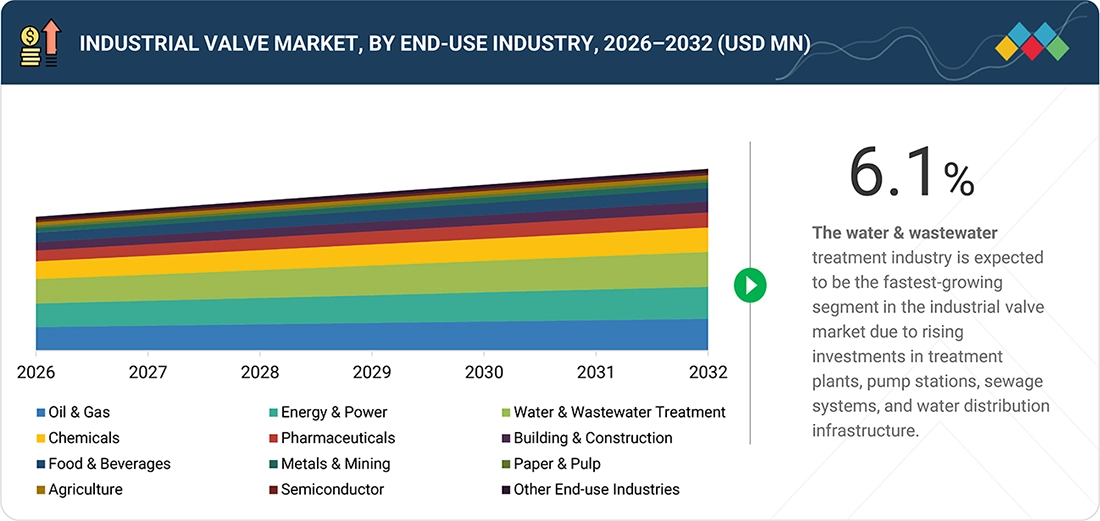
INDUSTRIAL VALVE MARKET, BY END-USE INDUSTRYBy end-use industry, the water & wastewater treatment segment is expected to display the highest CAGR during 2026–2032. Oil & gas, energy & power, and chemical industries also remain major demand contributors.
-
COMPETITIVE LANDSCAPE – KEY PLAYERSEmerson, SLB, Flowserve, IMI plc, Neway Valve, Crane, KITZ, Parker Hannifin, Alfa Laval, KSB, Curtiss-Wright, Spirax Group, Watts Water Technologies, Bray International, and Circor are key players in the industrial valve market.
-
COMPETITIVE LANDSCAPE – STARTUPS/SMEsStartups and SMEs/niche valve manufacturers such as Habonim Industrial Valves & Actuators and Richter Chemie-Technik GmbH focus on specialized areas such as cryogenic valves, corrosion-resistant valves, safety valves, severe-service valves, and customized flow-control solutions. Habonim lists cryogenic valves, LNG/CNG, hydrogen, severe-service, and customized valve solutions, while Richter highlights corrosion-resistant valves and safety valve solutions.
The industrial valve market is expected to grow steadily as industries increase investments in oil & gas production, pipeline infrastructure development, chemical processing, power generation, and water & wastewater treatment systems. Demand is driven by the need for reliable flow control, pressure regulation, isolation, safety relief, and process efficiency across critical industrial operations. Product innovation, the development of automation-compatible valve systems, advanced severe-service valve designs, and strategic growth initiatives by leading companies such as Emerson, SLB, Flowserve, IMI plc, and Neway Valve are key drivers propelling sustained market expansion.
TRENDS & DISRUPTIONS IMPACTING CUSTOMERS' CUSTOMERS
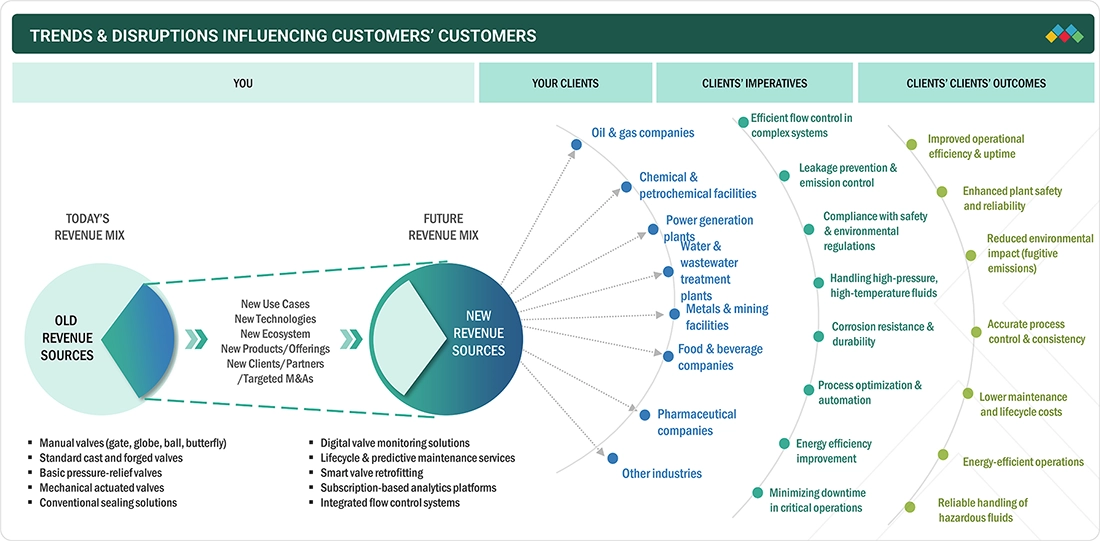
Smart valve automation, digital actuators, IIoT-enabled monitoring, and predictive maintenance systems are transforming the industrial valve market by improving process control, safety, and operational efficiency. These technologies enable real-time valve performance monitoring, faster fault detection, reduced downtime, and better flow-control accuracy across oil & gas, chemicals, power generation, and water & wastewater treatment applications. Advancements in electric and pneumatic actuators, control valves, corrosion-resistant materials, and severe-service valve designs are also improving reliability in high-pressure, high-temperature, and harsh operating environments. As a result, industries are increasingly adopting automated and smart valve solutions to enhance plant safety, regulatory compliance, and long-term operational performance.
Source: Secondary Research, Interviews with Experts, MarketsandMarkets Analysis
MARKET DYNAMICS

Level
-
Increasing need to establish new power plants and revamp existing ones

-
Growing use of connected networks and smart industrial valves


Level
-
High capital investments and low profit margins

-
Volatility in raw material prices, particularly steel and alloys


Level
-
Integration of industrial valves with IIoT, AI, Industry 5.0, and additive manufacturing

-
Increasing investments in water & wastewater treatment infrastructure


Level
-
Intense price competition due to fragmented market structure

-
Ensuring durability and performance in extreme operating conditions

Source: Secondary Research, Interviews with Experts, MarketsandMarkets Analysis
Driver: Increasing need to establish new power plants and revamp existing ones
Rising investments in oil & gas facilities, chemical plants, power generation units, and water & wastewater treatment infrastructure are increasing the demand for industrial valves. New plants require valves for flow control, isolation, pressure regulation, and safety applications, while existing facilities need valve replacement and upgrades to improve efficiency, reduce leakage, and meet operational safety requirements.
Restraint: High capital investments and low profit margins
Industrial valves used in high-pressure, high-temperature, corrosive, or critical-service applications require advanced materials, precision engineering, testing, and certification, which increases overall costs. At the same time, strong price competition among valve suppliers can limit profit margins, especially in standardized valve categories such as gate, ball, butterfly, and check valves.
Opportunity: Integration of industrial valves with IIoT, AI, Industry 5.0, and additive manufacturing
The adoption of IIoT-enabled valve monitoring, smart actuators, and predictive maintenance systems creates strong opportunities for valve manufacturers. Connected valves help end users track performance, detect leakage, reduce downtime, and improve plant reliability across oil & gas, chemicals, power generation, and water treatment facilities.
Challenge: Intense price competition due to fragmented market structure
The industrial valve market includes several global players, regional manufacturers, and specialized suppliers, creating strong pricing pressure. Customers often compare vendors on price, delivery time, customization, certifications, and after-sales support, making it difficult for smaller players to maintain margins while competing with established brands.
INDUSTRIAL VALVES MARKET SIZE, SHARE & ANALYSIS: COMMERCIAL USE CASES ACROSS INDUSTRIES
| COMPANY | USE CASE DESCRIPTION | BENEFITS |
|---|---|---|
 |
Provides control valves, isolation & shutoff valves, regulators, actuators, and nuclear flow control solutions for process industries and oil & gas applications | Enhances process control | Improves plant safety | Supports high-pressure and critical-service flow applications |
 |
Offers industrial valves, pumps, seals, and actuators for industries such as energy, chemical processing, nuclear power, water, and food production | Supports reliable flow control | Enables use in critical infrastructure | Helps address tough industrial process challenges |
 |
Provides control valves, actuators, choke valves, and severe-service valve solutions for oil & gas, power, petrochemicals, LNG, water, and heavy industries | Improves reliability in severe service | Handles pressure, temperature, erosion, and corrosion issues | Supports critical flow-control applications |
 |
Manufactures industrial valves and pumps for water, energy, chemical, petrochemical, mining, and industrial water treatment applications | Supports fluid control in pipelines | Enables use in petrochemical and processing plants | Offers broad valve type and material coverage |
 |
Manufactures valves used to control the flow of water, air, oil, and gas; offers gate, globe, check, ball, and butterfly valves for industrial plants | Supports fluid control in pipelines | Enables use in petrochemical and processing plants | Offers broad valve type and material coverage |
Logos and trademarks shown above are the property of their respective owners. Their use here is for informational and illustrative purposes only.
MARKET ECOSYSTEM
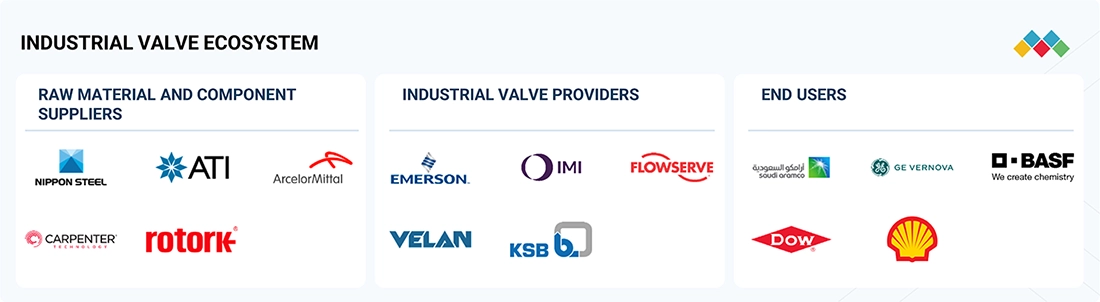
The industrial valve ecosystem includes raw material and component suppliers, industrial valve manufacturers and end users, forming an integrated value chain for flow-control and pressure-management solutions. Suppliers provide materials such as steel, cast iron, alloys, plastics, seals, actuators, and control components, while manufacturers develop valves for isolation, throttling, pressure relief, backflow prevention, and process control. Integrators and distributors support automation, installation, aftermarket services, and connectivity, while end users across oil & gas, chemicals, power generation, water & wastewater industries, and industrial processing drive demand. Collaboration across this ecosystem improves plant safety, operational efficiency, reliability, and lifecycle performance.
Logos and trademarks shown above are the property of their respective owners. Their use here is for informational and illustrative purposes only.
MARKET SEGMENTS
Source: Secondary Research, Interviews with Experts, MarketsandMarkets Analysis
Industrial Valve Market, by Valve Type
Linear valves hold a larger share of the industrial valve market than rotary valves, supported by their use in throttling, pressure regulation, safety, and flow-control applications. The market for this segment is expected to grow steadily during the forecast period, while rotary valves continue to gain demand in isolation, shut-off, and pipeline applications.
Industrial Valve Market, by Safety Valve
The market for safety valves is expected to grow at a healthy rate due to rising pressure-protection requirements in boilers, pipelines, reactors, refineries, storage tanks, and power plants. Their adoption is supported by increasing focus on plant safety, regulatory compliance, and equipment protection in critical industrial operations.
Industrial Valve Market, by Valve Size
Medium-size valves, especially the 1–6 inch range, account for a major market share due to their wider use in industrial pipelines, process control systems, plant utilities, and water treatment facilities. Larger valve sizes also show steady growth, supported by oil & gas transmission, power generation, and large water distribution projects.
INDUSTRIAL VALVE MARKET, BY PRESSURE RANGE
Up to 50 bar valves are expected to hold a major market share due to wide use in water & wastewater treatment, chemicals, power plants, food & beverages sectors. Higher pressure valves are also gaining demand in oil & gas, pipelines, LNG, and critical process industries.
INDUSTRIAL VALVE MARKET, BY MEDIA TYPE
Liquid media type is expected to account for the largest market share due to high usage in water treatment, oil & gas, chemicals, food & beverage, and power generation. The market for gas media type is also growing due to rising demand from LNG, hydrogen, natural gas, and industrial gas applications.
Industrial Valve Market, by Material
Steel valves hold a dominant position in the industrial valve market because of their strength, durability, pressure resistance, and suitability for heavy industrial applications. Plastic valves are expected to record comparatively faster growth, mainly due to increasing use in corrosion-resistant applications across chemical handling, water treatment, and low-pressure fluid systems.
Industrial Valve Market, by Function
On-off valves represent the largest share of the market as they are widely used for isolation and shut-off applications across pipelines and industrial plants. The market for control valves is expected to grow steadily as process industries increase automation and require better regulation of flow, pressure, temperature, and process stability.
Industrial Valve Market, by Component
Actuators account for a major share of the component segment, supported by growing adoption of automated valves and smart flow-control systems. Valve bodies also remain significant due to their core role in pressure handling, while seals, stems, seats, and accessories support reliable valve performance.
Industrial Valve Market, by End-use Industry
The water & wastewater treatment industry is expected to record the highest CAGR in the industrial vale market due to rising investments in water treatment, sewage systems, pump stations, and distribution infrastructure. Oil & gas, energy & power, and chemicals continue to hold strong shares because valves are essential in pipelines, refineries, boilers, turbines, reactors, and process systems.
REGION
Asia Pacific to be fastest-growing market for industrial valves during forecast period
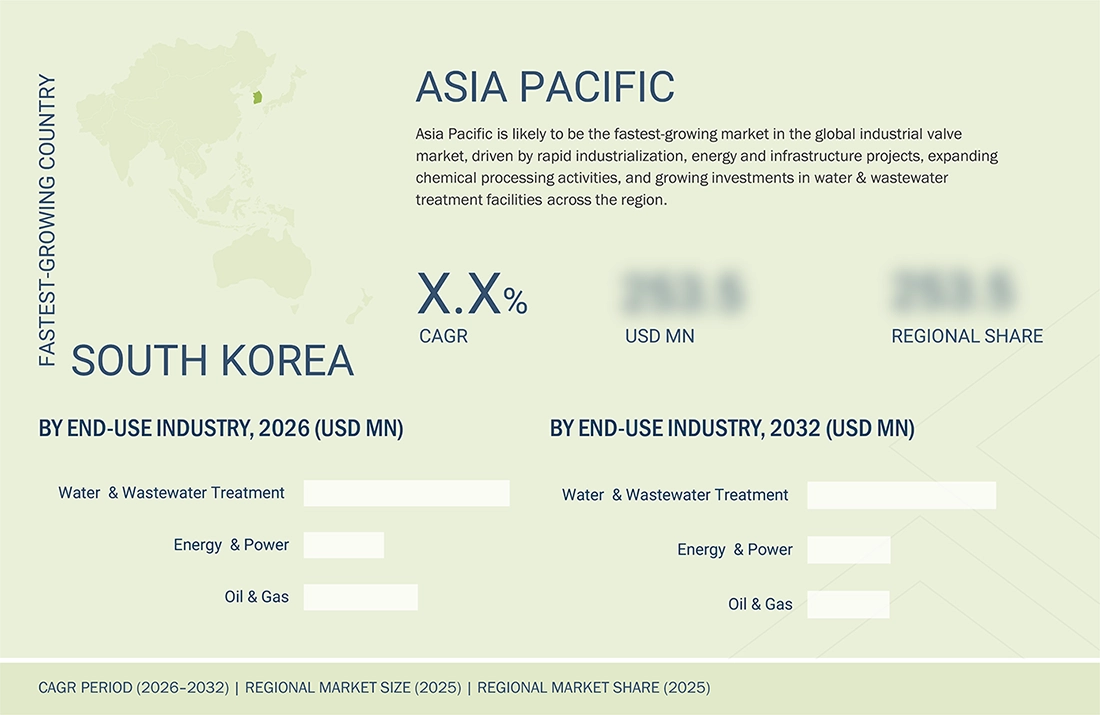
Asia Pacific is expected to be the fastest-growing industrial valve market, supported by rapid industrial expansion, energy projects, chemical processing, and water infrastructure developments. The region’s growth is driven by rising demand from oil & gas, power generation, water & wastewater treatment, and manufacturing industries across China, India, Japan, South Korea, and Southeast Asia. Increasing investments in new industrial plants, pipeline networks, refineries, and water treatment facilities are further supporting valve demand. As industries focus on automation, safety, and efficient flow control, the demand for industrial valves across Asia Pacific is expected to increase steadily during the forecast period.
INDUSTRIAL VALVES MARKET SIZE, SHARE & ANALYSIS: COMPANY EVALUATION MATRIX
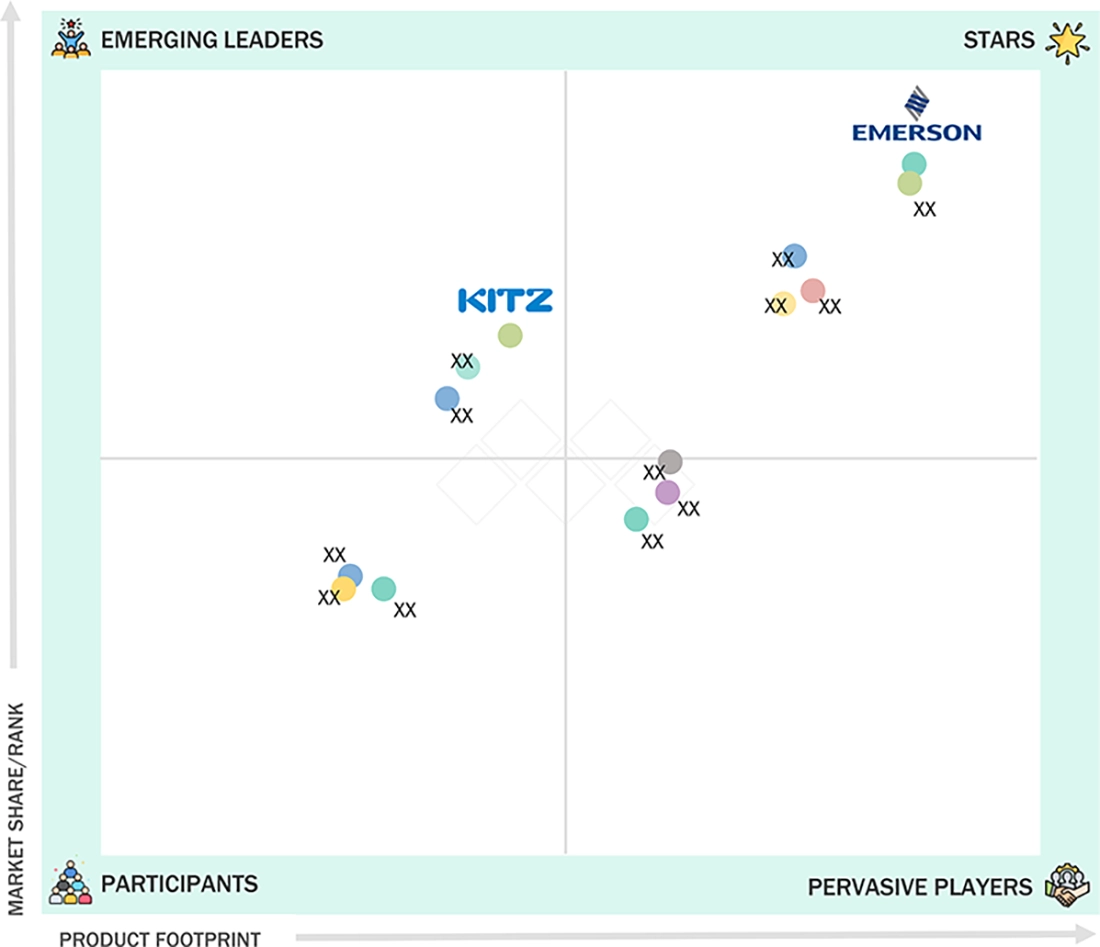
In the industrial valve market, Emerson (Star) holds a leading position due to its strong global presence, broad industrial valve portfolio, and deep expertise across oil & gas, chemicals, power generation, water & wastewater treatment, and process industries. The company’s control valves, isolation valves, regulators, actuators, and automation solutions support critical applications such as flow regulation, pressure control, safety, and plant efficiency. KITZ Corp (Emerging Leader) is strengthening its position through a broad valve portfolio covering ball valves, butterfly valves, gate valves, globe valves, check valves, and automated valve solutions. The company is gaining traction across oil & gas, chemicals, water treatment, power, and general industrial applications, supported by its focus on quality manufacturing, product reliability, and expanding presence in Asia and international markets.
Source: Secondary Research, Interviews with Experts, MarketsandMarkets Analysis
KEY MARKET PLAYERS
- Emerson Electric Co. (US)
- SLB (US)
- Flowserve Corporation (US)
- IMI plc (UK)
- Neway Valve (China)
- Crane Co. (US)
- KITZ Corporation (Japan)
- Parker Hannifin Corporation (US)
- Alfa Laval AB (Sweden)
- KSB SE & Co. KGaA (Germany)
MARKET SCOPE
| REPORT METRIC | DETAILS |
|---|---|
| Market Size in 2026 (Value) | USD 108.36 Billion |
| Market Forecast in 2032 (Value) | USD 147.19 Billion |
| Growth Rate | CAGR of 5.2% from 2026–2032 |
| Years Considered | 2022–2032 |
| Base Year | 2025 |
| Forecast Period | 2026–2032 |
| Units Considered | Value (USD Billion), Volume (Million Units) |
| Report Coverage | Revenue Forecast, Company Ranking, Competitive Landscape, Growth Factors, Trends, and Segment Analysis |
| Segments Covered |
|
| Regions Covered | North America, Europe, Asia Pacific, and RoW |
WHAT IS IN IT FOR YOU: INDUSTRIAL VALVES MARKET SIZE, SHARE & ANALYSIS REPORT CONTENT GUIDE
DELIVERED CUSTOMIZATIONS
We have successfully delivered the following deep-dive customizations:
| CLIENT REQUEST | CUSTOMIZATION DELIVERED | VALUE ADDS |
|---|---|---|
| Industrial Valve OEM/Equipment Manufacturer |
|
|
| Industrial Component Supplier |
|
|
| Process Engineering/EPC Firm |
|
|
| Oil & Gas/Energy/Chemical Enterprise |
|
|
| Private Equity Investment Firm |
|
|
RECENT DEVELOPMENTS
- February 2026 : Flowserve acquired Trillium Flow Technologies’ Valves division to strengthen its position in nuclear and power applications. The acquisition is likely to expand Flowserve’s industrial valve portfolio and enhance its ability to serve critical flow-control applications.
- October 2025 : Rotork launched the RTP-4000 range, a new generation of intelligent valve positioners designed to improve control performance and support optimized valve automation in industrial applications.
- July 2025 : KSB launched the BOA-Systronic ePIC, an intelligent control valve for automated operation in building services and industrial heating and cooling systems. The valve supports monitoring, control, and process optimization in one solution.
- March 2025 : Alfa Laval expanded its hygienic valve portfolio with the Unique SSV Pressure Relief Valve, Leakage Detection Butterfly Valve, and smaller sizes of Unique Mixproof CIP and Unique Mixproof Process Valves, supporting safety, efficiency, and reliability in hygienic industries.
- February 2025 : Emerson introduced the Anderson Greenwood Type 84 pressure-relief valve, designed for leak-tight service at very high pressures in hydrogen storage, transport, and refueling applications.
Table of Contents
 Exclusive indicates content/data unique to MarketsandMarkets and not available with any competitors.
Methodology
The study involved four major activities in estimating the current size of the industrial valve market. Extensive secondary research was conducted to gather information on the market, adjacent industries, and the broader industrial flow-control ecosystem. This was followed by primary research with industry stakeholders across the value chain, including valve manufacturers, actuator suppliers, component providers, distributors, system integrators, EPC firms, and end users, to validate assumptions and market sizing. Both top-down and bottom-up approaches were used to estimate the overall market size. Market breakdowns and data triangulation techniques were then applied to derive the size of individual segments and subsegments. Secondary and primary sources were jointly used to support a comprehensive technical and commercial analysis of the industrial valve market.
Secondary Research
Various secondary sources were referred to in the secondary research process to identify and collect information relevant to the industrial valve market. These sources include annual reports, press releases, investor presentations, product catalogs, white papers, technical journals, certified publications, industry websites, directories, and databases. Secondary research was conducted to obtain key insights into the market’s supply chain, value chain, competitive landscape, pricing trends, technology trends, and segmentation across valve type, pressure range, fluid type, size, material, component, function, end-use industry, and region. It also helped analyze industry trends such as valve automation, smart actuators, IIoT-enabled monitoring, severe-service valve demand, corrosion-resistant materials, and replacement demand from process industries. The collected data was further analyzed to estimate the overall market size and validate findings, which were subsequently refined through primary research with industry experts and stakeholders.
Primary Research
Extensive primary research was conducted after gaining knowledge about the current scenario of the industrial valve market through secondary research. Several primary interviews were conducted with experts from the demand and supply sides across major regions: North America, Europe, Asia Pacific, and RoW.
BREAKDOWN OF PRIMARY INTERVIEW PARTICIPANTS
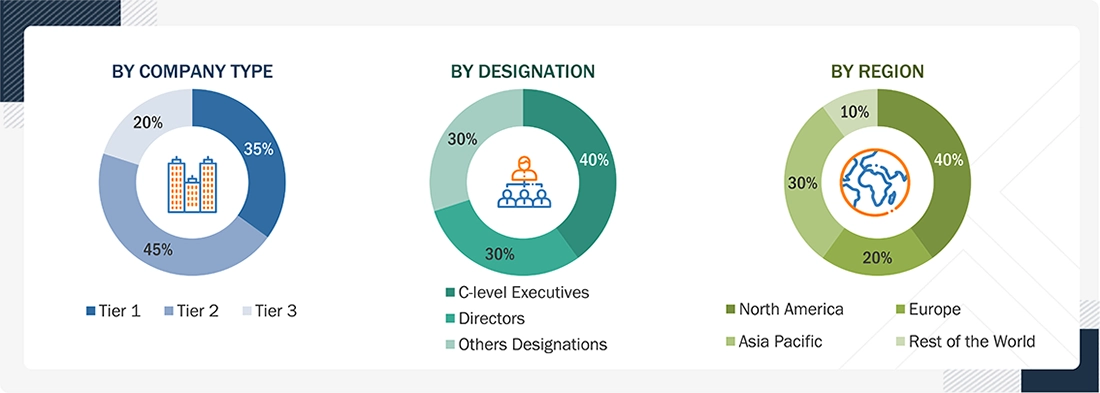
Note: The three tiers of companies are defined based on their total revenue in 2025: Tier 1 - revenue greater than or equal to USD 1 billion; Tier 2 - revenue between USD 100 million and USD 1 billion; and Tier 3 revenue less than or equal to USD 100 million. Other designations include sales managers, marketing managers, and product managers.
To know about the assumptions considered for the study, download the pdf brochure
Market Size Estimation
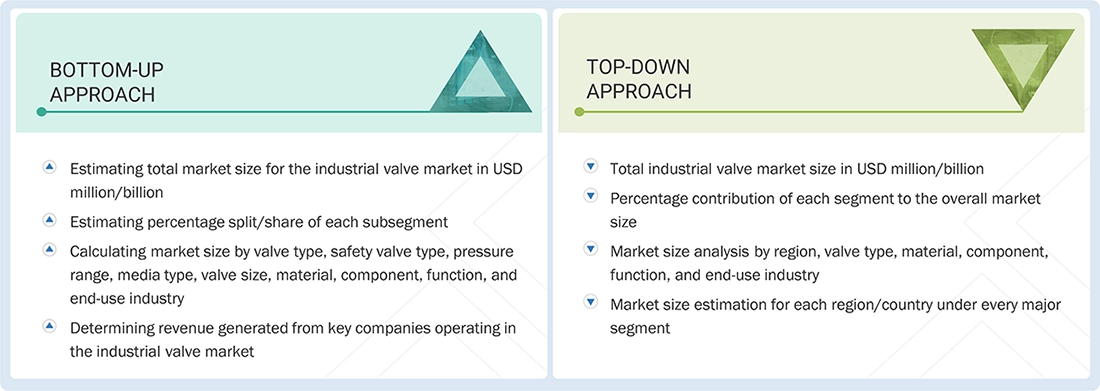
Both top-down and bottom-up approaches have been used to estimate and validate the total size of the industrial valve market. These methods have also been used extensively to estimate the size of various subsegments on the market. The following research methodology has been used to estimate the market size:
- Major players in the industrial valve market were identified through extensive secondary research.
- The industry’s value chain and market size, in terms of value, were determined through primary and secondary research processes.
- All percentage shares, splits, and breakdowns were determined using secondary sources and verified through primary sources.
Data Triangulation
After arriving at the overall size of the industrial valve market from the market size estimation process explained above, the total market has been split into several segments and subsegments. Data triangulation and market breakdown procedures were employed, wherever applicable, to complete the overall market engineering process and arrive at the exact statistics for all segments and subsegments of the market. The data was triangulated by studying various factors and trends from both the demand and supply sides. Along with this, the market size has been validated using both top-down and bottom-up approaches.
Market Definition
An industrial valve is a mechanical device used to manually or automatically control, regulate, start, stop, or restrict the flow of liquid, gas, or slurry through a piping system. These valves operate either through external actuation or by their own design mechanism, depending on the level of automation and process control required by the end user. Industrial valves are widely used across end-use industries such as oil & gas, energy & power, chemicals, water & wastewater treatment, and other process industries. Common valve types include ball valves, butterfly valves, check valves, gate valves, globe valves, and pressure-relief valves. Ball valves are widely used where quick shut-off is required, while butterfly valves are commonly used for isolation and flow regulation through quarter-turn operation. Check valves prevent reverse flow in pipelines, gate valves are primarily used for opening or closing fluid flow, and globe valves are used for regulating flow in piping systems. Pressure-relief valves act as safety devices by protecting industrial process equipment from overpressure conditions and potential damage.
Key Stakeholders
- End users
- Government bodies, venture capitalists, and private equity firms
- Industrial valve manufacturers
- Industrial valve distributors
- Valve industry-related associations
- Professional service/solution providers
- Research institutions and organizations
- Standards organizations and regulatory authorities
- System integrators
- Technology consultants
Report Objectives
- To describe and forecast the industrial valves market, in terms of value, based on valve type, safety valve type, media type, component, function, material, valve size, pressure range and end-use industry
- To forecast the industrial valves market, in terms of volume, by valve type and region
- To describe and forecast the market for various segments across four main regions, namely, North America, Europe, Asia Pacific, and RoW, in terms of value
- To strategically analyze micromarkets about individual growth trends, prospects, and contribution to the market
- To provide detailed information regarding drivers, restraints, opportunities, and challenges influencing market growth
- To analyze opportunities for stakeholders by identifying high-growth segments in the market
- To provide a detailed overview of the industrial valve value chain
- To provide an ecosystem analysis, case study analysis, patent analysis, trade analysis, technology analysis, pricing analysis, Porter’s five forces analysis, and regulations pertaining to the market
- To strategically profile key players in the industrial valve market and comprehensively analyze their market share and core competencies
- To analyze competitive developments such as partnerships, acquisitions, expansions, collaborations, and product launches, along with R&D in the industrial valve market
- To provide interconnected markets and cross-sector opportunities, strategic moves by tier 1/2/3 players, ecosystem analysis, case study analysis, patent analysis, technology analysis, impact of AI/Gen AI, impact of 2025 US tariffs, key conferences and events, Porter’s five forces analysis, and regulations pertaining to the market under study.
Available customizations:
With the market data given, MarketsandMarkets offers customizations according to the company’s specific needs. The following customization options are available for the report:
Company Information:
- Detailed analysis and profiling of additional market players (up to 5)
Need a Tailored Report?
Customize this report to your needs
Get 10% FREE Customization
Customize This ReportPersonalize This Research
- Triangulate with your Own Data
- Get Data as per your Format and Definition
- Gain a Deeper Dive on a Specific Application, Geography, Customer or Competitor
- Any level of Personalization
Let Us Help You
- What are the Known and Unknown Adjacencies Impacting the Industrial Valve Market
- What will your New Revenue Sources be?
- Who will be your Top Customer; what will make them switch?
- Defend your Market Share or Win Competitors
- Get a Scorecard for Target Partners

Custom Market Research Services
We Will Customise The Research For You, In Case The Report Listed Above Does Not Meet With Your Requirements
Get 10% Free CustomisationTESTIMONIALS

Tetsuya Ohhira
Business Development Manager-Technology Business
Nikon Corporation,
Leading Japanese MNC specializing in optics and imaging productswww.nikon.com
MarketsandMarkets™ response
is quick. Their attitude is flexible and positive. Analyst Insights are globally considered and
significant. Client Services quickly respond to our inquiry and demand. Their wide range of global
surveys help us make our strategic plan.
We hope Knowledge Store will be easier to search
for a report.
VP - Marketing & Business Development
Leading Provider of Process Control Solutions
We engaged with MarketsandMarkets on a study to perform an analysis and recommend a Go-To-Market strategy for metrology and process control in the semiconductor market. The study was tailored to our targets and needs with well-defined milestones. Our overall experience with the MarketsandMarkets team was very good throughout the project in all aspects including the analysis methodologies used, the quality and depth of primary and secondary data sets, the professionalism and flexibility of the team and the ability to meet the target schedule and milestones. We want to thank MarketsandMarkets team for a job well done.
Growth opportunities and latent adjacency in Industrial Valve Market

Still Researching the
Industrial Valve Ecosystem?
See the competitors, opportunity evaluation, and growth signals shaping it - Instantly!
Generate 15+ consulting-grade strategic intelligence outputs - from competitor analysis to board-ready strategy decks, tailored to your Industrial Valve growth question.




User
Sep, 2019
I have a requirement regarding the shipment data specific to North America with various types of valves.
User
Sep, 2019
Need to understand the butterfly triple off set valve market; it is included in this report.
User
Sep, 2019
Global trends & forecasts for the upcoming 5 years in Oil & Gas, Chemical, Power (generation), Energy, Ship, Maritime industries. Upcoming projects and plans with a focus on specific geographies.
User
Nov, 2019
I am looking for in-depth analysis of the industrial valves market. Can you help me with the scope of the industrial valves market? I would like to know more about the segments covered in the report. I would also like to understand the research methodology used to arrive at the market size..
User
Mar, 2019
I am Interested in undertanding the total global industrial valves market in terms of volume and size. I am also interested in understanding the competitive landscape of market players the key strategies adopted by them in this market..