
Cellulose Ether & Derivatives Market

Cellulose Ether & Derivatives Market by Product Type (Methyl Cellulose & Derivatives, Carboxymethyl Cellulose, HEC, HPC, EC), Application (Construction, Pharmaceutical, Personal Care, Food & Beverage), Region - Global Forecast to 2031




OVERVIEW
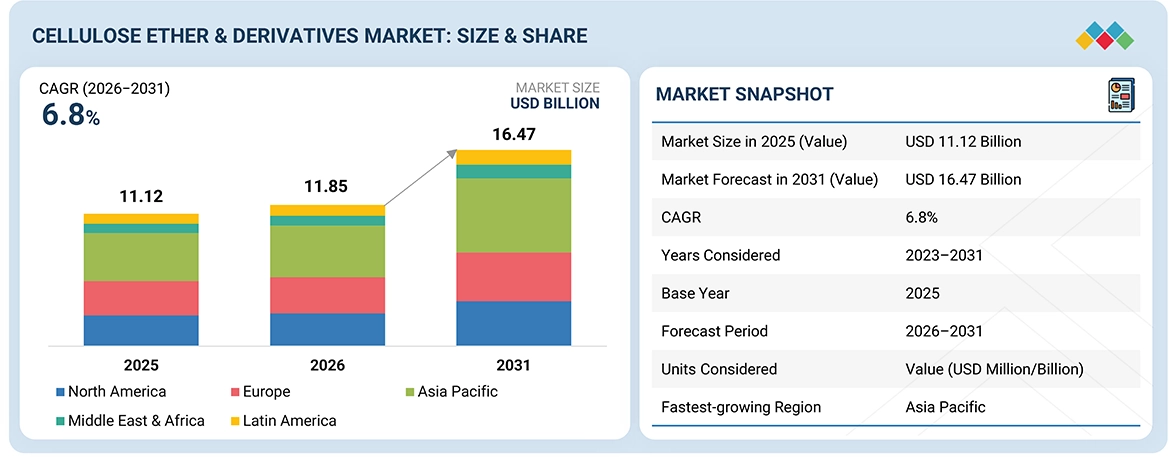
Source: Secondary Research, Interviews with Experts, MarketsandMarkets Analysis
The cellulose ether & derivatives market is projected to reach USD 16.47 billion in 2031 from USD 11.85 billion in 2026, at a CAGR of 6.8%. The growth of the market is primarily due to the rising demand for cellulose ether & derivatives from several application sectors like foods, pharmaceuticals, personal care products, and others. The construction industry is one of the key consumers of cellulose ether & derivatives. Cellulose ether & derivatives find their use in large numbers within formulations of cement and mortar to provide improved workability, water retention, adhesive, and durability characteristics. Rising demand for building structures and efficient energy-saving buildings leads to increased consumption of cellulose ether & derivatives within the sector. Pharmaceutical and personal care industries are among the key end-users of cellulose ether & derivatives. They are utilized as important components in formulations for their attributes like binding, sustained release, thickening, and stabilization.
Market Size and Forecast:
- Market Size Value in 2026: USD 11.85 Billion
- Market Size Value in 2031: USD 16.47 Billion
- Growth Rate: CAGR of 6.8% from 2026 to 2031
- Data available from 2023 to 2031
-
North America Cellulose Ether & Derivatives Market
- Market size USD 2.38 billion in 2025
- Market forecast USD 3.40 billion in 2030
- Market Growing at a CAGR of 7.4%
-
Asia Pacific Cellulose Ether & Derivatives Market
- Market size USD 4.18 billion in 2025
- Market forecast USD 7.03 billion in 2030
- Market Growing at a CAGR of 10.9%
-
Europe Cellulose Ether & Derivatives Market
- Market size USD 1.85 billion in 2025
- Market forecast USD 2.61 billion in 2030
- Market Growing at a CAGR of 7.1%
Key Market Trends and Insights
- Segment Acceleration: The construction segment is experiencing the fastest acceleration, driven by increasing use of cellulose ethers in cement, mortars, and tile adhesives for improved performance and workability.
-
Growth Opportunities: Emerging opportunities lie in expanding applications in pharmaceuticals and personal care products, alongside rising demand from Asia Pacific due to rapid urbanization and infrastructure development.
- Growth Drivers: Market growth is fueled by increasing construction activities, growing demand for convenience foods, and the multifunctional properties of cellulose ethers such as thickening, binding, and water retention.
- Market Share Analysis: The market is characterized by a mix of global and regional players, where leading companies maintain dominance through product innovation, strong distribution networks, and strategic expansions in high-growth regions.
KEY TAKEAWAYS
-
By RegionAsia Pacific dominated the cellulose ether & derivatives market with a share of 36.4% in terms of value in 2025.
-
By Product TypeBy product type, the HEC, HPC, and EC segment is projected to grow at the highest CAGR (7.9%) during the forecast period.
-
By ApplicationBy application, the construction segment of methyl cellulose & derivatives dominated the cellulose ether & derivatives market with a share of 37.8% in terms of value in 2025.
-
Competitive Landscape - Key PlayersThe Dow Chemical Company, Ashland Global Holdings, Inc., Rayonier Advanced Materials, Shin-Etsu Chemical Co., Ltd., and Nouryon Chemical Holdings B.V. are star players in the cellulose ether & derivatives market, given their broad industry coverage and strong operational & financial strength.
-
Competitive Landscape - StartupsTaian Ruitai Cellulose Co., Ltd., Henan Botai Chemical Building Material Co., Ltd., Zhejiang Kehong Chemical Co., Ltd., and Shandong Liachang E Hua Pharmaceutical Co., Ltd. have distinguished themselves among startups and SMEs due to their well-developed marketing channels and extensive funding to build their product portfolios.
The need for sustainability across the globe and the increasing preference for bio-based, degradable polymers form the major factors driving the growth of the cellulose ether & derivatives market. The contemporary formulation technology relies heavily on such plant-based polymers for applications in construction, pharmaceutical, and food & beverage industries, providing vital properties, such as water retention and binding properties. The polymers contribute highly towards the increased effectiveness of thickening and film formation, which is an important aspect for the formulation of dry-mix mortar, as well as drug release control in pharmaceuticals. The rising demand for such polymers is driven by the increasing consumer industries, such as the processed food and personal care industries. The market for such products is showing significant growth in regions such as the Asia Pacific and North America due to the growth in infrastructure and advances in purity production techniques.
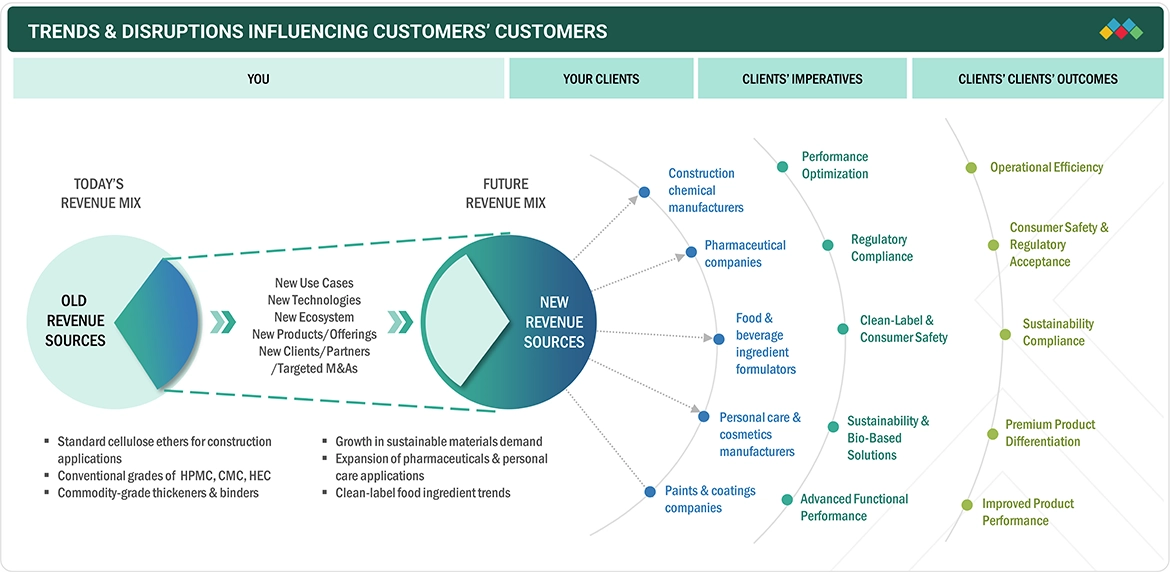
TRENDS & DISRUPTIONS IMPACTING CUSTOMERS' CUSTOMERS
The impact on consumers’ business emerges from customer trends or disruptions. Shifts, which are changing trends or disruptions, will impact the revenues of end users. The revenue impact on end users will affect the revenue of hot bets, which will further affect the revenues of cellulose ether & derivative manufacturers.
Source: Secondary Research, Interviews with Experts, MarketsandMarkets Analysis
MARKET DYNAMICS

Level
-
Sustainable product offering several advantages

-
Rapid growth in construction industry


Level
-
Emission of hazardous air pollutants during production

-
Risk of burning and explosions


Level
-
Booming personal care & cosmetics industry

-
Advanced pharmaceutical formulations and drug delivery systems


Level
-
Emergence of substitutes in various applications

-
Water retention due to external factors

Source: Secondary Research, Interviews with Experts, MarketsandMarkets Analysis
Driver: Rapid growth in construction industry
The growth in the construction sector is the key determinant in terms of demand for cellulose ethers & their derivatives, such as HPMC, HEC, and MC. Cellulose ethers are important functional additives used in dry-mix mortars, tile adhesives, renders, gypsum systems, self-leveling flooring, and EIFS. Unlike other additives, which serve commodity functions, cellulose ethers impact rheological properties, water retention, workability, open times, anti-sag properties, and efficiency in hydration of cement, making them irreplaceable in many construction formulations. Growth is further fueled by the change in structural composition from the conventional method of using cement at the site to using factory-based dry-mix mortar, especially in the Asia Pacific and Middle East regions.
Restraint: Risk of burning and explosions
Many industrially processed powdery materials are combustible and can, under certain conditions, if dispersed, cause dust explosions. Cellulose ethers are fine organic dust that is combustible and potentially explosive in a favorable environment. They can catch fire at the time of processing and/or handling. In order to avoid any such conditions, there are rules and regulations that the companies have to follow. There are certain guidelines for the safe handling, processing, transport, and packaging of cellulose ether derivatives.
Opportunity: Advanced pharmaceutical formulations and drug delivery systems
One of the most promising areas for cellulose derivatives is the development of advanced drug delivery systems due to their wide application in complicated drug formulations. For instance, hydroxypropyl methylcellulose, ethyl cellulose, and other specialized cellulose excipients are extensively used in controlled-release tablets, enteric-coated products, improved solubility systems, and capsule technologies aimed at improving medical efficacy and increasing patient compliance. The increasing spread of chronic illnesses and biopharmaceuticals is contributing to the growing need for modified-release drugs capable of decreasing the dosing schedule and providing enhanced medicinal effects.
Challenge: Water retention due to external factors
Water retention capability is among the essential features of cellulose ether. Water-retention capacity depends on the viscosity, fineness, and operating temperature of the mortar. Fineness influences the solubility of cellulose ether. The coarse cellulose ether has a granular form and is easily dispersed and dissolves in water without clumping, but dissolution is slow; thus, it is not suitable for dry-mixed mortar. In addition, cellulose ether is added to the other components of the mortar in the process of making the dry-mix mortar, including aggregates, fine aggregates, and cement. Water-retention capacity of cellulose ether depends on the operating temperature, and it becomes worse with increasing operating temperature. Mortar production is often carried out under high temperature conditions during practical engineering. This will result in poor workability and cracking resistance.
CELLULOSE ETHER & DERIVATIVES MARKET: COMMERCIAL USE CASES ACROSS INDUSTRIES
| COMPANY | USE CASE DESCRIPTION | BENEFITS |
|---|---|---|
 |
Uses cellulose ethers (HPMC, MHEC) in drymix mortars, tile adhesives, gypsum products, and cement-based formulations | Improved water retention, workability, adhesion strength, and crack resistance |
 |
Incorporates cellulose derivatives in detergents and personal care formulations | Stabilization, texture improvement, and product consistency |
 |
Uses pharmaceutical-grade HPMC and HPC in tablet coatings and controlled drug-release systems | Controlled release, binding efficiency, and formulation stability |
Logos and trademarks shown above are the property of their respective owners. Their use here is for informational and illustrative purposes only.
MARKET ECOSYSTEM
The ecosystem of the cellulose ether & derivatives market comprises raw material suppliers, chemical processors, formulation manufacturers, distributors, and end-use industries operating across construction, pharmaceuticals, food & beverages, personal care, and paints & coatings sectors. Producers source cellulose primarily from wood pulp and cotton linters, which are chemically modified into products such as carboxymethyl cellulose (CMC), hydroxyethyl cellulose (HEC), methyl cellulose (MC), and hydroxypropyl methylcellulose (HPMC). Major manufacturers, including Dow, Ashland, Shin-Etsu Chemical, and Nouryon, supply these materials to formulators and industrial users for applications such as thickeners, stabilizers, binders, and water-retention agents. The ecosystem is further supported by specialty chemical distributors, R&D institutions, and regulatory bodies, driving demand for sustainable, bio-based, and multifunctional additives.
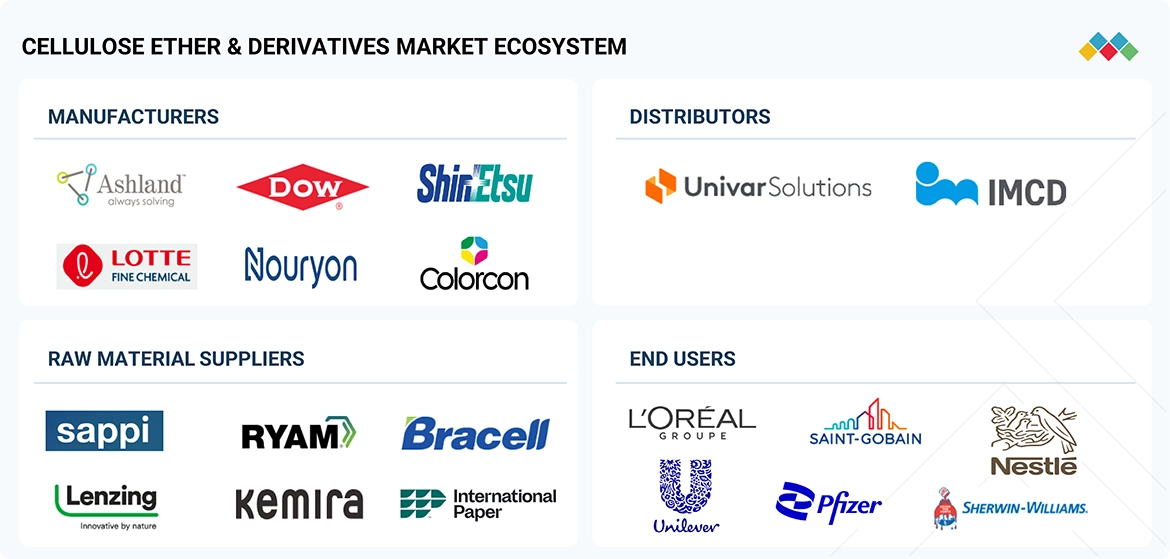
Logos and trademarks shown above are the property of their respective owners. Their use here is for informational and illustrative purposes only.
MARKET SEGMENTS
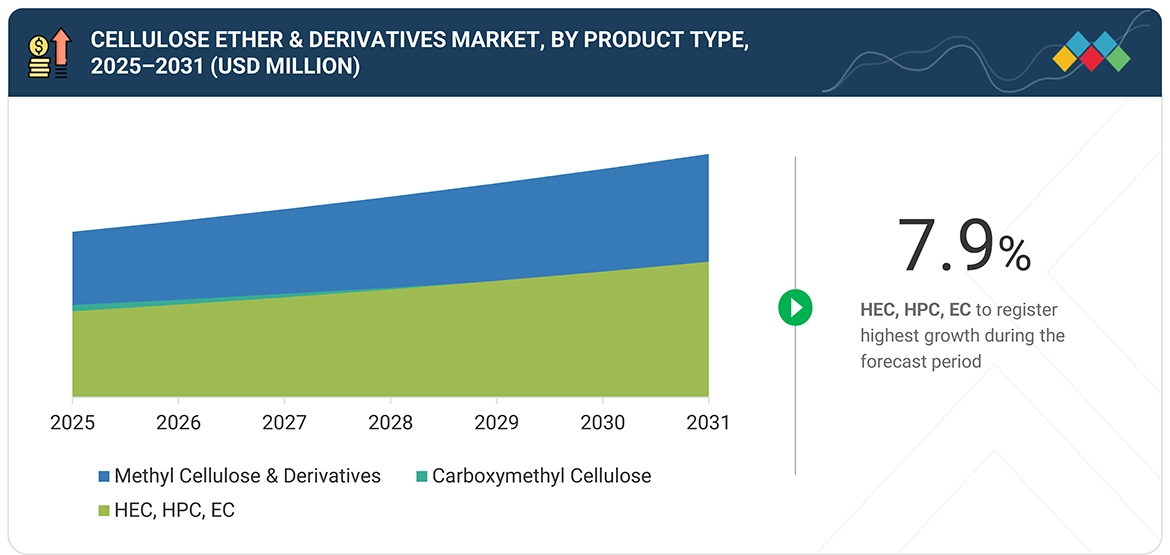
Source: Secondary Research, Interviews with Experts, MarketsandMarkets Analysis
Cellulose Ether & Derivatives Market, By Product Type
The methyl cellulose & derivatives dominated the market due to their remarkable flexibility and physical properties, like their water solubility and temperature-dependent gel formation. These derivatives act as key additives in several demanding industries because they function as important binders, thickeners, film-forming agents, and stabilizers in various applications, such as medicines, construction materials, and foods. Within the field of pharmaceuticals, these derivatives play a vital role by providing controlled release for medications and as binders of tablets, and thus their popularity is justified. Besides, the fact that these derivatives have biocompatibility, safety, and are biodegradable fits well with the global trend towards green and biological products for industry purposes.
Cellulose Ether & Derivatives Market, By Application
The construction application sector holds the largest share in the methyl cellulose & derivatives segment mainly because of the special functions that methyl cellulose provides in the construction field. The properties of methyl cellulose and its derivatives, such as hydroxypropyl methyl cellulose (HPMC), help as effective thickeners and water retention components to improve the workability, cohesiveness, and hydration rate of cement-based products such as mortars, grouts, and renders. By controlling fast evaporation from the cement-based products, it prevents premature hardening and enhances the adhesion strength of these constructions. Additionally, the property of offering consistency and controlling rheology of cement-based products makes them extremely important in the field of construction.
REGION
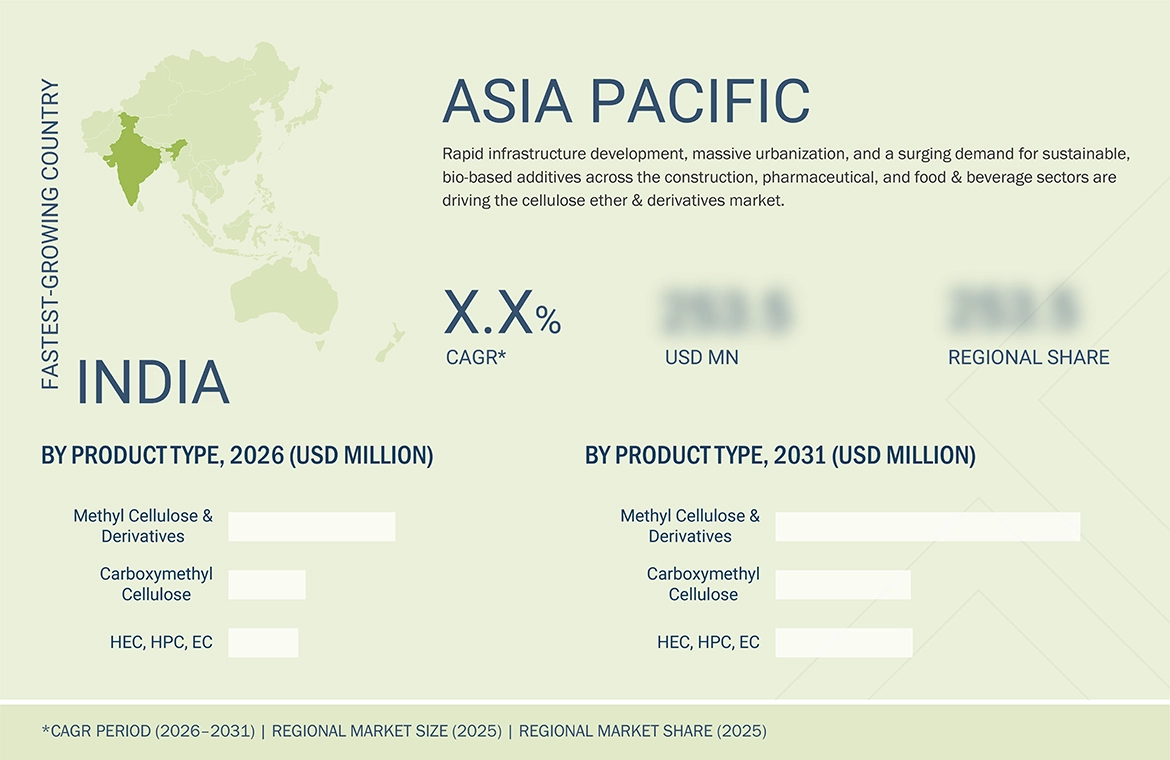
Asia Pacific to be the fastest-growing market for cellulose ether & derivatives during the forecast period
The Asia Pacific region is the fastest-growing market for cellulose ether & derivatives due to rapid industrialization, massive infrastructure development, and increasing urbanization in countries like China and India. The construction industry, one of the primary sources driving the demand for cellulose ethers, includes various applications, including cement, mortars, and tile adhesives. In addition, there is a rising trend towards adopting pharmaceuticals, personal care products, and food & beverage items. Cellulose ethers are increasingly used as excipients, thickening agents, and stabilizing agents in these markets. Favorable government policies for adopting bio-chemicals and the availability of substantial manufacturing facilities in the region enhance the growth prospects for cellulose ethers in the coming years.
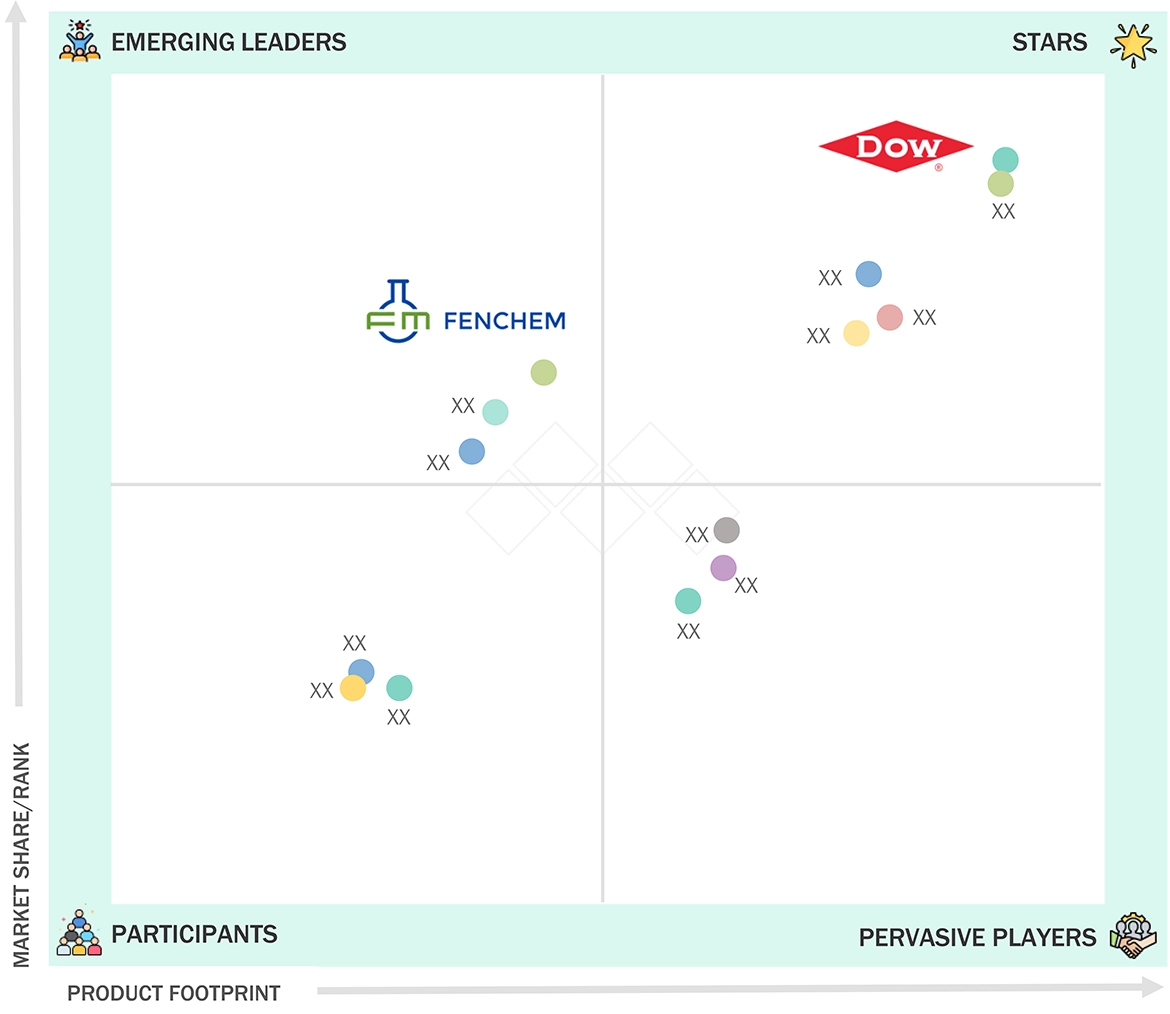
CELLULOSE ETHER & DERIVATIVES MARKET: COMPANY EVALUATION MATRIX
In the global cellulose ether & derivatives market, The Dow Chemical Company (Star) leads with a dominant market share and an extensive global footprint, driven by its vertically integrated manufacturing and strategic focus on a diverse portfolio of high-performance ethers & derivatives for pharmaceutical, construction, and industrial applications. On the other hand, Fenchem (Emerging Leader) is rapidly gaining visibility, leveraging its expertise in specialty supply chain solutions and high-quality cellulose-based functional additives to provide tailored, cost-effective formulations for the next generation of food & beverage, personal care, and construction projects.
Source: Secondary Research, Interviews with Experts, MarketsandMarkets Analysis
KEY MARKET PLAYERS
- The Dow Chemical Company (US)
- Ashland Global Holdings, Inc. (US)
- Rayonier Advanced Materials (US)
- Shin-Etsu Chemical Co., Ltd. (Japan)
- LOTTE Fine Chemicals (South Korea)
- DKS Co. Ltd. (Japan)
- Nouryon Chemical Holdings B.V. (Netherlands)
- Shandong Head Co., Ltd. (China)
- Colorcon (US)
- FENCHEM (China)
- Lamberti S.p.A. (US)
- J. RETTENMAIER & SÖHNE GmbH + Co KG (Germany)
- Hebei JiaHua Cellulose Co., Ltd. (China)
- Zibo Hailan Chemical Co., Ltd. (China)
- Celotech Chemical Co., Ltd. (China)
MARKET SCOPE
| REPORT METRIC | DETAILS |
|---|---|
| Market Size, 2025 (Value) | USD 11.12 Billion |
| Market Size, 2031 (Value) | USD 16.47 Billion |
| Growth Rate | CAGR of 6.8% from 2026 to 2031 |
| Years Considered | 2023–2031 |
| Base Year | 2025 |
| Forecast Period | 2026–2031 |
| Units Considered | Value (USD Million/Billion) |
| Report Coverage | Revenue Forecast, Company Ranking, Competitive Landscape, Growth Factors, and Trends |
| Segments Covered |
|
| Regions Covered | North America, Asia Pacific, Europe, Latin America, Middle East & Africa |
WHAT IS IN IT FOR YOU: CELLULOSE ETHER & DERIVATIVES MARKET REPORT CONTENT GUIDE
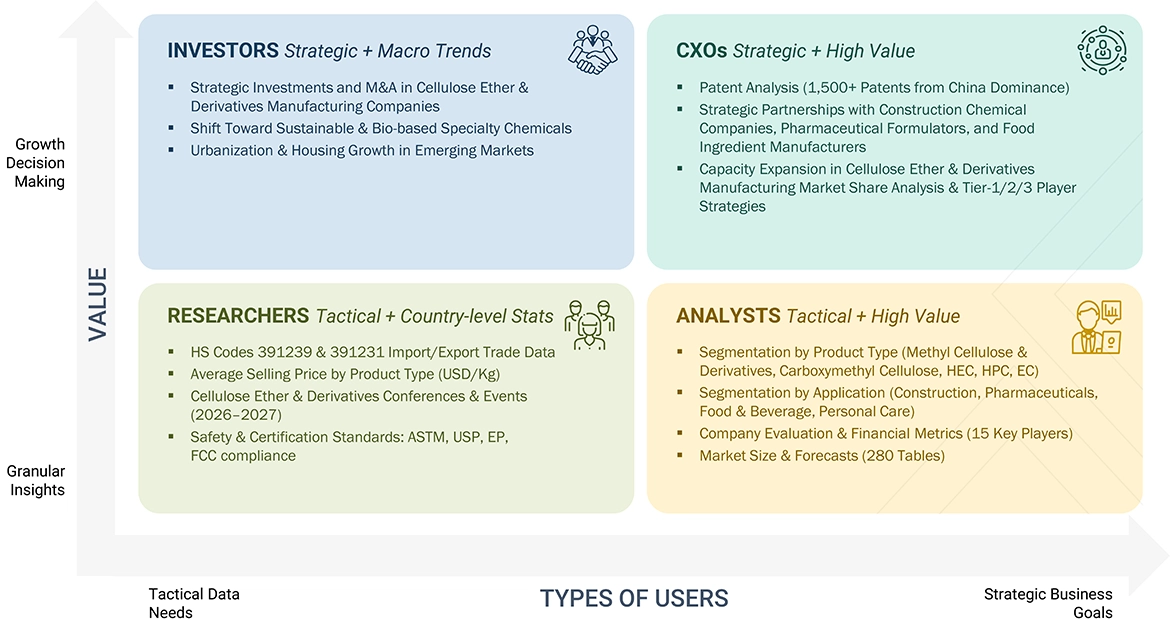
DELIVERED CUSTOMIZATIONS
We have successfully delivered the following deep-dive customizations:
| CLIENT REQUEST | CUSTOMIZATION DELIVERED | VALUE ADDS |
|---|---|---|
| Raw Material Suppliers (Wood Pulp, Cotton Linter, Caustic Soda, Etherifying Agents) |
|
|
| Cellulose Ether & Derivatives Manufacturers (HPMC, CMC, HEC, MC, HPC, EC Producers) |
|
|
| Industrial Formulators & OEMs |
|
|
| End-use Industries (Construction, Pharmaceuticals, Food & Beverage, Paints & Coatings, Personal Care, Oil & Gas) |
|
|
RECENT DEVELOPMENTS
- October 2025 : Ashland named Tilley Distribution as its exclusive US distributor for food, beverage, and nutraceutical cellulosic hydrocolloids, including blanose CMC, benecel MC and HPMC, and aerowhip HPC. This partnership expands Ashland’s commercial reach in the US food &beverage sector by leveraging Tilley’s distribution network and technical sales support.
- December 2023 : Colorcon entered an exclusive multi-year partnership with LOTTE Fine Chemical for the development and manufacture of controlled-release and enteric pharmaceutical formulations using hypromellose cellulose derivatives.
- February 2023 : Ashland launched Benecel MX 100 methylcellulose, a high-viscosity, plant-based hydrocolloid specifically formulated for meat alternatives and other vegetable-based applications such as vegan chicken and seafood, designed to enable large-scale, high-speed production.
Table of Contents
 Exclusive indicates content/data unique to MarketsandMarkets and not available with any competitors.
Methodology
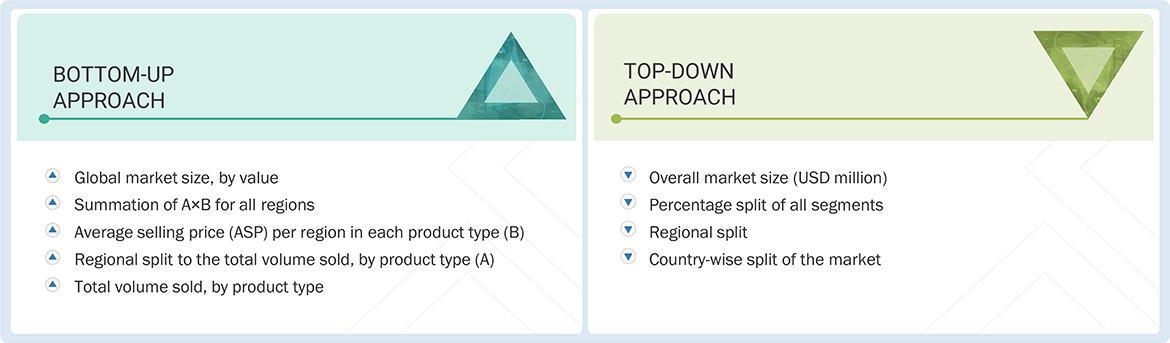
The study involves two major activities in estimating the current market size for the cellulose ether & derivatives market. Exhaustive secondary research was done to collect information on the market, peer market, and parent market. The next step was to validate these findings, assumptions, and sizing with industry experts across the value chain through primary research. Both top-down and bottom-up approaches were employed to estimate the complete market size. Afterward, data triangulation was used to estimate the market size for segments and subsegments.
Secondary Research
Secondary sources referred to for this research study include financial statements of companies offering cellulose ether & derivatives and information from various trade, business, and professional associations. Secondary research has been used to obtain critical information on the industry’s value chain, the total pool of key players, market classification, and segmentation by industry trends, down to the bottom-most level and regional markets. Secondary data were collected and analyzed to determine the overall size of the cellulose ether & derivatives market, which was validated by primary respondents.
Primary Research
Extensive primary research was conducted after obtaining information regarding the cellulose ether & derivatives market scenario through secondary research. Several primary interviews were conducted with market experts from both the demand and supply sides across major countries of North America, Europe, Asia Pacific, the Middle East & Africa, and Latin America. Primary data was collected through questionnaires, emails, and telephonic interviews. The primary sources from the supply side included various industry experts, such as Chief X Officers (CXOs), Vice Presidents (VPs), Directors from business development, marketing, product development/innovation teams, and related key executives from cellulose ether & derivatives industry vendors; system integrators; component providers; distributors; and key opinion leaders.
Primary interviews were conducted to gather insights, including market statistics, revenue data from products and services, market breakdowns, market size estimates, market forecasting, and data triangulation. Primary research also helped in understanding the various trends related to product type, application, and region.
Stakeholders from the demand side, such as CIOs, CTOs, CSOs, and installation teams of the customers/end users who are using cellulose ether & derivatives, were interviewed to understand the buyer’s perspective on the suppliers, products, component providers, and their current usage of cellulose ether & derivatives and future outlook of their business, which will affect the overall market.
Breakup of Primary Research
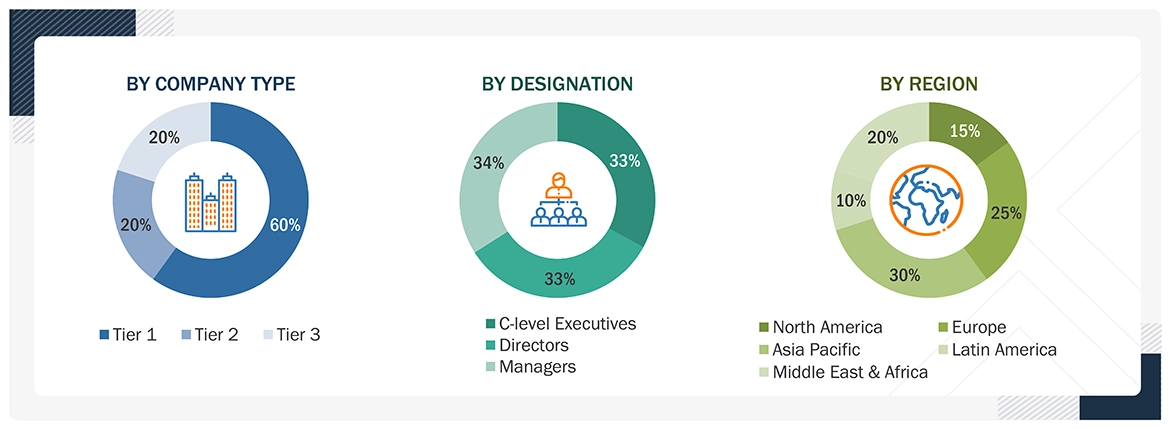
Note: Tiers of companies are based on their revenue in 2024. Tier 1: company revenue greater than USD 1 billion; Tier 2: company revenue between USD 100 million and USD 1 billion; and Tier 3: company revenue less than USD 100 million.
To know about the assumptions considered for the study, download the pdf brochure
Market Size Estimation
The research methodology used to estimate the size of the cellulose ether & derivatives market includes the following details. Market sizing was conducted from the demand side. The market was upsized to accommodate procurements and modernizations of cellulose ether & derivatives across different product types at the regional level. Such procurements provide information on the demand aspects of the cellulose ether & derivatives industry for each product type. For each product type, all possible segments of the cellulose ether & derivatives market were integrated and mapped.
Cellulose Ether & Derivatives Market : Top-Down and Bottom-Up Approach
Data Triangulation
After arriving at the overall size from the market size estimation process explained above, the total market was split into several segments and subsegments. The data triangulation and market breakdown procedures explained below were implemented, where applicable, to complete the overall market engineering process and derive the exact statistics for various market segments and subsegments. The data was triangulated by examining various factors and trends on both the demand and supply sides. In addition, the market size was validated using both top-down and bottom-up approaches.
Market Definition
Cellulose ether & derivatives are defined as polymers, which are produced by the chemical modification of cellulose. It consists of methylcellulose & derivatives, carboxymethyl cellulose, hydroxyethyl cellulose, hydroxypropyl cellulose, and ethyl cellulose. They perform a variety of functions, such as thickening, binding, water retention, emulsifying, and acting as a protective colloid in industries, including pharmaceutical, construction, food & beverage, oil & gas, and paints & coatings.
Key Stakeholders
- Cellulose ether & derivative manufacturers
- Raw material manufacturers
- Government and research organizations
- R&D institutions
- National and local government organizations
- Institutional investors
- Cellulose ether & derivatives suppliers
- End users
Report Objectives
- To define, describe, and forecast the cellulose ether & derivatives market size in terms of volume and value
- To provide detailed information regarding the key factors, such as drivers, restraints, opportunities, and challenges influencing market growth
- To analyze and project the global cellulose ether & derivatives market by product type, application, and region
- To forecast the market size concerning five main regions (along with country-level data), namely, North America, Europe, Asia Pacific, the Middle East & Africa, and Latin America, and analyze the significant region-specific trends
- To strategically analyze micromarkets with respect to individual growth trends, prospects, and contributions of the submarkets to the overall market
- To analyze the market opportunities and the competitive landscape for stakeholders and market leaders
- To assess recent market developments and competitive strategies, such as agreements, contracts, acquisitions, and product developments/product launches, to draw the competitive landscape
- To strategically profile the key market players and comprehensively analyze their core competencies
Available customizations:
MarketsandMarkets offers the following customizations for this market report:
- Additional country-level analysis of the cellulose ether & derivatives market
Product Analysis
- Product matrix, which provides a detailed comparison of the product portfolio of each company’s market
Need a Tailored Report?
Customize this report to your needs
Get 10% FREE Customization
Customize This ReportPersonalize This Research
- Triangulate with your Own Data
- Get Data as per your Format and Definition
- Gain a Deeper Dive on a Specific Application, Geography, Customer or Competitor
- Any level of Personalization
Let Us Help You
- What are the Known and Unknown Adjacencies Impacting the Cellulose Ether & Derivatives Market
- What will your New Revenue Sources be?
- Who will be your Top Customer; what will make them switch?
- Defend your Market Share or Win Competitors
- Get a Scorecard for Target Partners

Custom Market Research Services
We Will Customise The Research For You, In Case The Report Listed Above Does Not Meet With Your Requirements
Get 10% Free CustomisationTESTIMONIALS

We at Nissan Chemicals Corporation have been clients of MarketsandMarkets for more than a year now. We recently consulted MarketsandMarkets for a study, the team at MarketsandMarkets was extremely professional and organized. The business insights were very detailed and aligned well with our expectations that really helped us formulate the Business Plans and device new strategies for development themes. MarketsandMarkets offers a unique combination of expertise and dedicated engagement model. Their research findings have helped us in designing our Pricing Strategy which will make it easier for us to predict the future sales and profits for the next ten years. We look forward to working with MarketsandMarkets in the future.
VP of Strategy & New Business Development
Leading Specialty Chemical Company
The MarketsandMarkets Engagement Model, composed of both the Knowledge Store and advisory custom research, has greatly helped us in understanding our markets and making strategic decisions. The Knowledge Store is a fast way to allow everyone in our organization to understand more about most any market they are interested in. The ability to then get custom research done and get answers to specific strategic questions and market insight has been spectacular. The Markets and Markets team feel more like colleagues than vendors and their services have helped us change our culture where statements of things like growth opportunities and competitive position are always backed by industry research.

Rich Gibson,
Director, Corporate Strategy
Milliken & Company,
Leading Industrial Manufacturer of specialty chemical, floor covering, performance and protective textile materials, and healthcaremilliken.com
MarketsandMarkets is a trusted resource that helps us to better understand markets that are near-adjacencies-whether its technology, value chain or geography. Their Knowledge Store platform provides a dashboard of markets and their characteristics which is easy to use and saves us time.
Adam Shaw,
Market Development and Strategy Manager
AdvanSix Inc. USA,
An American Leader in Chemicalswww.advansix.com
The Knowledge Store from MarketsandMarkets is a valuable tool which has helped my team acquire greater insight in to the end markets that our business serves. This has enabled us to help our company build stronger strategies throughout our planning process.
TOSHIO KINOSHITA
Senior Chif Consultion Research & Consulting Division
Mitsubishi Chemical Research Corporation,
Leading Manufacturer of Chemical Productswww.mitsubishichem-res.co.jp/en/

We recently engaged with MarketsandMarkets for a study, the team not only clearly understood our business objectives but was also extremely professional in the way they handled the entire project. The study was efficiently conducted in a phase-wise manner, and the engagement model furnished us with high-quality business insights that far exceeded our expectations at each phase. We were especially happy that MarketsandMarkets could provide us with both, an English as well as a Japanese version of the study. A special thanks to the Analyst Team and Client Services Team, whose fluency in Japanese enhanced our comfort level, as we could converse with them in our preferred language.
Independent entrepreneurs
Arrow Precision
We approached MarketsandMarkets for study on Proppants Market, and their work exceeded our expectations. The study conducted was comprehensive and enabled us to view the market through the various dimensions. In addition, the team was extraordinarily responsive throughout the process and resolved our queries on time. I strongly recommend MarketsandMarkets and will certainly consider them for additional market assessments we will need in the future.
Global engineering company, Japan
Deputy Manager,
Strategic Planning OfficeThe high-quality insights shared by the MarketsandMarkets team helped us understand the pharmaceutical plant designers in a specific geography. It also captured the risks that we may likely face in communicating with our potential partners. The study would enable us identify partners, which would impact our future growth.
Growth opportunities and latent adjacency in Cellulose Ether & Derivatives Market

Still Researching the
Cellulose Ether & Derivatives Ecosystem?
See the competitors, opportunities, and growth signals shaping it - instantly.
Generate 15+ consulting-grade strategic insights tailored to your growth question.






Masaya
Mar, 2014
General information on cellulose ether and its derivatives and specific focus on cosmetics and personal care.
Patima
Jan, 2014
Report on cellulose ethers concentrating on Asian market.
David
Feb, 2017
Detailed information on the MCAA (monochloroacetic acid) market.
sachchidanand
Jan, 2014
Information on the Cellulose Ethers Market.
Blaine
Jun, 2016
cellulose ether market.
Carlos
Apr, 2017
Market data for Cellulose ether CMC market..
Indranill
Nov, 2019
Import data of Cellulose Ether(HECELLOSE) SBHV for Bangladesh.
Nikhil
Apr, 2014
General information on cellulose ether and its derivatives.