
Mulch Films Market Trends, Growth, and Forecast [Latest]

Mulch Films Market Report by Type (Clear/Transparent, Black Mulch, Colored Mulch, Photo-selective Mulch, Degradable Mulch), Application (Agricultural and Horticulture), Element (LLDPE, LDPE, HDPE, EVA, PLA, PHA), and Region - Global Forecast to 2031




OVERVIEW
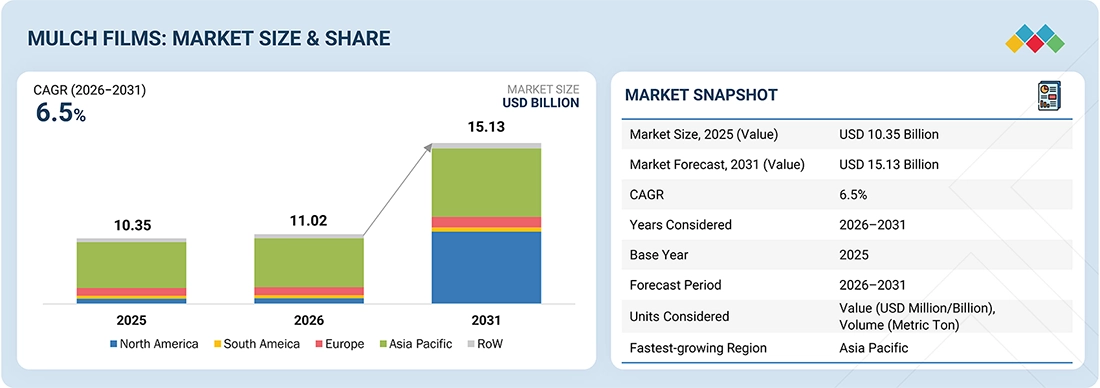
Source: Secondary Research, Interviews with Experts, MarketsandMarkets Analysis
The mulch films market is projected to reach USD 15.13 billion by 2031 from USD 11.02 billion in 2026, at a CAGR of 6.5%. Agricultural mulch films consist of thin polymer sheets that farmers use to cover soil fields and boost their crop output and resource utilization. The products protect soil moisture levels while maintaining optimal soil temperature, controlling weed development and helping plants absorb nutrients. The horticulture industry and row crop farmers use mulch films because they increase crop yields and produce higher quality crops while cutting down on water and herbicide requirements, which makes them essential for both precision farming and sustainable agricultural methods.
KEY TAKEAWAYS
-
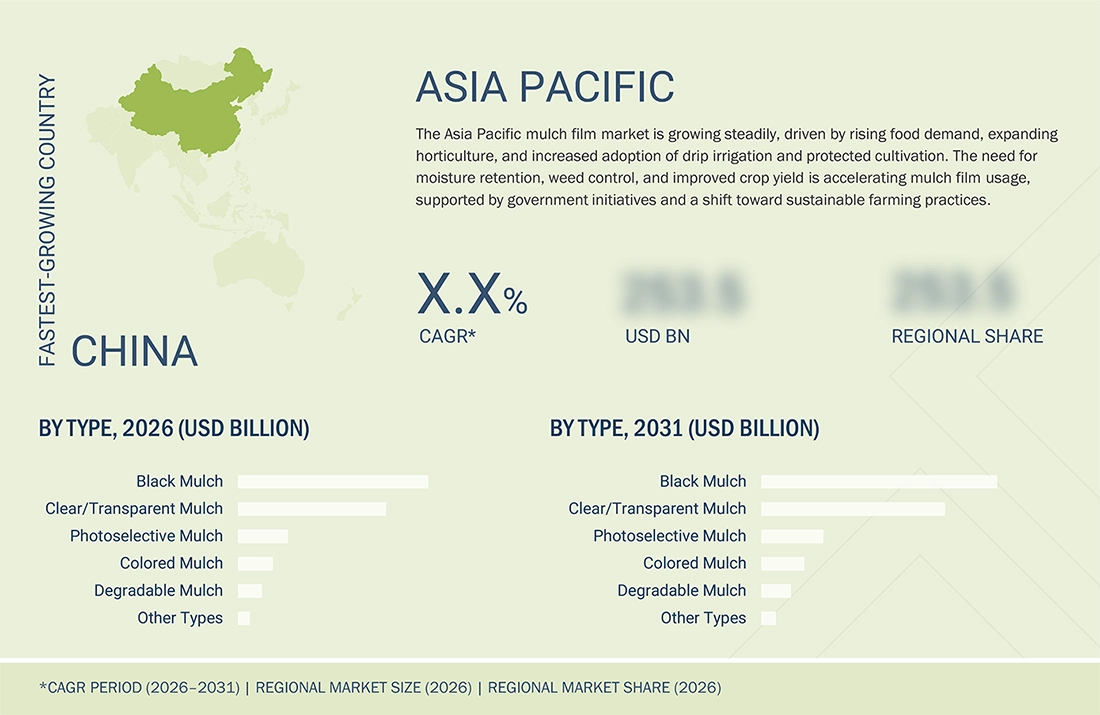
BY REGIONAsia Pacific, in the mulch films market, is estimated to account for the highest revenue share of 69.9% in 2026.
-
BY TYPEBy type, the clear/transparent mulch segment is poised to register the highest CAGR of 7.0% between 2026 and 2031.
-
BY ELEMENTThe conventional polyolefin-based mulch films segment is projected to register the highest CAGR.
-
BY APPLICATIONThe horticulture application segment is projected to grow at the fastest CAGR of 6.7% from 2026 to 2031.
-
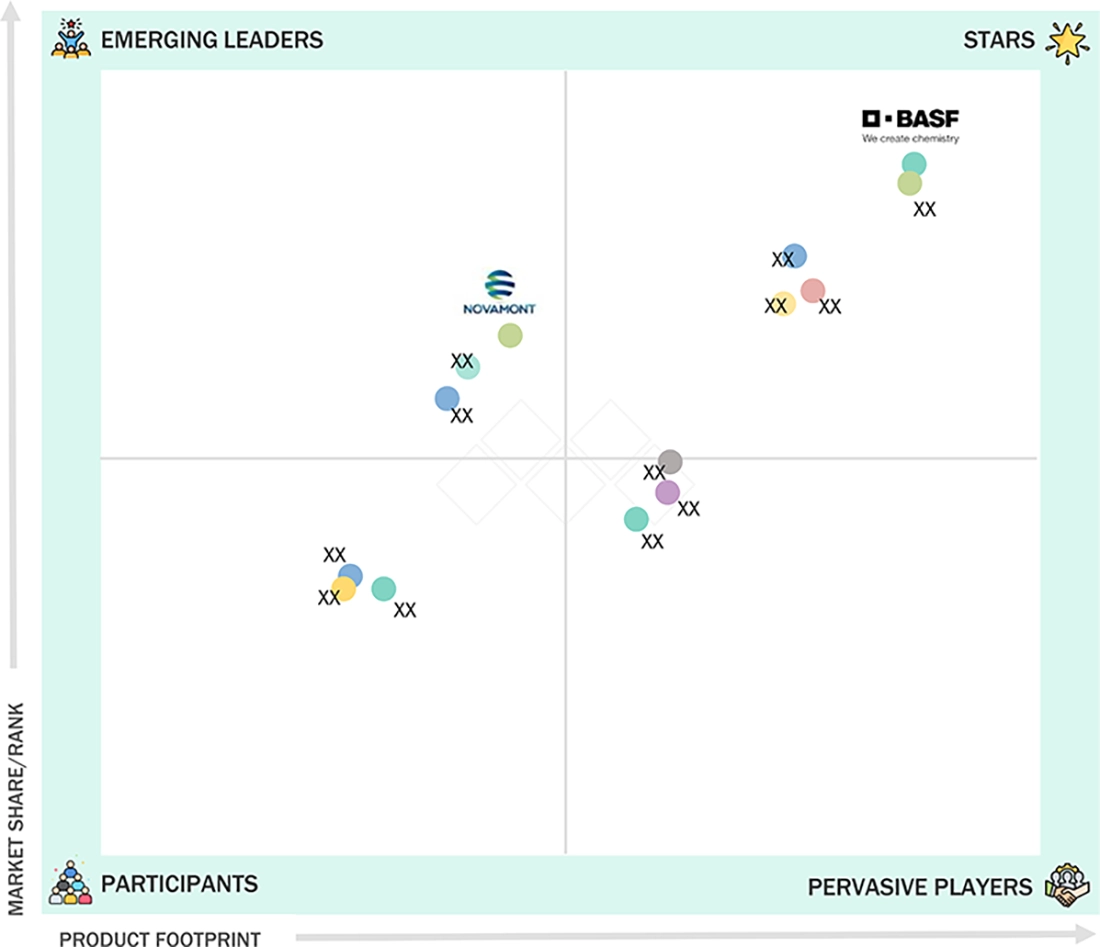
COMPETITIVE LANDSCAPE - KEY PLAYERSBASF SE, Amcor Plc, Dow, Kuraray, and Exxon Mobil Corporation were identified as some of the star players in the mulch films market, given their strong market share and product footprint.
-
COMPETITIVE LANDSCAPE - STARTUPSTURFQUICK AB, FilmOrganic, and Kingfa Sci. & Tech. Co., Ltd., among others, have distinguished themselves among startups and SMEs by securing strong footholds in specialized niche areas, underscoring their potential as emerging market leaders
The mulch films market is projected to reach USD 15.13 billion by 2031 from USD 11.02 billion in 2026, at a CAGR of 6.5%. The market expansion occurs through the mulch films as particular agricultural materials, which they make from polyethylene, biodegradable polymers and photodegradable compounds to create controlled growing conditions above their fields. The system helps to preserve soil water content by decreasing evaporation rates, and it maintains soil temperature at levels that support root growth, while its weed control function stops sunlight from reaching unwanted plants. The use of mulch films leads to better fertilizer use and less soil erosion and it also helps to maintain cleaner crops which have higher quality. Horticulture and fruit and vegetable farming now use this method more because farmers want to achieve better crop yields while using less water and following environmentally friendly agricultural methods.
TRENDS & DISRUPTIONS IMPACTING CUSTOMERS' CUSTOMERS
The mulch films market is disrupted because people prefer biodegradable and compostable materials, which reduce traditional plastic usage to solve environmental issues related to soil pollution. The development of multilayer films together with nanotechnology brings better protection, enhanced light transmission capabilities and crop-specific performance improvements. The resource efficiency of agricultural systems improves through the use of precision agriculture technologies, which include drip irrigation systems and sensor-based monitoring systems. The European Union and various Asian countries enforce strict regulations, which drive companies to develop sustainable products while creating a new market environment that compels manufacturers to adopt circular economy practices and environmentally friendly product development.
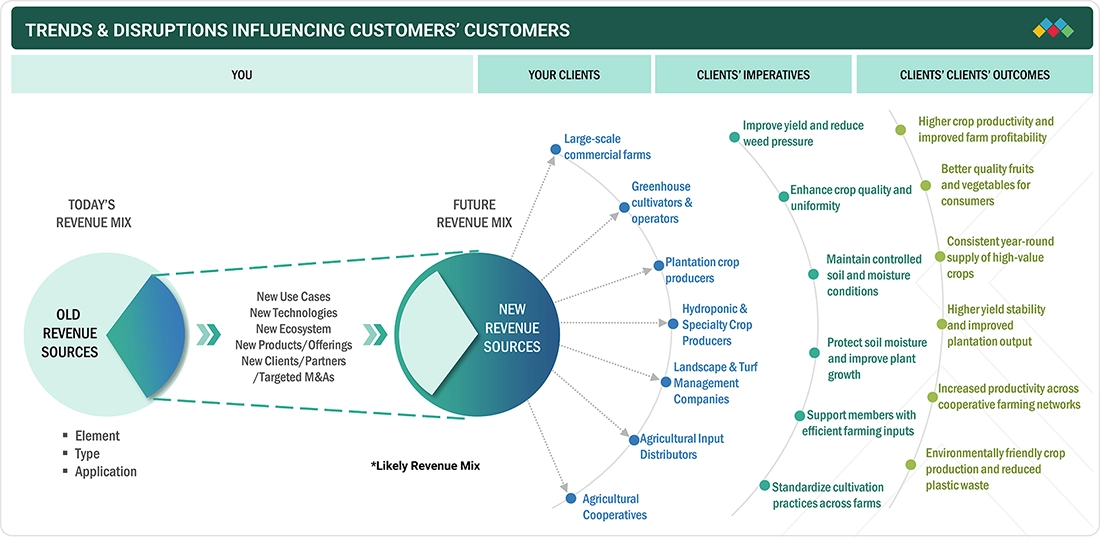
Source: Secondary Research, Interviews with Experts, MarketsandMarkets Analysis
MARKET DYNAMICS

Level
-
Enhancing Crop Productivity Through Microclimate Management

-
Improving Water-Use Efficiency in Irrigated Agriculture


Level
-
??Addressing Agricultural Plastic Waste Accumulation

-
Managing Higher Costs of Biodegradable Alternatives


Level
-
Increasing Adoption of Precision Irrigation and Water Management Practices

-
Accelerating Transition Toward Sustainable and Bio-Based Films


Level
-
Navigating Regulatory Restrictions on Plastic Usage

-
Mitigating Raw Material Price Volatility

Source: Secondary Research, Interviews with Experts, MarketsandMarkets Analysis
Driver: Enhancing Crop Productivity Through Microclimate Management
A key driver of the mulch films is that they create a controlled soil microclimate by optimizing temperature, retaining moisture, and reducing evaporation losses, which directly supports faster germination and improved root development. This controlled environment enhances nutrient uptake efficiency and minimizes weed competition, leading to higher crop yields and better quality produce. As farmers increasingly focus on maximizing output per hectare—especially in horticulture and high-value crops—the role of mulch films as a productivity-enhancing input continues to strengthen.
Restraint: ??Addressing Agricultural Plastic Waste Accumulation
A key restraint is that the widespread use of conventional polyethylene mulch films has led to significant concerns regarding plastic waste accumulation in agricultural soils. Improper disposal and limited recycling infrastructure result in soil contamination, negatively impacting soil health and long-term fertility. Additionally, removal and disposal costs add to farmers’ operational burden. These environmental and economic challenges are restraining adoption, particularly in regions with increasing awareness and stricter environmental norms.
Opportunity: Increasing Adoption of Precision Irrigation and Water Management Practices
A key opportunity is the growing integration of mulch films with precision irrigation systems, such as drip irrigation, which presents strong growth opportunities. Mulch films help optimize water distribution by reducing evaporation and ensuring efficient delivery directly to plant roots. This enhances water-use efficiency, which is critical in water-scarce regions. As governments and agricultural bodies promote efficient irrigation practices, the combined use of mulch films and advanced irrigation technologies is expected to gain significant traction.
Challenge: Navigating Regulatory Restrictions on Plastic Usage
A key challenge in the stringent regulations on plastic usage, particularly in agriculture, is emerging as a key challenge for mulch film manufacturers. Policies aimed at reducing single-use plastics and promoting sustainable alternatives require companies to invest in biodegradable materials and adapt production processes. Compliance with varying regional regulations increases operational complexity and costs. Moreover, inconsistent standards for biodegradable films and limited farmer awareness can hinder the smooth adoption of compliant solutions across different markets.
MULCH FILMS MARKET TRENDS, GROWTH, AND FORECAST [LATEST]: COMMERCIAL USE CASES ACROSS INDUSTRIES
| COMPANY | USE CASE DESCRIPTION | BENEFITS |
|---|---|---|
 |
Development of biodegradable mulch films for horticulture and vegetable cultivation | Reduces plastic waste, improves soil health, and aligns with sustainable farming regulations |
 |
Use of advanced polyethylene mulch films with high durability in row crops | Enhances moisture retention, improves crop yield, and ensures longer field performance |
 |
Application of high-performance mulch films with UV stabilization in open-field farming | Extends film lifespan, improves temperature control, and boosts crop productivity |
 |
Production of customized mulch films (black, transparent, reflective) for crop-specific applications | Optimizes weed control, regulates soil temperature, and enhances crop quality |
Logos and trademarks shown above are the property of their respective owners. Their use here is for informational and illustrative purposes only.
MARKET ECOSYSTEM
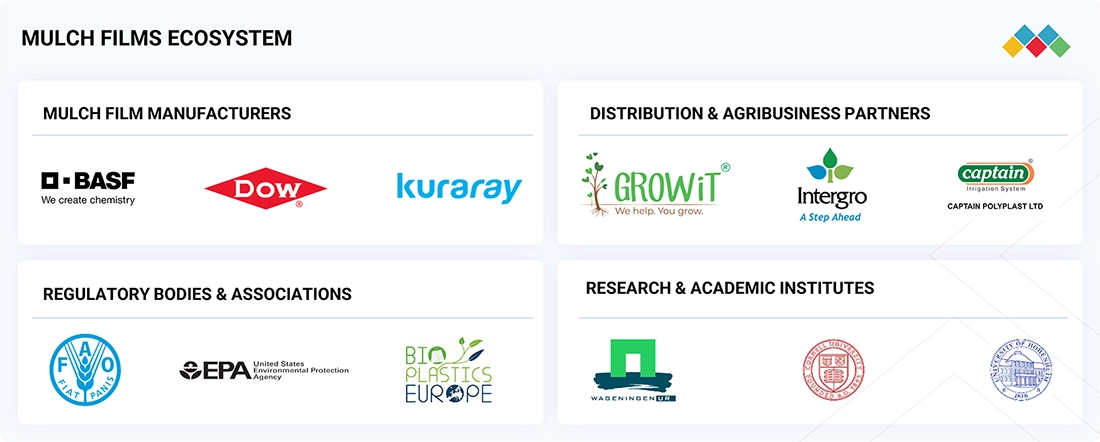
The mulch films market includes several well-established and financially strong manufacturers with diversified specialty nutrition portfolios and advanced formulation capabilities. These companies operate through extensive global distribution networks and focus on high-efficiency nutrient solutions. The mulch film ecosystem consists of raw material suppliers, manufacturers, irrigation system providers, distributors, and growers. Key players such as BASF SE, Dow, RKW Group, Plastika Kritis S.A., and Novamont S.p.A. develop mulch films and specialty crops applications.
Logos and trademarks shown above are the property of their respective owners. Their use here is for informational and illustrative purposes only.
MARKET SEGMENTS
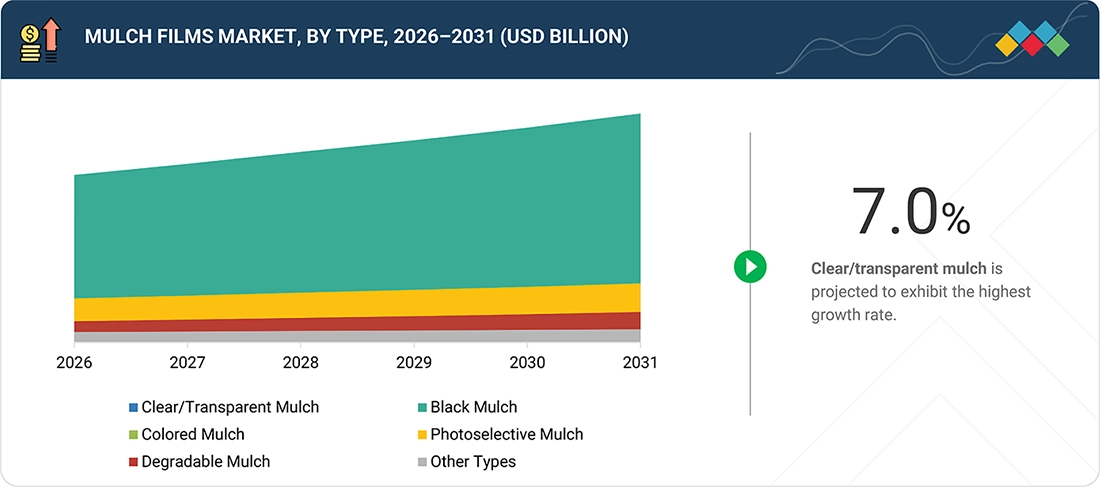
Source: Secondary Research, Interviews with Experts, MarketsandMarkets Analysis
Mulch Films Market, By Type
The market by type includes seven mulch film categories, which include clear/transparent, black, colored, photoselective, degradable, and other mulch films designed to achieve particular agronomic results. Black mulch serves as the most effective solution because it protects against weeds while retaining soil moisture, whereas transparent mulch serves as the primary method for soil solarization, which helps control pathogens. The use of colored and photoselective mulches produces better crop yield results because these mulches reflect light and alter spectral properties, which helps control pests. The market for degradable mulch films, which include biodegradable and photodegradable options, has expanded due to growing sustainability requirements and impending regulatory compliance needs. The development of new mulch products emerges from increased agricultural specialization and advancements in agricultural technologies.
Mulch Films Market, By Element
The market is semented according to elements into three groups: conventional polyolefin-based films, biodegradable & compostable films, and various other specialized materials. The market primarily uses LLDPE, LDPE, HDPE, and EVA as its main materials because those plastics provide both strength and flexibility at a low production cost. The market for biodegradable and compostable films shows rapid growth because people want environmentally friendly products, and plastic waste management rules are becoming stricter. The market provides specialty materials, which include TPS, PBS, and oxo-PE and specialty copolymers to meet specific demands for products that require better degradation speed or stronger mechanical characteristics. The segment is undergoing a transition toward sustainable material innovation and circular economy alignment.
Mulch Films Market, By Application
The mulch films market is divided into two categories based on application: field crops and horticultural crops. Horticultural crops account for the largest share due to their high value and the need for controlled growing conditions in fruits and vegetables. The use of mulch films in these applications helps farmers achieve better crop yields while their soil moisture remains intact and their crop quality improves. Field crops are gradually adopting mulch films, especially in areas that face water shortages and use more mechanized farming methods. The implementation of mulch films in the agricultural sector expands their usage in both sectors through their integration with drip irrigation systems and precision farming techniques, which help farmers use fewer resources while increasing their agricultural output.
REGION
Asia Pacific to be the fastest-growing country in the mulch films market during the forecast period
The mulch films market will grow fastest in the Asia Pacific region during the forecast period because agricultural activities will expand, the population will increase, and people will need more high-yielding crops. The countries of China and India show high rates of adoption because their governments support modern farming methods and irrigation systems. The region's water conservation efforts and public understanding of sustainable farming practices and rising use of biodegradable films drive market expansion for both horticultural and field crop uses.
MULCH FILMS MARKET TRENDS, GROWTH, AND FORECAST [LATEST]: COMPANY EVALUATION MATRIX
Star companies such as BASF SE, along with other leading global mulch film manufacturers, maintain broad and diversified product portfolios, strong brand equity, and significant market influence across key agricultural regions. Emerging leaders such as Intergro, Inc. are expanding rapidly through innovative and sustainable mulch film solutions, particularly biodegradable variants. Established participants maintain stable operations with consistent demand, while pervasive players hold a moderate yet steadily growing presence, driven by regional expansion and increasing adoption of advanced and eco-friendly mulch film technologies.
Source: Secondary Research, Interviews with Experts, MarketsandMarkets Analysis
KEY MARKET PLAYERS
- BASF SE (Germany)
- Amcor Plc (Switzerland)
- DOW (US)
- Kuraray (Japan)
- Exxon Mobil Corporation (US)
- RKW GROUP (Germany)
- Intergro, Inc. (US)
- Green Maneuver Industries LLP (India)
- Plastika Kritis S.A (Greece)
- Kothari Group (India)
- Organix Solutions (US)
- Captain Polyplast Ltd (India)
- SunShine Paper Company (US)
- Tilak Polypack Pvt. Ltd (India)
- IRIS Polymers (India)
MARKET SCOPE
| REPORT METRIC | DETAILS |
|---|---|
| Market Size, 2025 (Value) | USD 10.35 Billion |
| Market Forecast, 2031 (Value) | USD 15.13 Billion |
| Growth Rate | 6.50% |
| Years Considered | 2021–2031 |
| Base Year | 2025 |
| Forecast Period | 2026–2031 |
| Units Considered | Value (USD Million/Billion), Volume (Metric Tons) |
| Report Coverage | Revenue forecast, company ranking, competitive landscape, growth factors, and trends |
| Segments Covered |
|
| Countries Covered | North America, South America, Europe, Asia Pacific, Rest of the World |
WHAT IS IN IT FOR YOU: MULCH FILMS MARKET TRENDS, GROWTH, AND FORECAST [LATEST] REPORT CONTENT GUIDE
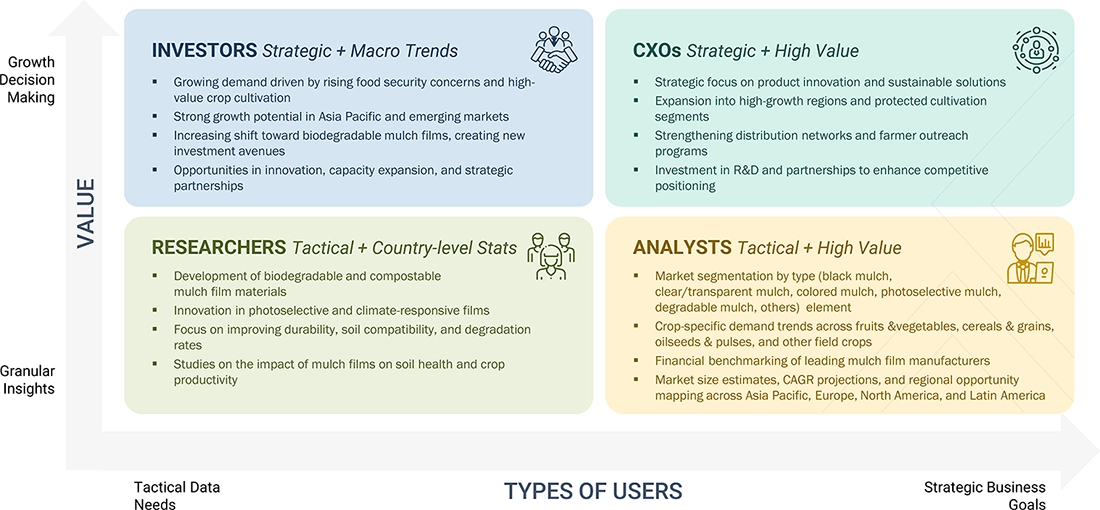
DELIVERED CUSTOMIZATIONS
We have successfully delivered the following deep-dive customizations:
| CLIENT REQUEST | CUSTOMIZATION DELIVERED | VALUE ADDS |
|---|---|---|
| Global-based Mulch Film Manufacturer |
|
|
| Globally Focused Distributor |
|
|
| Global Specialty Film Company |
|
|
| Investor / Private Equity Firm |
|
|
RECENT DEVELOPMENTS
- March 2024 : BASF SE (Germany) launched ecovio mulch film, a soil-biodegradable mulch film developed for sustainable agricultural applications. The product was designed to biodegrade directly in the soil after the cropping cycle, eliminating the need for film collection and disposal while reducing plastic waste in agricultural fields. Ecovio mulch film maintains durability throughout the crop cycle, supporting soil moisture retention, weed suppression, and temperature regulation.
- September 2025 : Dow Inc. (US) launched DOWSIL 5-1050 Polymer Processing Aid, a fluoropolymer-free processing aid designed for film extrusion applications, including agricultural and mulch films. The product was developed to improve polymer processing efficiency by reducing melt fracture and enhancing surface quality during polyethylene film production.
- September 2025 : Armando Alvarez Group (Spain) launched Solar Shrink, an advanced solar-shrinkable mulch film designed for agricultural applications across the EMEA region. The next-generation mulch film featured a darker and thinner structure that shrinks when exposed to solar radiation, enabling improved soil contact and enhanced performance in field conditions.
- February 2024 : Novamont S.p.A. (Italy) launched Mater-Bi Advanced Mulch Film, a biodegradable mulch film designed for agricultural applications. The product offered enhanced tear resistance and extended field performance, making it suitable for crops such as fruits and vegetables grown under intensive cultivation systems.
Table of Contents
 Exclusive indicates content/data unique to MarketsandMarkets and not available with any competitors.
Methodology
The study involved four major activities in estimating the current size of the mulch films market. Exhaustive secondary research was done to collect information on the market, peer market, and parent market. The next step was to validate these findings, assumptions, and sizing with industry experts across the value chain through primary research. Both top-down and bottom-up approaches were employed to estimate the complete market size. After that, data triangulation was used to estimate the market size of segments and subsegments.
Secondary Research
This research study involved the extensive use of secondary sources—directories and databases such as Bloomberg Businessweek and Factiva—to identify and collect information useful for a technical, market-oriented, and commercial study of the mulch films market.
In the secondary research process, various sources such as annual reports, press releases & investor presentations of companies, white papers, certified publications, articles from recognized authors, gold & silver standard websites, directories, and databases were referred to identify and collect information. This research study involved the extensive use of secondary sources—directories and databases such as Bloomberg Businessweek and Factiva—to identify and collect information useful for a technical, market-oriented, and commercial study of the mulch films market.
Secondary research was mainly used to obtain key information about the industry’s supply chain, the total pool of key players, and market classification and segmentation as per the industry trends to the bottom-most level, regional markets, and key developments from both market- and technology-oriented perspectives.
Primary Research
Extensive primary research was conducted after obtaining information regarding the Mulch films market scenario through secondary research. Several primary interviews were conducted with market experts from both the demand and supply sides across major countries of North America, Europe, Asia Pacific, South America, and RoW. Primary data was collected through questionnaires, emails, and telephonic interviews. The primary sources from the supply side included various industry experts, such as Chief X Officers (CXOs), Vice Presidents (VPs), Directors from business development, marketing, research, and development teams, and key opinion leaders. Primary interviews were conducted to gather insights such as market statistics, data on revenue collected from the products and services, market breakdowns, market size estimations, market forecasting, and data triangulation. Primary research also helped in understanding the various trends related to the Mulch films market, core material, shell material, method, technology, and application. Stakeholders from the demand side, such as research institutions and universities, and third-party vendors, were interviewed to understand the buyer’s perspective on the service, and their current usage of encapsulation and the outlook of their business, which will affect the overall market.

Note: The three tiers of the companies are defined based on their total revenues in 2023 or 2024, as per the availability of financial data: Tier 1: Revenue >USD 1 billion; Tier 2: USD 100 million ≤ Revenue ≤ USD 1 billion; Tier 3: Revenue USD 100 million.
To know about the assumptions considered for the study, download the pdf brochure
|
COMPANY NAME |
DESIGNATION |
|
BASF SE (Germany) |
R&D Expert |
|
Amcor Plc (Switzerland) |
Sales Manager |
|
Dow Inc. (US) |
Manager |
|
Kuraray Co., Ltd. (Japan) |
Sales Manager |
|
Exxon Mobil Corporation (US) |
Marketing Manager |
Market Size Estimation
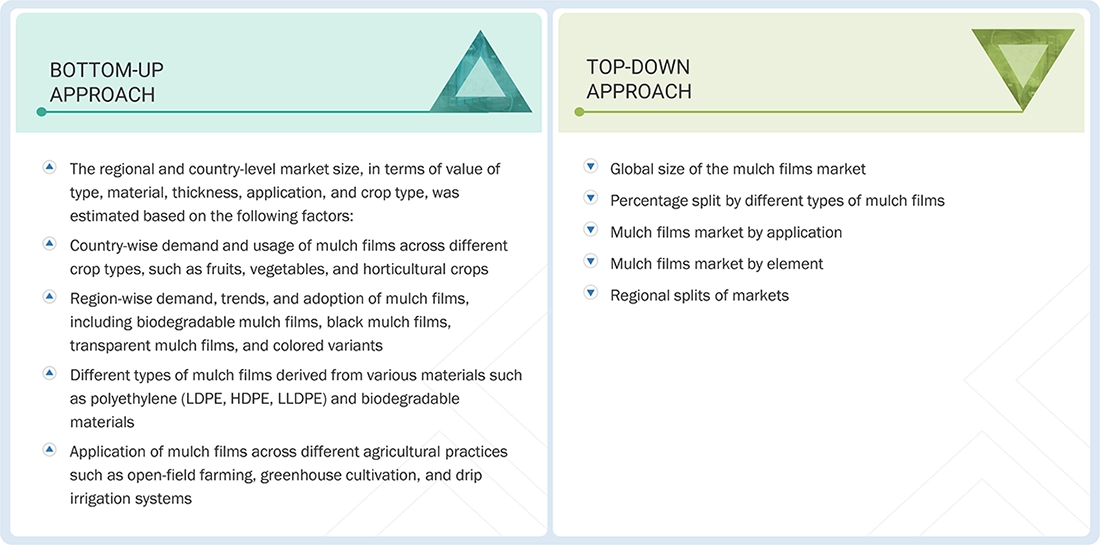
Both the top-down and bottom-up approaches were used to estimate and validate the total size of the mulch films market. These approaches were also used extensively to determine the size of various subsegments in the market. The research methodology used to estimate the market size includes the following details:
- The key players in the industry and the overall markets were identified through extensive secondary research.
- All shares, splits, and breakdowns were determined using secondary sources and verified through primary sources.
- All possible parameters that affect the market covered in this research study were accounted for, viewed in extensive detail, verified through primary research, and analyzed to obtain final quantitative and qualitative data.
- The research included the study of reports, reviews, and newsletters of top market players, along with extensive interviews for opinions from leaders, such as CEOs, directors, and marketing executives.
Mulch Films Market : Top-Down and Bottom-Up Approach
Data Triangulation
After arriving at the overall market size from the estimation process explained above, the total market was split into several segments and subsegments. Data triangulation procedure was employed, wherever applicable, to estimate the overall mulch films market and arrive at the exact statistics for all segments and subsegments. The data was triangulated by studying various factors and trends from the demand and supply sides. Along with this, the market size was validated using both the top-down and bottom-up approaches.
Market Definition
The mulch films market refers to the global industry focused on the production and use of thin plastic or biodegradable films applied over soil to improve agricultural productivity and efficiency. These films help regulate soil temperature, retain moisture, suppress weed growth, and enhance crop yield and quality, making them widely used in open-field farming, greenhouse cultivation, and horticulture. The market includes various types, such as black, transparent, and biodegradable mulch films made from materials like polyethylene (PE) and other advanced polymers. Growth in this market is driven by rising demand for high-yield farming, increasing adoption of modern agricultural practices, and a growing shift toward sustainable and eco-friendly farming solutions across major agricultural regions.
Key Stakeholders
- Raw material suppliers and manufacturers
- Key manufacturers of mulch films
- Distributors, traders, and suppliers of agricultural films
- Importers and exporters
-
Regulatory bodies:
- Food and Drug Administration (FDA)
- Food and Agriculture Organization (FAO)
- The United States Department of Agriculture (USDA)
- European Commission (EC)
- Commercial research & development (R&D) institutions and financial institutions:
-
Associations:
- International Plastics and Agricultural Film Associations
- Micronutrient Manufacturers Association (MMA)
- Organisation for Economic Co-operation and Development (OECD)
Report Objectives
- Determining and projecting the size of the mulch films market with respect to type, crop type, mode of application, source, formulation, and region
- Identifying the attractive opportunities in the market by determining the largest and fastest-growing segments
- Providing detailed information about the key factors influencing the market growth (drivers, restraints, opportunities, and industry-specific challenges)
- Providing the regulatory framework and market entry process related to the mulch films market
- Analyzing the micromarkets with respect to individual growth trends, prospects, and their contribution to the total market
Customization Options:
With the given market data, MarketsandMarkets offers customizations according to company-specific scientific needs.
The following customization options are available for the report:
Product Analysis
- Products Matrix, which gives a detailed comparison of the product portfolio of each company
Geographic Analysis
With the given market data, MarketsandMarkets offers customizations according to company-specific scientific needs
- Further breakdown of Rest of Europe mulch films market into key countries
- Further breakdown of Rest of Asia Pacific mulch films market into key countries
- Further breakdown of Rest of South America mulch films market into key countries
Company Information
- Detailed analyses and profiling of additional market players (up to five)
Need a Tailored Report?
Customize this report to your needs
Get 10% FREE Customization
Customize This ReportPersonalize This Research
- Triangulate with your Own Data
- Get Data as per your Format and Definition
- Gain a Deeper Dive on a Specific Application, Geography, Customer or Competitor
- Any level of Personalization
Let Us Help You
- What are the Known and Unknown Adjacencies Impacting the Mulch Films Market
- What will your New Revenue Sources be?
- Who will be your Top Customer; what will make them switch?
- Defend your Market Share or Win Competitors
- Get a Scorecard for Target Partners

Custom Market Research Services
We Will Customise The Research For You, In Case The Report Listed Above Does Not Meet With Your Requirements
Get 10% Free Customisation





Growth opportunities and latent adjacency in Mulch Films Market