
Protective Films Market

Protective Films Market by Type [Pressure-Sensitive Adhesive (PSA) Films, Non-adhesive/Cling Films], Material [Polyethylene (PE), Polypropylene (PP)], End-use Industry (Automotive & Transportation, Building & Construction), and Region - Global Forecast to 2031




OVERVIEW
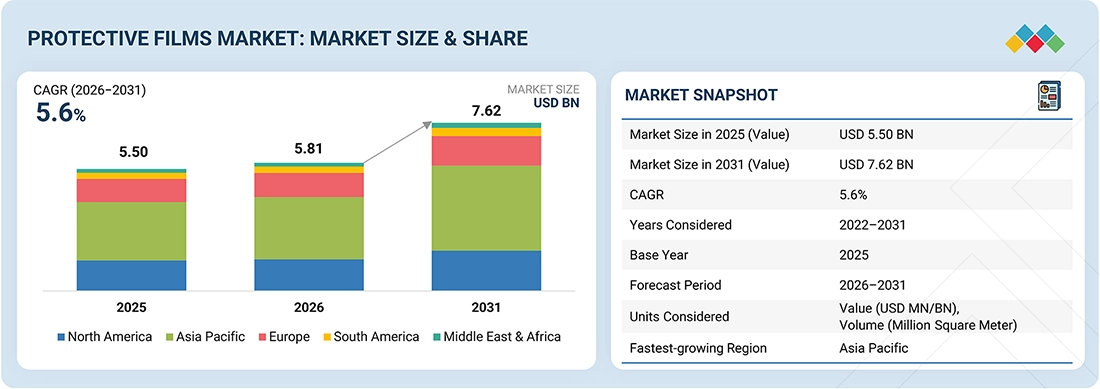
Source: Secondary Research, Interviews with Experts, MarketsandMarkets Analysis
The protective films market is projected to grow from USD 5.81 billion in 2026 to USD 7.62 billion by 2031, at a CAGR of 5.6% during the forecast period. The protective films market will experience growth because of the rising need to protect surfaces against scratches, dust and damage throughout manufacturing, transport and installation. The rapid growth of the electronics, automotive, construction and other industries is also a major contributor to the demand for surface protection solutions. The increased manufacturing of smartphones, display panels and electronics products needs protective films to ensure the quality of products throughout the processing and logistics. Also, a growing consumption of protective films on paint, glass, and interior parts is due to increased automotive manufacturing, including electric vehicles (EVs).
KEY TAKEAWAYS
-
By RegionThe Asia Pacific dominated the protective films market with a share of 48.0% in 2025.
-
By TypeBy type, the pressure-sensitive adhesive (PSA) films segment is expected to register the highest CAGR of 5.8% from 2026 to 2031, in terms of value.
-
By MaterialBy material, the polyethylene (PE) segment is expected to be the leading segment, in terms of value.
-
By End-use IndustryBy end-use industry, the automotive & transportation segment is expected to dominate the market.
-
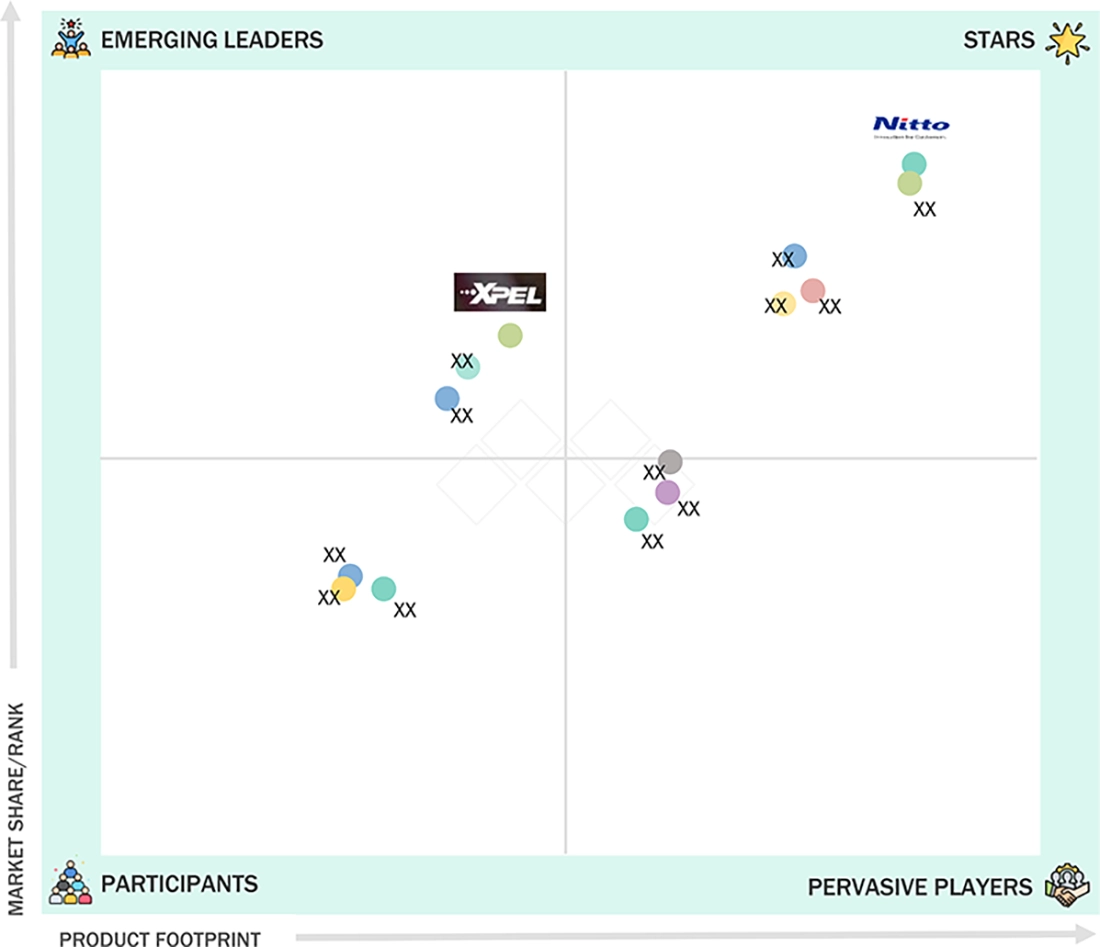
Competitive Landscape - Key PlayersNitto Denko Corporation, 3M, POLIFILM, Eastman Chemical Company, and XPEL were identified as Star players in the protective films market, as they have focused on advanced material innovation, strong global distribution networks, and diversified product portfolios.
-
Competitive Landscape- StartupsEcoplast, MT TAPES, Kao-Chia Plastics, Lamin-x , REEDEE, among others, have distinguished themselves among startups and SMEs due to their niche product offerings, flexible manufacturing capabilities, and regional market expertise.
The protective films are also in demand for building materials such as glass panels, aluminum sheets, and flooring, driven by urbanisation and infrastructure development. The use of protective films by manufacturers is on the increase to minimize product damage, defects, and reduce the cost of repairing or replacing products. Moreover, increased attention to sustainable, recyclable protective films is stimulating innovation and generating new market opportunities.
TRENDS & DISRUPTIONS IMPACTING CUSTOMERS' CUSTOMERS
The market for protective films is becoming more focused towards high-performance and application-specific films that provide superior control over adhesion, scratch resistance, and removability without leaving residue. Concurrently, sustainability pressures are disrupting the market, and manufacturers must innovate with recyclable or less-plastic protective solutions. As well, automation and high-precision manufacturing are promoting more specialized films, which are intended to be used on delicate surfaces and on automated manufacturing lines.
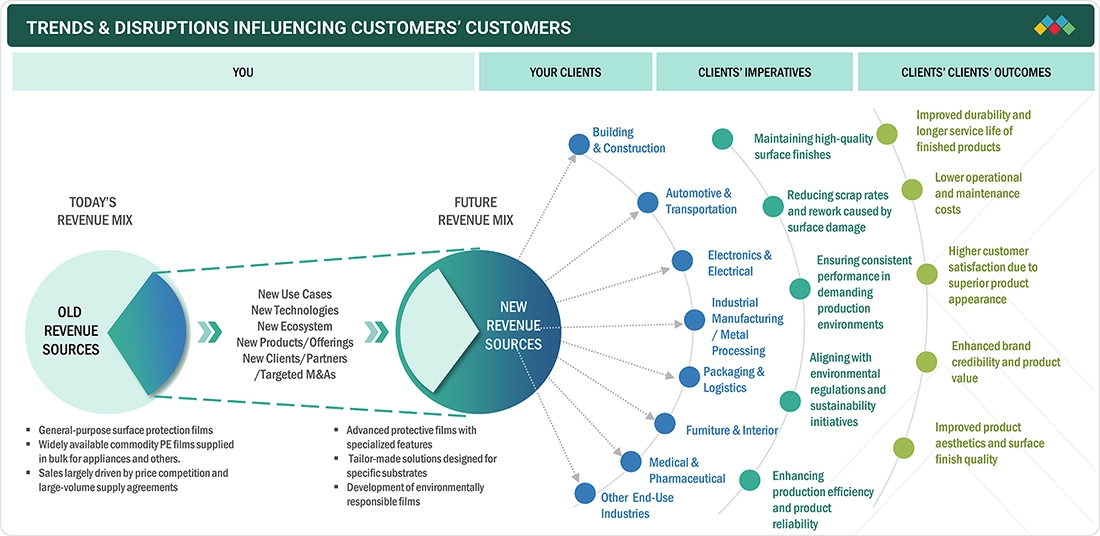
Source: Secondary Research, Interviews with Experts, MarketsandMarkets Analysis
MARKET DYNAMICS

Level
-
Increased demand in transportation

-
Growth in building & construction


Level
-
Difficulty in recycling polymer plastics

-
Volatile raw material prices


Level
-
Growing demand in pharmaceutical & medical applications

-
Growing demand for sustainable protective films


Level
-
Stringent environmental regulations

-
Limited awareness in developing markets

Source: Secondary Research, Interviews with Experts, MarketsandMarkets Analysis
Driver: Increased demand in the transportation industry
The European Automobile Manufacturers' Association reports that global car sales in 2024 totaled 74.6 million, an increase of 2.5% from 2023. The increased manufacturing of passenger cars, commercial cars, and electric cars is increasing the demand for protective films. These are widely used to protect painted surfaces, glass, displays, and internal parts during manufacturing, assembly, transportation, and storage. Protective films prevent scratches, abrasion, and dust contamination, among other damages on the surface, which is important in the preservation of quality products and minimizes the cost of repair. Moreover, the rise in popularity of high-quality cars and other technologically advanced car parts is also enhancing the use of protective film in the transport sector.
Restraint: Difficulty in recycling polymer plastics
Polyethylene (PE), polypropylene (PP), polyvinyl chloride (PVC), and polyethylene terephthalate (PET) are the most frequently used polymer materials in manufacturing most types of protective films. They are used to avoid scratches, dusting, and damage to surfaces in the course of manufacturing, transportation, and installation. They are, however, easily disposed of after the product reaches the end user or after installation, since these films are usually designed to last only a short time. Furthermore, protective films tend to be multilayered thin structures that are covered with adhesive layers, and it is challenging to separate and recycle them with traditional recycling technologies. Consequently, a large section of the waste from protective films is deposited in landfills or incineration plants and pollutes the environment and puts a strain on the regulatory bodies and the environmental management agencies to minimise the amount of plastic waste.
Opportunity: Growing demand for sustainable protective films
Protective films are extensively applied in the industries of electronics, automotive, construction, and packaging to cover surfaces during their manufacturing, transportation, and installation. Manufacturers, in turn, are coming up with recyclable, biodegradable, and bio-based protective films, and thinner film structures and solvent-free adhesives to minimize material use and enhance sustainability. Simultaneously, the tighter restrictions on environmental laws and corporate sustainability targets are forcing companies to use recyclable and eco-friendly materials. This change is giving rise to new protective film solutions that will favour the practices of a circular economy and lower environmental impact.
Challenge: Stringent environmental regulations
There have been tighter regulations on plastic use, waste disposal, and chemical emissions by governments and other regulatory bodies. Manufacturers of protective films are required to observe environmental standards of manufacturing polymer, adhesive production, and plastic waste disposal. These were some of the regulatory necessities that may raise the cost of production and make operations of companies in the protective films market difficult.
PROTECTIVE FILMS MARKET: COMMERCIAL USE CASES ACROSS INDUSTRIES
| COMPANY | USE CASE DESCRIPTION | BENEFITS |
|---|---|---|
 |
Protective surface film (Polymask) was applied to automotive fenders during manufacturing and transportation to shield painted metal panels from scratches, dust, and handling damage throughout the supply chain and assembly process. | Helps maintain paint quality and surface finish, reduces rework and repair costs, and ensures that automotive components reach assembly lines and dealerships in optimal condition. |
 |
Automotive customization shop SS Customs used Avery Dennison Supreme Defense Matte Paint Protection Film (PPF) to protect high-end vehicles from scratches, debris, and environmental damage while maintaining a premium matte finish during vehicle customization and detailing. | Provides high scratch resistance, self-healing properties, and a smooth OEM-like finish, while improving installation quality and protecting luxury vehicles from daily wear, road debris, and environmental exposure. |
Logos and trademarks shown above are the property of their respective owners. Their use here is for informational and illustrative purposes only.
MARKET ECOSYSTEM
The protective films market has an ecosystem with various stakeholders integrated into the value chain, including raw material suppliers, film manufacturers, adhesive manufacturers, distributors, and end-use industries. Polyethylene, polypropylene, and other materials are the polymers supplied by the suppliers of raw materials and are also involved in the making of protective films, which require specialty adhesives. These materials are converted by film manufacturers into surface protection solutions, which they provide to industries either through distributors or directly. The key end users are automotive, electronics, building and construction, appliances, and packaging that utilize protective films to ensure that damage to the surface of the product during the manufacturing process, during transportation, and during installation.
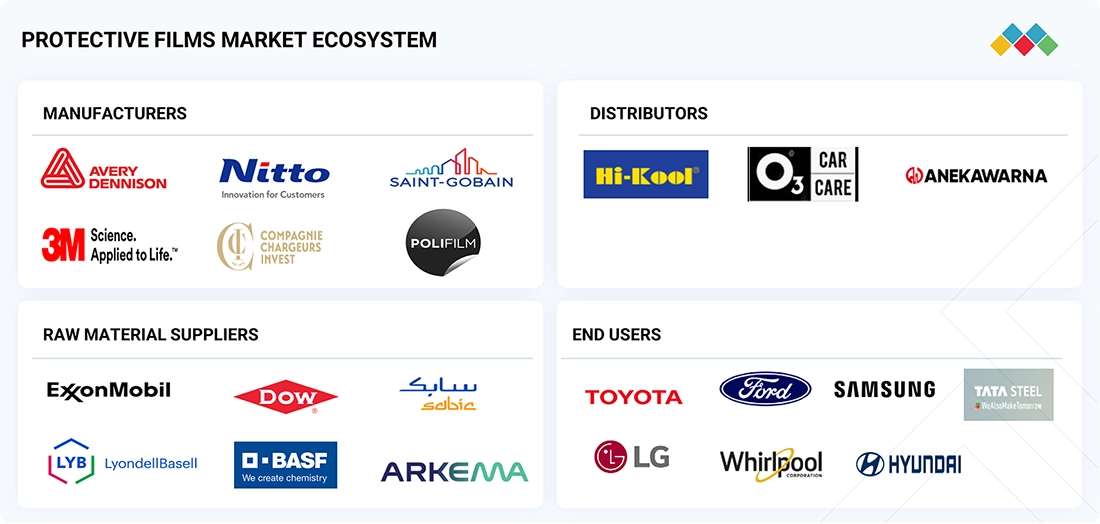
Logos and trademarks shown above are the property of their respective owners. Their use here is for informational and illustrative purposes only.
MARKET SEGMENTS
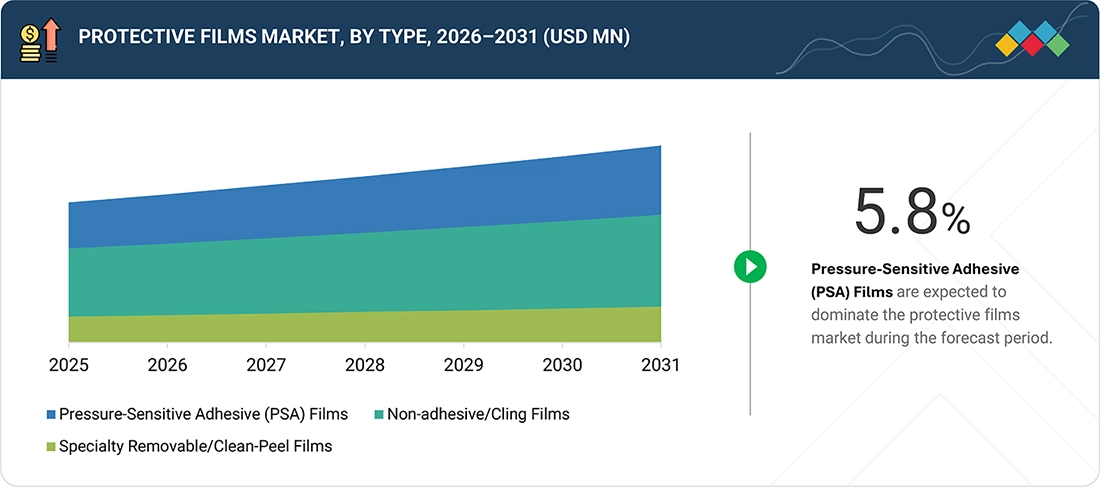
Source: Secondary Research, Interviews with Experts, MarketsandMarkets Analysis
Protective Films Market, By Type
Pressure-sensitive adhesive (PSA) films accounted for the largest share of the protective films market in 2025, because they are easy to apply and can be removed without heat, water, or solvents. These are films that offer good but temporary bonding and, hence, can be used to cover surfaces during the manufacturing, transportation, and installation process. PSA films are highly utilized in the automotive, electronic, construction, and appliance sectors of the economy due to the fact that they ensure that scratches, dust-related damages, and surface tearing do not occur. Their low cost, flexibility, and ability to be used with various substrates, including metal, glass, and plastic, also contribute to their leading position in the market.
Protective Films Market, By Material
In 2025, polyethylene (PE) accounted for the largest segment of the protective films market due to the presence of a good combination of flexibility, durability, and cost-effectiveness. PE films are good, moisture-resistant, impact-resistant, and scratch-resistant on the surfaces and are useful in a broad range of applications. They are commonly employed in construction products, metal sheets, glass panels, automotive parts, and appliances in processing and transportation. Moreover, PE films are simple to process, light, and can be done in different thicknesses and adhesive combinations, and this enhances their usage in many industries.
Protective Films Market, By End-use Industry
In 2025, automotive & transportation accounted for the largest share of the protective films market as the necessity to protect painted surfaces, displays, trims, and interior parts continues to rise in the course of the manufacturing and shipping of vehicles. The protective films avoid scratches, abrasion, and contamination during assembly, logistics, and dealership operations. The manufacturing of passenger cars, electric vehicles (EVs), and high-end cars has also increased, which has further generated the need to improve surface protection.
REGION
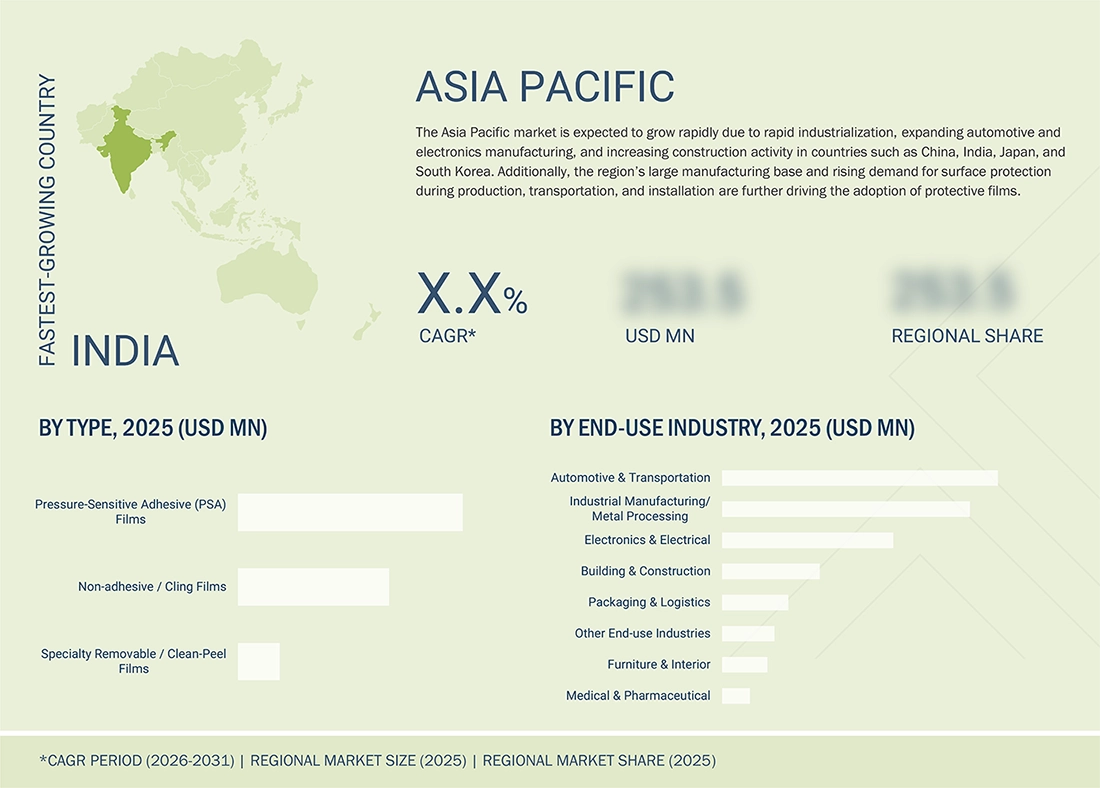
Asia Pacific is leads the global protective films market
By region, the Asia Pacific is the leading region in the protective films market because of the booming growth of electronics & electrical, automotive & transportation, and building construction sectors in countries like China, India, Japan, and South Korea. The region hosts major manufacturing of smartphones, display panels, and semiconductors, which require protective films to prevent scratches and other surface damage during manufacturing and transportation. A rapid increase in urbanization and infrastructure development is also accelerating the need for surface protection films in building materials and appliances. The increase in car manufacturing and EV production also increases the demand for protective films in the Asia Pacific.
PROTECTIVE FILMS MARKET: COMPANY EVALUATION MATRIX
In the protective films market matrix, Nitto Denko Corporation (Star) leads due to its strong expertise in advanced adhesive technologies and high-performance functional films. The company has extensive global manufacturing facilities and strong R&D capabilities. XPEL (Emerging Leader) is gaining visibility due to its strong specialization in automotive paint protection films (PPF) and surface protection solutions for vehicles.
Source: Secondary Research, Interviews with Experts, MarketsandMarkets Analysis
KEY MARKET PLAYERS
- Nitto Denko Corporation (Japan)
- Avery Dennison Corporation (US)
- 3M (US)
- Saint-Gobain (France)
- Compagnie Chargeurs Invest (France)
- POLIFILM (Germany)
- DuPont (US)
- Eastman Chemical Company (US)
- XPEL (US)
- Toray Industries, Inc. (Japan)
- Pregis LLC (US)
- Lintec Corporation (Japan)
- Bischof+Klein SE & Co. KG (Germany)
- Presto Tape (US)
- Ecoplast Ltd (India)
MARKET SCOPE
| REPORT METRIC | DETAILS |
|---|---|
| Market Size in 2025 (Value) (Base Year) | USD 5.50 Billion |
| Market Size in 2026 (Value) (Estimated Year) | USD 5.81 Billion |
| Market Forecast in 2031 (Value) (Forecast Year) | USD 7.62 Billion |
| CAGR | 5.6% |
| Years Considered | 2022–2031 |
| Base Year | 2025 |
| Forecast Period | 2026–2031 |
| Units Considered | Value (USD Million/Billion), Volume (Million Square Meter) |
| Report Coverage | Revenue forecast, company ranking, competitive landscape, growth factors, and trends |
| Segments Covered |
|
| Regions Covered | North America, Europe, Asia Pacific, South America, and Middle East & Africa |
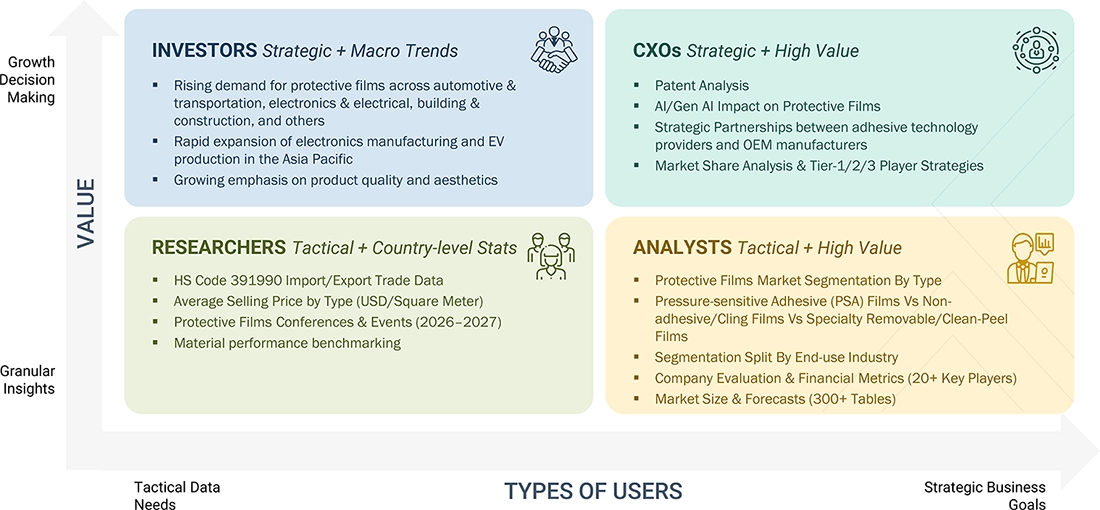
WHAT IS IN IT FOR YOU: PROTECTIVE FILMS MARKET REPORT CONTENT GUIDE
DELIVERED CUSTOMIZATIONS
We have successfully delivered the following deep-dive customizations:
| CLIENT REQUEST | CUSTOMIZATION DELIVERED | VALUE ADDS |
|---|---|---|
| North America-based Protective Films Market | Detailed company profiles of protective films market competitors (financials, product portfolio, production capacity), type (pressure-sensitive adhesive (PSA) films, non-adhesive/cling films, and specialty removable/clean-peel films), material (polyethylene (PE), polypropylene (PP), polyvinyl chloride (PVC), polyethylene terephthalate (PET), polyurethane (PU), and other materials), and end-use industry (building & construction, automotive & transportation, electronics & electrical, industrial manufacturing/metal processing, and other end-use industries) |
|
| Asia Pacific-based Protective Films Market | Detailed company profiles of protective films market competitors (financials, product portfolio, production capacity by type, material, and end-use industry) |
|
RECENT DEVELOPMENTS
- September 2025 : XPEL, Inc., a global leader in protective films and coatings, has introduced its COLOR Paint Protection Film (PPF) product line. This new solution combines the high-performance vehicle paint protection the company is known for with 16 colors, allowing vehicle owners to both protect and customize their cars.
- February 2023 : Eastman Chemical Company acquired Ai-Red Technology (Dalian) Co., Ltd., a manufacturer and supplier of paint protection and window films serving the automotive and architectural markets in the Asia-Pacific region.
- February 2022 : POLIFILM acquired pro dis GmbH, bringing a long-standing trading partner into the POLIFILM PROTECTION group, one of the world’s leading manufacturers of innovative surface protection films. Pro dis GmbH has extensive expertise in understanding customer requirements and business practices across key markets in Central, South-Eastern, and Eastern Europe. Through this acquisition, POLIFILM aimed to strengthen and expand its core business in important sales regions.
Table of Contents
 Exclusive indicates content/data unique to MarketsandMarkets and not available with any competitors.
Methodology
The study involved four major activities to estimate the current size of the global protective films market. Exhaustive secondary research was conducted to gather information on the market, the peer product market, and the parent product group market. The next step was to validate these findings, assumptions, and sizes with industry experts across the protective films value chain through primary research. The top-down and bottom-up approaches were employed to estimate the overall size of the protective films market. After that, market breakdown and data triangulation were used to determine the sizes of the market's segments
Secondary Research
The market for companies offering protective films is derived from secondary data from paid and unpaid sources, analysis of the product portfolios of major companies in the ecosystem, and ratings based on performance and quality. For this study, various secondary sources, such as Business Standard, Bloomberg, the World Bank, and Factiva, were referred to identify and collect information on the protective films market. In the secondary research process, various sources were consulted to identify and collect information for the study. Secondary sources included annual reports, press releases, and investor presentations of protective films vendors, forums, certified publications, and whitepapers. The secondary research was used to obtain critical information on the industry’s value chain, the total pool of key players, market classification, and segmentation from the market and technology-oriented perspectives.
Primary Research
In the primary research process, various primary sources from the supply and demand sides were interviewed to obtain qualitative and quantitative information for this report. The primary sources on the supply side included industry experts, such as chief executive officers (CEOs), vice presidents (VPs), marketing directors, technology and innovation directors, and other key executives from several companies and organizations operating in the protective films market. After the complete market engineering (calculations for market statistics, market breakdown, market size estimations, market forecasting, and data triangulation), extensive primary research was conducted to gather information and verify and validate the critical numbers arrived at.
Primary research was also conducted to identify segmentation types, industry trends, the competitive landscape of protective films offered by various market players, and key market dynamics, including drivers, restraints, opportunities, challenges, trends, and key player strategies. In the complete market engineering process, the top-down and bottom-up approaches and several data triangulation methods were extensively used to perform the market estimation and market forecasting for the overall market segments and subsegments listed in this report. Extensive qualitative and quantitative analysis was performed across the complete market engineering process to present key information/insights throughout the report.
The following is the breakdown of primary respondents:
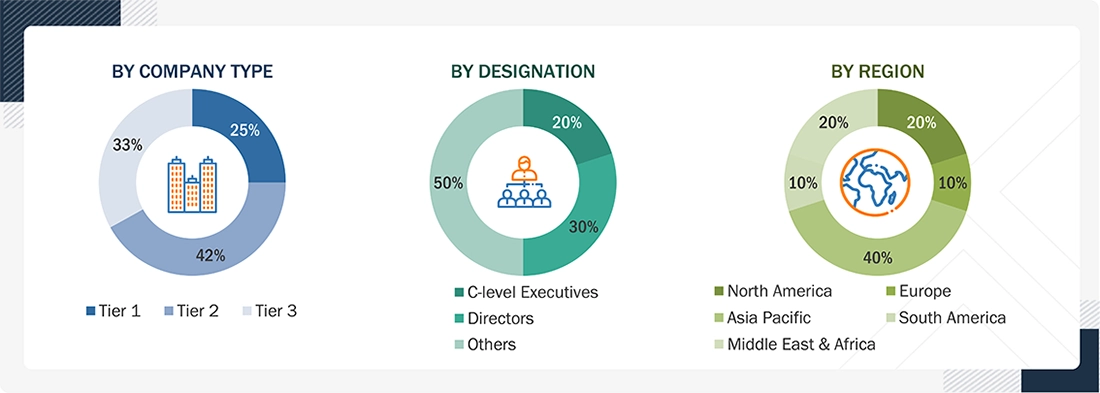
Notes: Other designations include sales, marketing, and product managers.
Tier 1: >USD 1 Billion; Tier 2: USD 500 million–1 Billion; and Tier 3: <USD 500 million
To know about the assumptions considered for the study, download the pdf brochure
Market Size Estimation
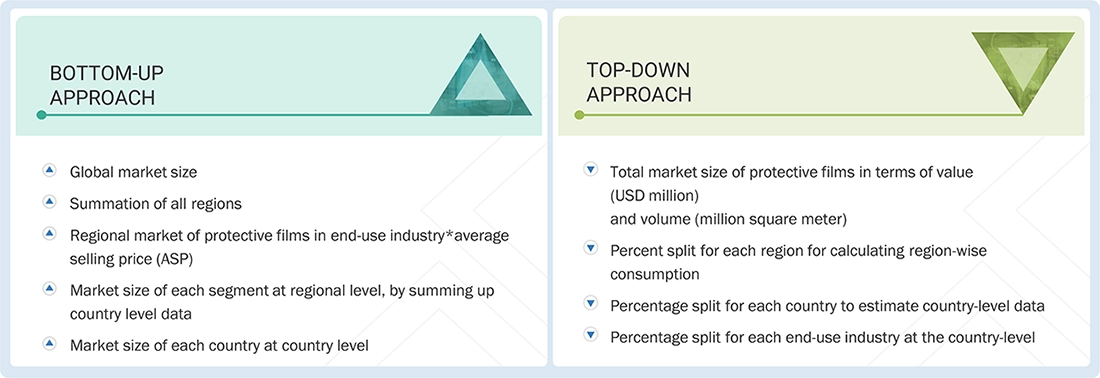
The top-down and bottom-up approaches were used to estimate and validate the size of the global protective films market. These approaches were also widely used to estimate the sizes of various dependent market segments. The research methodology used to estimate the market size included the following:
Protective Films Market: Top-Down and Bottom-Up Approach
Data Triangulation
After determining the overall market size using market sizing processes, the market was split into several segments and subsegments. The data triangulation and market breakup procedures were employed, wherever applicable, to complete the overall market engineering process and arrive at the exact statistics of each market segment and subsegment. The data was triangulated by examining various factors and trends on both the demand and supply sides.
Market Definition
A protective film is a thin, flexible layer of material applied to surfaces to protect them from damage such as scratches, abrasion, dust, moisture, and chemical exposure. These films serve as temporary or permanent protective barriers during manufacturing, transportation, storage, installation, or end use. They are commonly produced from materials such as polyethylene (PE), polypropylene (PP), polyvinyl chloride (PVC), polyethylene terephthalate (PET), polyurethane (PU), polycarbonate (PC), and others. Protective films may be designed with pressure-sensitive adhesives (PSA), non-adhesive or cling layers, or specialty removable and clean-peel adhesives that allow easy application and residue-free removal.
Over time, protective film technology has evolved substantially, resulting in modern films that are lightweight, durable, highly transparent, and provide strong surface protection. Advancements in polymer materials, adhesives, and coating technologies have enhanced the overall performance and functionality of these films. As a result, modern protective films can incorporate advanced features such as UV resistance, anti-static properties, and self-healing capabilities. These innovations improve durability, extend the lifespan of protected surfaces, and enable protective films to meet the increasingly demanding requirements of various industrial and commercial applications.
Protective films are widely used across numerous industries to maintain product quality, appearance, and durability. Key end-use sectors include building & construction, automotive & transportation, electronics & electrical, industrial manufacturing & metal processing, packaging & logistics, furniture & interior, and medical & pharmaceutical industries. By protecting surfaces such as painted panels, glass, metals, plastics, and electronic displays from damage during handling and use, protective films help extend product lifespan, reduce repair or replacement costs, and preserve the aesthetic and functional value of materials and finished products.
Key Stakeholders
- Raw material suppliers
- Protective films manufacturers
- Adhesive & coating technology providers
- Film converters and processors
- Distributors and suppliers
- OEMs (Original Equipment Manufacturers)
- Installers and applicators
- R&D institutions
- Regulatory bodies and standards organizations
- End-users
Report Objectives
- To define, describe, and forecast the size of the global protective films market, by type, material, and end-use industry, in terms of value and volume
- To forecast the market size of segments for North America, Europe, Asia Pacific, South America, and the Middle East & Africa, along with their respective countries, in terms of value and volume
- To provide detailed information on the significant drivers, restraints, opportunities, and challenges influencing the market
- To strategically analyze micromarkets concerning individual growth trends, prospects, and their contribution to the market
- To assess the growth opportunities in the market for stakeholders and provide details on the competitive landscape for market leaders
- To strategically profile key players and comprehensively analyze their market shares and core competencies
- To analyze competitive developments, such as product launches, expansion, acquisitions, and agreements in the protective films market
- To provide the impact of AI/Gen AI on the market
- To provide the macroeconomic outlook for each region covered under the study, and the impact of the US tariffs on the market
Available customizations:
Based on the given market data, MarketsandMarkets offers customizations tailored to client-specific needs.
The following customization options are available for the protective films report:
Product Analysis
-
A product matrix that gives a detailed comparison of the product portfolio of each company
Regional Analysis
- A further breakdown of the protective films market for additional countries
Company Information
-
Detailed analysis and profiling of additional market players (up to five)
Need a Tailored Report?
Customize this report to your needs
Get 10% FREE Customization
Customize This ReportPersonalize This Research
- Triangulate with your Own Data
- Get Data as per your Format and Definition
- Gain a Deeper Dive on a Specific Application, Geography, Customer or Competitor
- Any level of Personalization
Let Us Help You
- What are the Known and Unknown Adjacencies Impacting the Protective Films Market
- What will your New Revenue Sources be?
- Who will be your Top Customer; what will make them switch?
- Defend your Market Share or Win Competitors
- Get a Scorecard for Target Partners

Custom Market Research Services
We Will Customise The Research For You, In Case The Report Listed Above Does Not Meet With Your Requirements
Get 10% Free Customisation
Still Researching the
Protective Films Ecosystem?
See the competitors, opportunities, and growth signals shaping it - instantly.
Generate 15+ consulting-grade strategic insights tailored to your growth question.






Growth opportunities and latent adjacency in Protective Films Market