
Microspheres Market

Microspheres Market by Type (Hollow, Solid), Raw Material (Glass, Ceramic, Fly Ash, Polymer, Metallic), Application (Building & Construction, Medical Technology, Cosmetics & Personal Care, Automotive, Oil & Gas) - Global Forecast to 2031




OVERVIEW
Source: Secondary Research, Interviews with Experts, MarketsandMarkets Analysis
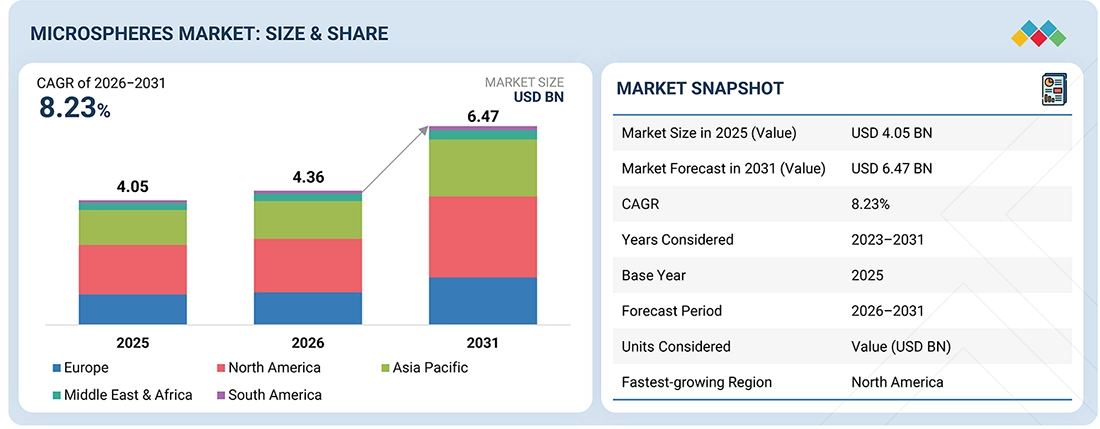
The microspheres market is projected to grow from USD 4.36 billion in 2026 to USD 6.47 billion by 2031, at a CAGR of 8.23%. Microspheres are small, spherical particles whose sizes usually range from 1 to 1,000 micrometers and are composed of different materials, including glass, polymers, ceramics, or metals. They have many advantages, including a lightweight nature, controlled size of particles, and an ability to have various properties such as thermal insulation, enhancement of flow, and density reduction. Multiple factors are contributing to the growth of this market, including rising demand from industries such as construction, automotive, healthcare, and cosmetics, as well as an increased emphasis on enhancing performance and reducing material waste.
KEY TAKEAWAYS
-
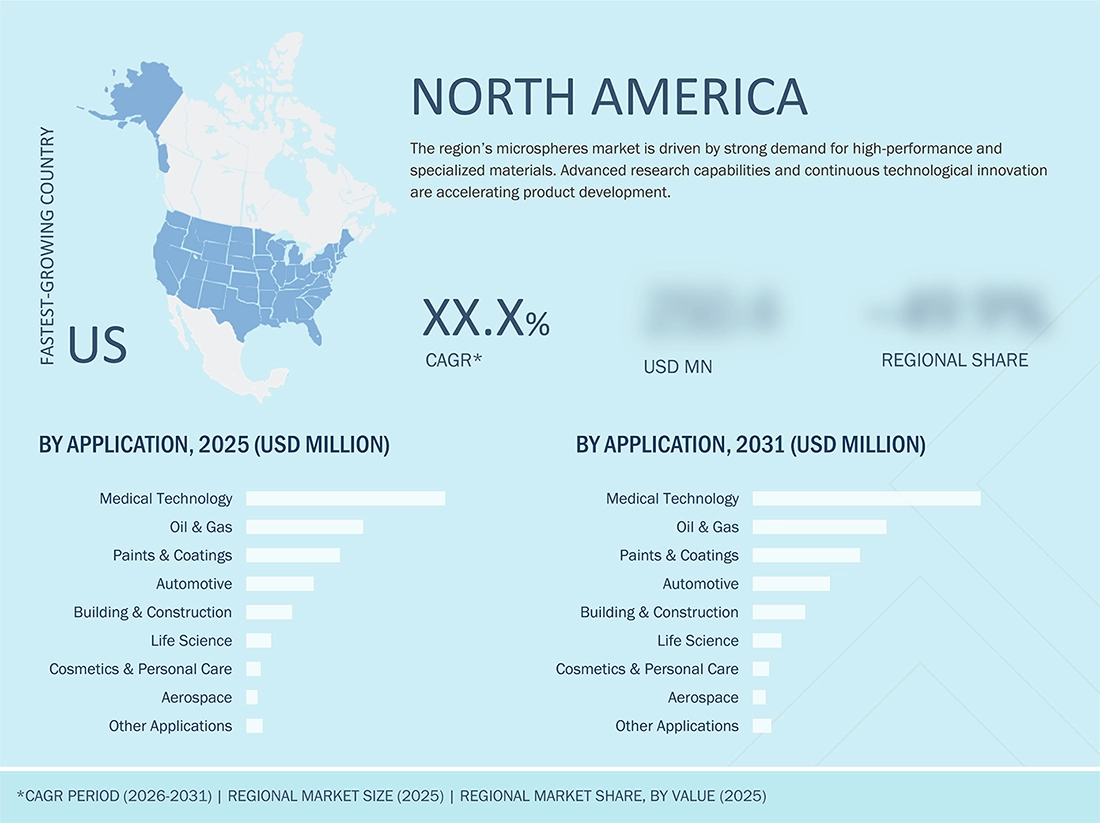
BY REGIONNorth America accounted for 39.7% of the global microspheres market in 2025 in terms of value.
-
BY TYPEThe hollow segment led the microspheres market in 2025.
-
BY RAW MATERIALThe polymer segment accounted for the largest market share in 2025.
-
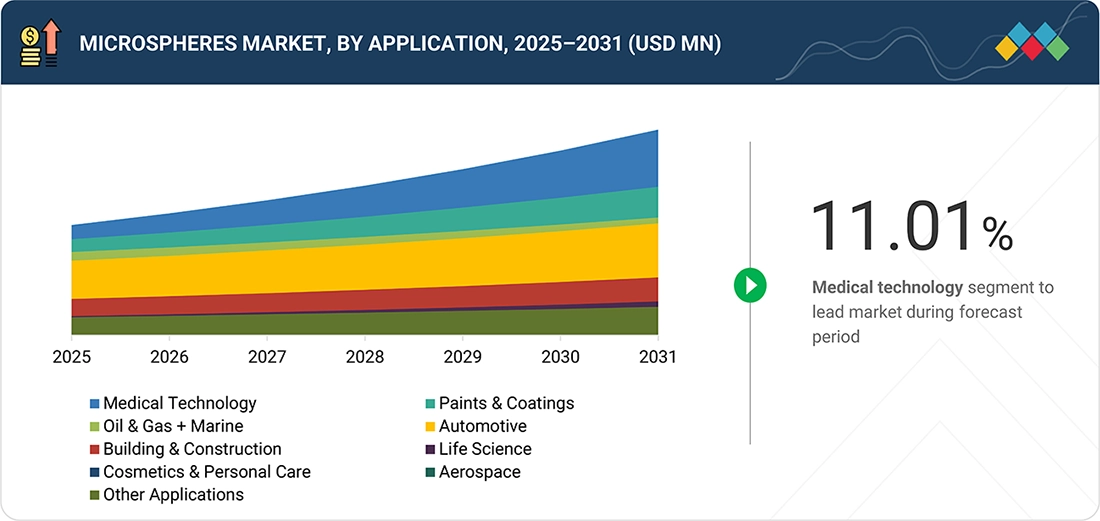
BY APPLICATIONThe medical technology segment is projected to register the highest CAGR of 11.01%, in terms of value, during the forecast period.
-
COMPETITIVE LANDSCAPE - KEY PLAYERS3M Company, Nouryon, and Merck KGaA are identified as key players in the microspheres market. These companies have strong market presence and extensive product portfolios.
-
COMPETITIVE LANDSCAPE - STARTUPSTrelleborg AB, Chase Corporation, and Sinosteel Maanshan New Material Technology Co., Ltd., among other emerging players, maintain solid positions within specialized niche segments, highlighting their potential to evolve into future leaders in the microspheres market.
The microsphere market is expected to continue growing over the next 10 years, owing to new developments in materials science and increased demand for stronger as well as lighter materials. Microspheres are widely used by manufacturers, given their better functionality, cost savings, and greater sustainability. The trend toward energy-efficient products, improved healthcare, and the production of eco-friendly materials will contribute to the widespread use of microspheres across many applications as a multi-functional material with an exceptional impact.
TRENDS & DISRUPTIONS IMPACTING CUSTOMERS' CUSTOMERS
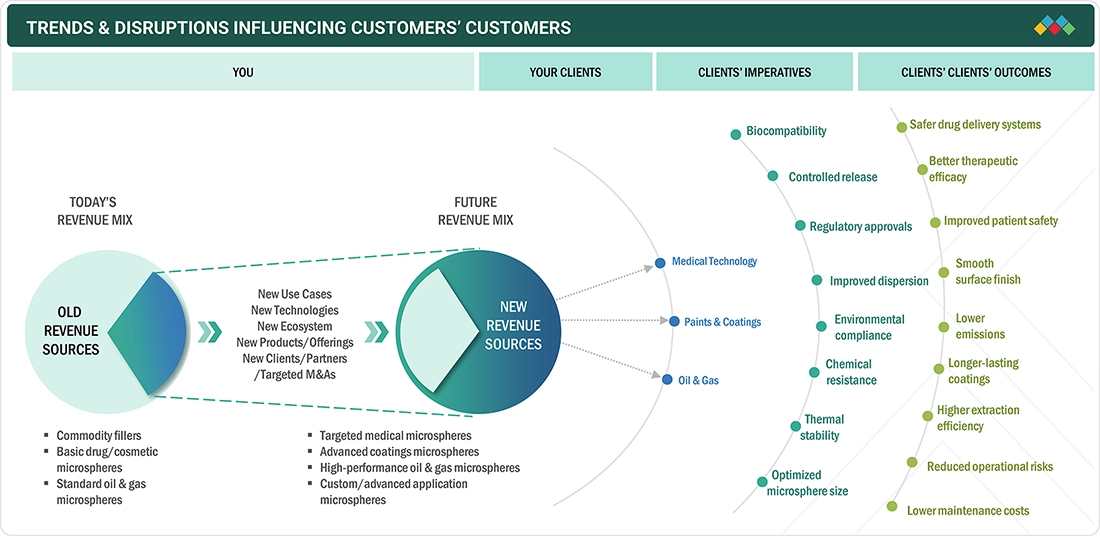
The impact on consumers' business emerges from customer trends or disruptions. Upstream clients for microsphere manufacturers are the suppliers of raw materials used to produce microspheres and the distributors of those raw materials. Downstream applications for microspheres are those that provide end-user demand for microspheres. Downstream application trends in end-user use of microspheres are directly impacted by upstream trends in performance, sustainability, and regulations. Fluctuations or changes in end-user demand will then drive changes in the materials procurement volume handled by upstream suppliers and distributors as a result of direct downstream application demands.
Source: Secondary Research, Interviews with Experts, MarketsandMarkets Analysis
MARKET DYNAMICS

Level
-
Demand for lightweight & high-performance materials

-
Rising demand in medical & drug delivery applications


Level
-
Raw material price volatility

-
High production & capital costs


Level
-
Expansion in biomedical & pharmaceutical fields

-
Advancing sustainable & biodegradable microsphere solutions


Level
-
Complex manufacturing processes

-
Limitations in scaling production

Source: Secondary Research, Interviews with Experts, MarketsandMarkets Analysis
Driver: Demand for lightweight & high-performance materials
The microspheres market continues its growth trajectory owing to the demand for lightweight but high-performance materials in an ever-increasing number of sectors, such as automotive, aerospace, and construction. By utilizing microspheres, manufacturers have a lower density of their materials while still maintaining durable properties, enabling them to improve fuel efficiency, ease material handling, and enhance the performance of the overall structure. Additionally, when added to coatings, composites, and plastics, microspheres enhance thermal insulation properties, increase durability, and improve the appearance of the surface. Many industries will continue to look to incorporate microspheres into new formulations as they seek to improve how much material is used without compromising on functionality, thus driving the continued demand for microspheres in different high-value applications.
Restraint: Raw material price volatility
Changes in supply chain operations, energy prices, and resource availability have had a direct impact on the cost of manufacturing microspheres, in turn impacting the pricing stability for the end users of microspheres. Manufacturers also have to constantly adjust cost structures in order to maintain stable prices that could affect long-term relationships, as well as profitability. Smaller manufacturers may find it difficult to absorb large increases in costs incurred by their suppliers, which would reduce their competitiveness. Therefore, the uncertainty in the pricing of input materials makes it difficult for companies to determine procurement strategies, causing delays in decision-making around incorporating microspheres into production processes. This factor may limit the broader adoption of microspheres in products that have cost restrictions.
Opportunity: Expansion in biomedical & pharmaceutical fields
The biomedical and pharmaceutical sectors offer strong growth potential for the global microspheres sector. Microspheres have multiple applications, including controlled-release drug delivery systems, imaging diagnostic systems, and targeted treatments due to their controlled-release properties and the degree of compatibility with human tissue. They are also an effective means of providing drug-like substances directly into the body (precisely delivering active ingredients) with increased treatment efficacy and diminished overall side effects. Additionally, microspheres are gaining traction as a viable solution in both tissue engineering and regenerative medicine as new healthcare technologies are developed. Advancements in innovative, patient-centered medical solutions and increased funding for research and development will result in new opportunities for expanded microsphere applications and overall growth in the market.
Challenge: Complex manufacturing processes
The development of the global microspheres sector is affected by many obstacles resulting from the complexity of micromolding processes used to manufacture microspheres with consistent size, structure, and performance. It is an exact science to produce uniform microspheres because there are many variables that affect the production process (e.g., temperatures, pressures, and chemical compositions). If any of these operating conditions vary, then the quality of the manufactured microspheres may be adversely impacted, thereby compromising the ability to achieve desired performance from their intended applications. In order to produce uniform microspheres, many of the latest technologies available for producing microspheres require specialized equipment and technical skill sets. Thus, the operational costs of producing microspheres are higher, which limits the ability of some manufacturers to scale up their operations. The ability to consistently produce high-quality microspheres to meet varying application requirements continues to be one of the most significant challenges facing microsphere manufacturers.
MICROSPHERES MARKET: COMMERCIAL USE CASES ACROSS INDUSTRIES
| COMPANY | USE CASE DESCRIPTION | BENEFITS |
|---|---|---|
 |
Use of polymeric microspheres in skincare and cosmetic formulations for texture enhancement and controlled release of active ingredients. | Improved product feel and spreadability, enhanced sensory appeal, controlled ingredient delivery, and better formulation stability. |
 |
Incorporation of hollow microspheres in industrial and architectural coatings to improve film build and reduce weight. | Enhanced coverage efficiency, reduced paint consumption, improved insulation properties, and consistent surface finish. |
 |
Use of microspheres in lightweight composite components and underbody coatings for vehicle weight reduction. | Improved fuel efficiency, reduced vehicle weight, enhanced corrosion resistance, and better noise and vibration damping. |
 |
Deployment of hollow microspheres in drilling fluids and cementing systems for density control and thermal insulation. | Optimized fluid performance, improved well stability, reduced operational risks, and enhanced efficiency in deep-well drilling operations. |
Logos and trademarks shown above are the property of their respective owners. Their use here is for informational and illustrative purposes only.
MARKET ECOSYSTEM
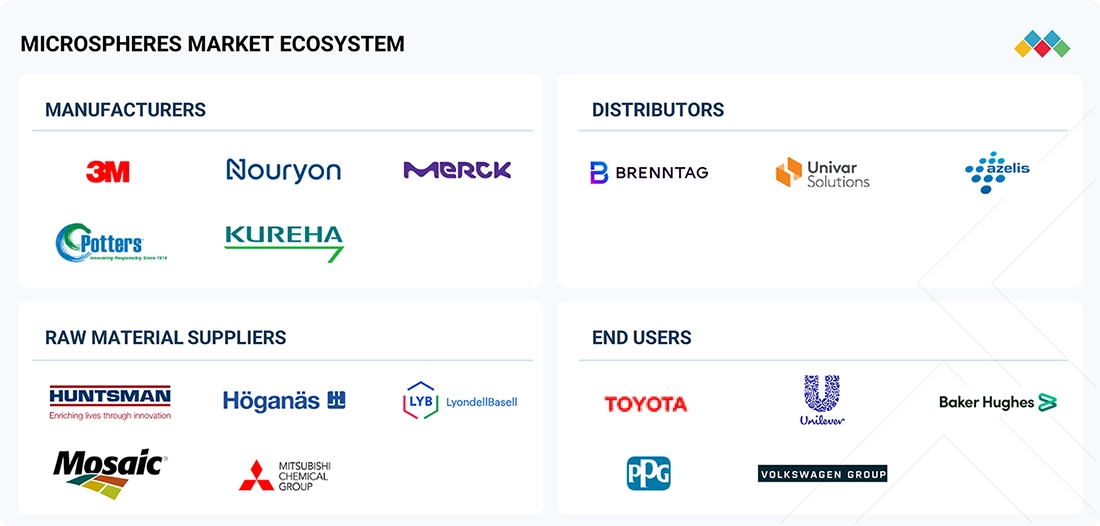
The microspheres market is an ecosystem consisting of raw material suppliers (Ciner Group, Tokuyama Corporation, PQ, Cabot Corporation) and end users (Unilever, Baker Hughes Company, PPG Industries, Inc., Toyota Motor Corporation). Examples of raw materials used by microsphere manufacturers include glass, polymer resins, ceramics, and fly ash. These materials can be processed into hollow and solid microspheres, which possess specific engineered characteristics that include low density, thermal insulation, controlled particle size, and improved flowability. When end-users consume a high-performance microsphere, it helps reduce product weight, improve product durability, enhance surface finishes, and enable controlled release functionality. Therefore, end-users create demand for multi-functional materials, and manufacturers provide consistency of quality, scalability, and application-driven/unique customisations to deliver these materials to end-users.
Logos and trademarks shown above are the property of their respective owners. Their use here is for informational and illustrative purposes only.
MARKET SEGMENTS
Source: Secondary Research, Interviews with Experts, MarketsandMarkets Analysis
Microspheres Market, By Type
In 2025, the hollow segment accounted for the largest market share. Hollow microspheres are experiencing a significant increase in demand due to their ability to provide substantial weight reductions while yielding comparable performance in terms of functionality. The weight reduction created by the void provides benefits ranging from improved fuel efficiency to reduced shipping costs. Materials manufacturing is actively working toward meeting efficiency and sustainability goals by replacing heavier materials with lightweight materials.
Microspheres Market, By Raw Material
In 2025, the polymer segment accounted for the largest market share. Polymer microspheres provide excellent compatibility with many types of organic materials (resins, glues, adhesives, etc.) used in the manufacture of coatings and adhesives, resulting in efficient mixing and stable dispersion of polymer microspheres into various formulations. The strong compatibility of polymer microspheres with organic materials reduces the challenges associated with formulating polymers; therefore, polymer microspheres provide the advantage of improved consistency, going from processing to application for manufacturing industries that rely on complex chemical systems. As advanced formulations become more common, the compatibility of polymer microspheres with organic systems will increase the demand for this product class in an array of applications.
Microspheres Market, By Application
In 2025, the medical technology segment accounted for the largest market share in terms of value. Advancements in medical technology are creating less invasive surgical procedures. Since microspheres are created in a standard size and shape, they can be delivered accurately through small catheters into hard-to-reach areas and can allow for very precise and accurate treatment without an invasive surgical procedure, resulting in lower risks and improved patient safety and comfort while decreasing overall costs for the healthcare system, fueling growth.
REGION
North America to be fastest-growing region in global microspheres market during forecast period
North America accounted for the largest share of the global microspheres market in 2025. The market in this region is also projected to witness the highest growth rate during the forecast period. The aerospace sector in North America has been recognized as one of the most active areas of technological and material innovation, with a primary emphasis on reducing the weight of aircraft structures without compromising on performance, while also maximizing their structural integrity. By incorporating microspheres into composite materials, sealant applications, and various types of coatings, manufacturers are able to lower the overall density of these materials without any detriment to performance characteristics. This supports a continued increase in demand for innovative, advanced materials like microsphere composites in North America's aerospace manufacturing industry.
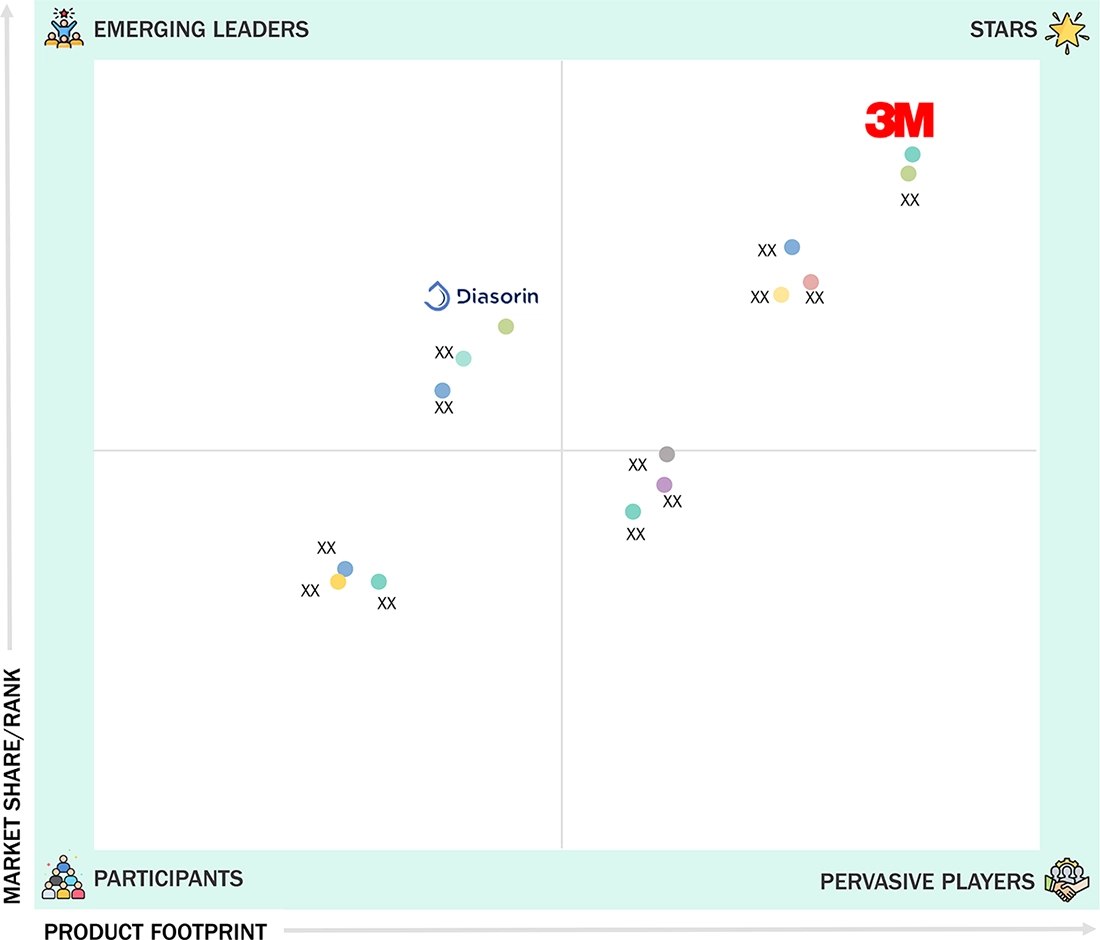
MICROSPHERES MARKET: COMPANY EVALUATION MATRIX
In the microspheres market matrix, 3M Company (Star) leads with a strong market share and broad product portfolio in glass and polyethylene materials, which are used in many building products, automotive parts, healthcare applications, oil and gas, and other related industries. DiaSorin S.p.A. (Emerging Leader) is more focused on utilizing technology for creating diagnostic and immunoassay platforms to manufacture microspheres for use in advanced life sciences and healthcare applications. While 3M leads in terms of supply chain strength, technological breadth, and product diversity, DiaSorin's strengths lie in its ability to provide innovative solutions for specific applications.
Source: Secondary Research, Interviews with Experts, MarketsandMarkets Analysis
KEY MARKET PLAYERS
- 3M Company (US)
- Nouryon (Netherlands)
- Merck KGaA (Germany)
- Potters Industries LLC (US)
- Thermo Fisher Scientific Inc. (US)
- Diasorin S.p.A. (Italy)
- Merit Medical Systems, Inc. (US)
- Terumo Corporation (Japan)
- Jiangsu NOVORAY New Material Co., Ltd. (China)
- Kureha Corporation (Japan)
MARKET SCOPE
| REPORT METRIC | DETAILS |
|---|---|
| Market Size in 2025 (Value) | USD 4.05 Billion |
| Market Size in 2026 (Value) | USD 4.36 Billion |
| Market Size in 2031 (Value) | USD 6.47 Billion |
| Growth Rate | CAGR of 8.23% from 2026 to 2031 |
| Years Considered | 2023–2031 |
| Base Year | 2025 |
| Forecast Period | 2026–2031 |
| Units Considered | Value (USD Million/Billion) |
| Report Coverage | Revenue forecast, company ranking, competitive landscape, growth factors, and trends |
| Segments Covered | By Type: Hollow, Solid l By Raw Material: Glass, Polymer, Ceramic, Fly Ash, Metallic, Other Raw Materials l By Application: Building & Construction, Medical Technology, Life Science, Paints & Coatings, Automotive, Cosmetics & Personal Care, Oil & Gas + Marine, Aerospace, Other Applications |
| Regions Covered | Asia Pacific, Europe, North America, Middle East & Africa, and South America |
WHAT IS IN IT FOR YOU: MICROSPHERES MARKET REPORT CONTENT GUIDE
DELIVERED CUSTOMIZATIONS
We have successfully delivered the following deep-dive customizations:
| CLIENT REQUEST | CUSTOMIZATION DELIVERED | VALUE ADDS |
|---|---|---|
| Europe-based Microspheres Manufacturer |
|
|
| Asia Pacific-based Microspheres Manufacturer |
|
|
RECENT DEVELOPMENTS
- March 2025 : Nouryon launched its new microspheres, an extra-small grade designed especially for interior paints.
- December 2024 : Brenntag SE extended its distribution agreement with 3M Company for glass bubbles, expanding the partnership beyond the UK into France and Iberia. This collaboration enhances regional access to hollow glass microspheres from 3M Company.
- April 2024 : Terumo launched BioPearl microspheres, the first resorbable drug-eluting microspheres designed for embolization procedures.
- October 2023 : Merit Medical Systems, Inc. launched the Maestro microcatheter line to support advanced embolization procedures, including the delivery of Embosphere Microspheres.
- June 2023 : Potters Industries LLC acquired glass bead production assets formerly owned by Ennis-Flint Inc. in Palestine, Texas and Thomasville, North Carolina.
Table of Contents
 Exclusive indicates content/data unique to MarketsandMarkets and not available with any competitors.
Methodology
This study involved four major activities in estimating the market size for microspheres. Exhaustive secondary research was done to collect information on the market, the peer market, and the parent market. The next step was to validate these findings, assumptions, and sizing with industry experts across the value chain through primary research. Both top-down and bottom-up approaches were employed to estimate the complete market size. After that, the market breakdown and data triangulation procedures were used to estimate the market size of the segments and subsegments.
Secondary Research
Secondary sources used in this study included annual reports, press releases, and investor presentations of companies; white papers; certified publications; articles from recognized authors; and gold-standard and silver-standard websites, such as Factiva, ICIS, Bloomberg, and others. The findings of this study were verified through primary research, which involved conducting extensive interviews with key officials, including CEOs, VPs, directors, and other executives. The breakdown of profiles of the primary interviewees is illustrated in the figure below:
Primary Research
The microspheres market comprises several stakeholders, such as raw material suppliers, end-product manufacturers, and regulatory organizations in the supply chain. Various primary sources from both the supply and demand sides of the market were interviewed to obtain qualitative and quantitative information.
BREAKDOWN OF PRIMARY PARTICIPANTS
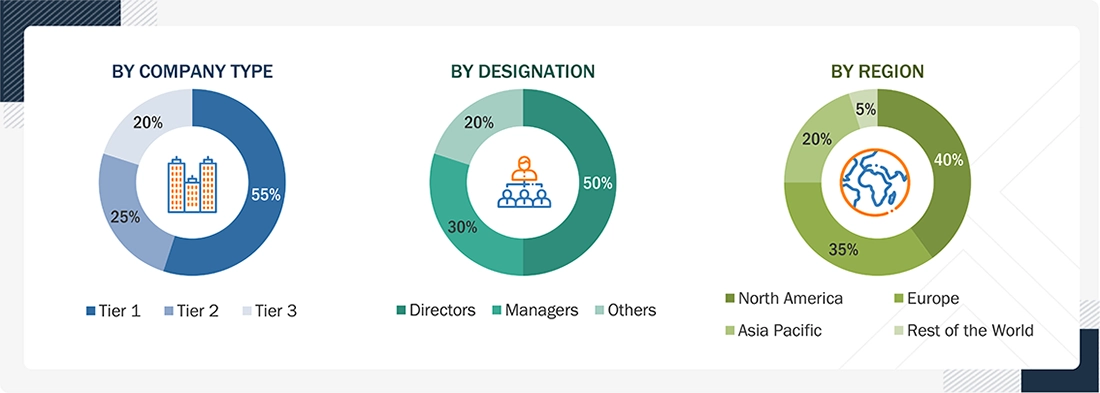
Notes: Tier 1, Tier 2, and Tier 3 companies are classified based on their market revenue in 2023/2024, available in the public domain, product portfolios, and geographical presence. Other designations include consultants and sales, marketing, and procurement managers.
|
COMPANY NAME |
DESIGNATION |
|
3M Company |
Senior Manager |
|
Nouryon |
Innovation Manager |
|
Merck KGaA |
Vice President |
|
Potters Industries LLC |
Production Supervisor |
|
Thermo Fisher Scientific Inc. |
Sales Manager |
To know about the assumptions considered for the study, download the pdf brochure
Market Size Estimation
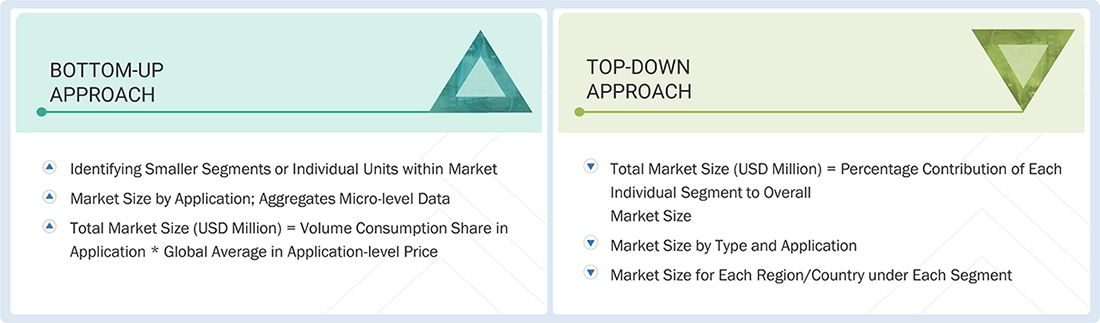
Both top-down and bottom-up approaches were used to estimate and validate the total size of the microspheres market. These methods were also used extensively to estimate the size of various subsegments in the market. The research methodology used to estimate the market size includes the following:
- The key players in the industry were identified through extensive secondary research.
- The supply chain of the industry was determined through primary and secondary research.
- All percentage shares, splits, and breakdowns were determined using secondary sources and verified through primary sources.
- All possible parameters that affect the markets covered in this research study were accounted for, viewed in extensive detail, verified through primary research, and analyzed to obtain the final quantitative and qualitative data.
Microspheres Market: Bottom-up and Top-DownApproach
Data Triangulation
After determining the overall market size using the market size estimation processes explained above, the market was divided into several segments and subsegments. To complete the overall market engineering process and determine the exact statistics for each market segment and subsegment, data triangulation and market breakdown procedures were employed, as applicable. The data was triangulated by studying various factors and trends from both the demand and supply sides in the microspheres industry.
Market Definition
According to the International Journal of Pharmaceutical Research and Applications, microspheres are engineered spherical particles, typically ranging from 1 to 1000 micrometers (µm) in diameter, produced in hollow or solid forms from materials such as polymers, glass, ceramics, fly ash, metals, and other specialty compounds. They are designed with controlled size, structure, and surface properties to function as lightweight fillers, performance enhancers, or carrier systems across diverse applications. They help improve properties such as density, strength, insulation, flow behavior, and controlled delivery performance.
Key Stakeholders
- Microspheres manufacturers
- Microspheres distributors
- Raw material suppliers
- Government and research organizations
- Investment banks and private equity firms
Report Objectives
- To analyze and forecast the size of the microspheres market in terms of value
- To provide detailed information about the major drivers, restraints, challenges, and opportunities influencing the market growth
- To define, describe, and segment the market based on type, raw material, application, and region
- To forecast the size of the market segments based on regions such as Asia Pacific, North America, Europe, Middle East & Africa, and South America.
- To strategically analyze micromarkets with respect to individual growth trends, prospects, and their contribution to the overall market
- To strategically analyze the segmented markets with respect to individual growth trends, prospects, and contributions to the overall market
- To identify and analyze opportunities for stakeholders in the market
- To analyze competitive developments such as expansions, partnerships, joint ventures, mergers & acquisitions, agreements, and product launches in the market
- To strategically profile the key companies and comprehensively analyze their core competencies.
Available customizations:
Using the provided market data, MarketsandMarkets offers customizations tailored to the company’s specific needs. The following customization options are available for the report.
Product analysis
- Product comparative analysis, which gives a detailed comparison of innovative products being offered by prominent vendors
Geographic analysis
- Further breakup of additional European countries by offering, business function, data type, and vertical
- Further breakup of additional Asia Pacific countries by offering, business function, data type, and vertical
- Further breakup of additional Middle East & African countries by offering, business function, data type, and vertical
- Further breakup of additional Latin American countries by offering, business function, data type, and vertical
Company information
- Detailed analysis and profiling of additional market players (up to five)
Need a Tailored Report?
Customize this report to your needs
Get 10% FREE Customization
Customize This ReportPersonalize This Research
- Triangulate with your Own Data
- Get Data as per your Format and Definition
- Gain a Deeper Dive on a Specific Application, Geography, Customer or Competitor
- Any level of Personalization
Let Us Help You
- What are the Known and Unknown Adjacencies Impacting the Microspheres Market
- What will your New Revenue Sources be?
- Who will be your Top Customer; what will make them switch?
- Defend your Market Share or Win Competitors
- Get a Scorecard for Target Partners

Custom Market Research Services
We Will Customise The Research For You, In Case The Report Listed Above Does Not Meet With Your Requirements
Get 10% Free CustomisationGrowth opportunities and latent adjacency in Microspheres Market

Still Researching the
Microspheres Ecosystem?
See the competitors, opportunities, and growth signals shaping it - instantly.
Generate 15+ consulting-grade strategic insights tailored to your growth question.






Marián
Oct, 2014
Looking for colloid chemistry, nanoparticles, terahertz time domain spectroscopy, ceramic materials, clays and clay minerals.
Minseon
Nov, 2013
Market information (by application, by company marketshare) for "hollow glass microspheres" (for example, 3Ms glass bubble). .
Andrzej
Jul, 2013
Marke data for european cenosphere market .
Graham
May, 2014
Information on Microspheres and macro/midi-spheres (up to 3mm in diameter)for making syntactic epoxy / polyurethane systems - composites applications..
Tiffany
Apr, 2019
Microspheres market .
John
May, 2019
General information on Microspheres industry.
Nur
Dec, 2019
Requirement for list of polymer microspheres producer companies for oil and gas industries applications.
Reza
Dec, 2019
Require sample copy of Microsphere Market .
michael
Nov, 2015
Detailed value chain of microspheres and trends in the market.
saeed
Mar, 2018
Microspherse market.
Jeff
Feb, 2014
Information on microspheres used in oil & gas and market size conformation.