
Conversational AI Market Size, Share, Growth Opportunities & Latest Trends

Conversational AI Market by Product Type (AI Chatbots, Voice Bots, Virtual Assistants, Gen AI Agents), Business Function (Sales & Marketing, Operations & Supply Chain, Finance & Accounting, HR), Integration Type, and End User - Global Forecast to 2031




OVERVIEW
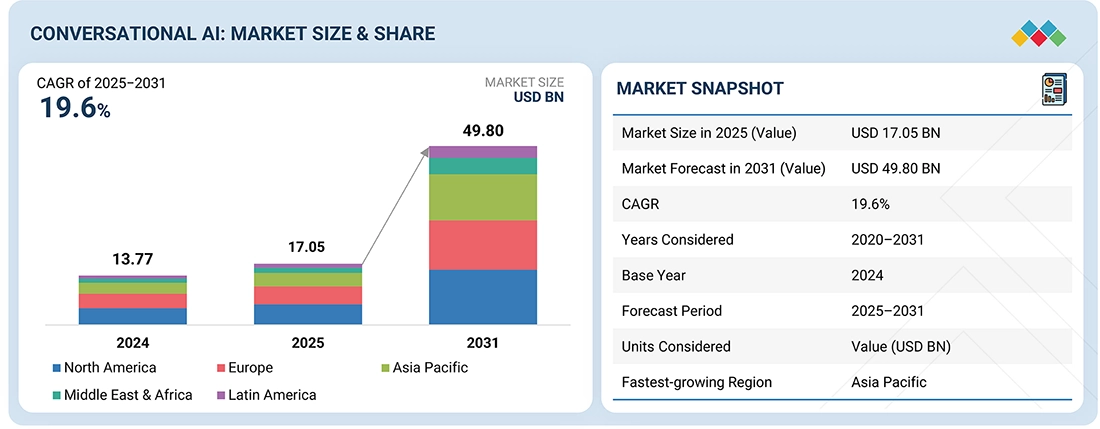
Source: Secondary Research, Interviews with Experts, MarketsandMarkets Analysis
The conversational AI market is set for significant expansion and is expected to grow from USD 17.05 billion in 2025 to USD 49.80 billion by 2031, indicating a strong CAGR of 19.6% during the forecast period. The Conversational AI market is undergoing rapid expansion as enterprises across industries embrace intelligent dialogue systems to enhance customer engagement and operational efficiency. Driven by advancements in generative AI, natural language processing, and voice recognition, organizations are integrating conversational platforms across websites, mobile apps, and social channels to deliver personalized, real-time interactions at scale. Demand is accelerating in sectors such as BFSI, retail, healthcare, and telecom, where 24/7 support and multilingual capabilities are becoming competitive differentiators. Businesses are moving beyond simple FAQ chatbots to deploy context-aware, emotion-sensitive virtual assistants that handle complex queries, automate workflows, and boost conversion rates. As enterprises prioritize customer experience and digital accessibility, Conversational AI is evolving from a support tool into a strategic enabler of revenue growth and brand engagement.
KEY TAKEAWAYS
- By Region, North America accounted for largest market share of 33.62% in 2025.
- Generative AI agents are projected to witness the fastest growth of CAGR of 25.5% during the forecast period.
- By business function, Sales & marketing is estimated to dominate the market during the forecast period.
- By integration type, the internal enterprise systems segment is projected to hold largest market share in 2025
- Within enterprises, healthcare & life sciences is set to become a leading adopter of conversational AI, growing at the highest CAGR of 20.1%
- The major market players like Microsoft, Google, and AWS have adopted both organic and inorganic strategies including partnerships and investments. This dual strategy signals an arms race where scale and speed of innovation will determine leadership, reshaping the balance of power across the ecosystem.
- Companies like Aisera, Laiye , and OneReach.ai among others, have distinguished themselves among startups and SMEs by securing strong footholds in specialized niche areas, underscoring their potential as emerging market leaders.
The Conversational AI market is witnessing exponential growth, driven by rapid advancements in generative AI, natural language understanding (NLU), and multimodal interaction capabilities. Enterprises across industries are adopting AI-powered conversational systems to enhance customer engagement, streamline service delivery, and automate high-volume interactions across voice and text channels. The increasing demand for personalized, always-on customer support—coupled with integration of large language models (LLMs) into enterprise workflows—is reshaping how organizations interact with customers and employees. Moreover, the expansion of omnichannel communication platforms, API-based AI assistants, and voice commerce is accelerating adoption across BFSI, retail, healthcare, and telecom sectors.
TRENDS & DISRUPTIONS IMPACTING CUSTOMERS' CUSTOMERS
The conversational AI landscape is rapidly evolving, driven by advancements in AI, machine learning, and big data analytics, alongside growing demand for personalized, real-time interactions. Cloud-based AI platforms are gaining popularity for their scalability, flexibility, and cost-efficiency, enabling businesses to support remote teams and automate customer service functions like chatbots and voice assistants. Additionally, companies are leveraging vast volumes of conversational data to enhance decision-making, optimize customer experiences, and refine AI models for more accurate, context-aware interactions. As AI adoption grows, businesses are also responding to regulatory developments, such as data privacy laws, and prioritizing cybersecurity to protect sensitive customer information from increasing digital threats. The trend toward integrated solutions is gaining traction, with organizations aiming to unify their AI systems across departments, ensuring a more seamless and consistent customer experience while improving operational efficiency. Furthermore, the ongoing push for ethical AI practices and transparent decision-making is shaping how businesses implement AI, balancing innovation with responsibility and trust.
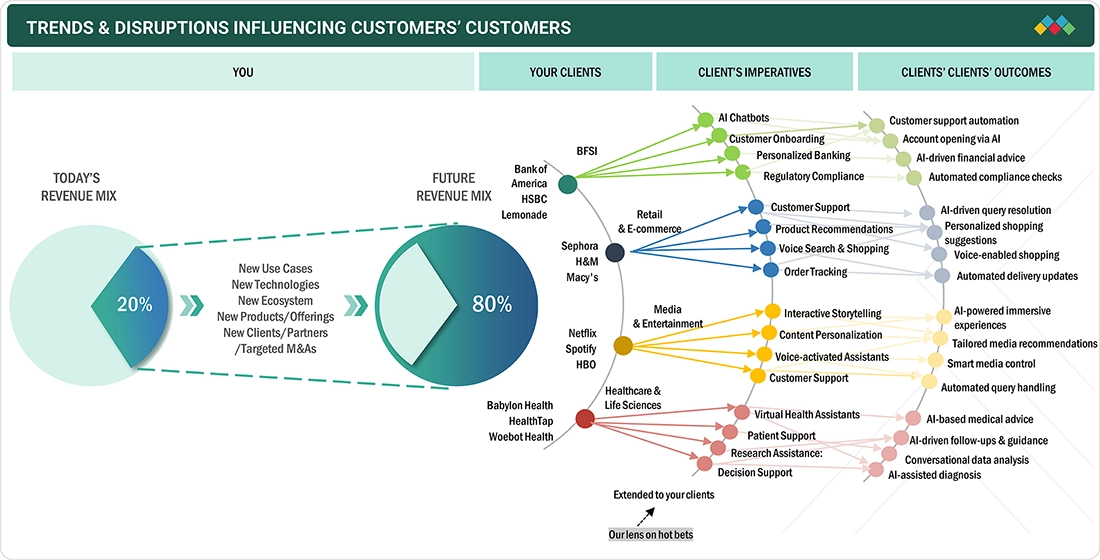
Source: Secondary Research, Interviews with Experts, MarketsandMarkets Analysis
MARKET DYNAMICS

Level
-
Increasing demand for personalized, real-time customer and employee engagement

-
Growth of omnichannel and hybrid engagement ecosystems


Level
-
Integration complexity with legacy systems and data silos

-
Limited AI literacy and change management challenges


Level
-
Expansion of AI into generative and predictive enterprise applications

-
Integration of computer vision with voice recognition technology to facilitate in-depth and personalized interactions


Level
-
Maintaining compliance, privacy, and ethical standards at scale

-
Balancing automation with human oversight

Source: Secondary Research, Interviews with Experts, MarketsandMarkets Analysis
Growth of omnichannel and hybrid engagement ecosystems
Enterprises are increasingly seeking conversational AI solutions that unify interactions across web, mobile, messaging apps, and voice platforms. By enabling seamless, consistent engagement across multiple touchpoints, organizations can strengthen customer relationships, improve partner collaboration, and create integrated operational workflows, unlocking new revenue streams and enhancing overall business resilience.
Integration complexity with legacy systems and data silos
Enterprises face challenges in connecting conversational AI with CRM, ERP, and knowledge management systems. Disparate data and outdated infrastructure can limit AI effectiveness, slow deployment, and reduce the accuracy of personalized interactions, especially in highly regulated industries.
Expansion of AI into generative and predictive enterprise applications
The rise of generative AI agents and predictive analytics allows enterprises to extend conversational intelligence beyond customer support, enabling operations optimization, automated decision-making, and real-time insights. Organizations that adopt these advanced capabilities can unlock efficiency, enhance personalization, and drive strategic growth.
Maintaining compliance, privacy, and ethical standards at scale
As conversational AI adoption grows, enterprises must ensure data privacy, regulatory compliance, and responsible AI usage. This includes managing sensitive customer and operational data, monitoring agent outputs, and implementing robust governance frameworks to prevent bias and maintain trust across all interactions.
Conversational AI Market: COMMERCIAL USE CASES ACROSS INDUSTRIES
| COMPANY | USE CASE DESCRIPTION | BENEFITS |
|---|---|---|
 |
Humana is a Medicare Advantage and prescription drug plan provider ranked second on the Fortune 500 list. Humana's IVR system transferred too many calls to human agents at tremendous cost. Humana chose to work with IBM Watson, collaborating with IBM Data and AI Expert Labs to develop Provider Services Conversational Voice Agent using Watson Assistant. | Humana's Voice Agent with Watson provides faster, friendlier, and more consistent healthcare service administration. Access to services like medical eligibility verification is done without speaking to a live agent. The solution achieved 90%-95% sentence error rate accuracy with speech customization training. |
 |
City of Johns Creek in Fulton County is a suburb of Atlanta named Georgia's safest city in 2017 and 2018. Johns Creek's reception staff received between 50 and 100 calls daily with duplicate questions. O'Day built a chatbot with Amazon Lex based on technology used by Amazon Alexa, leveraging open data accessible to Johns Creek citizens. | Amazon Lex reduced after-hours voicemails by 90%, reduced receptionist call volume by 60% and delivered information to citizens up to 2x faster. The chatbot connects calls to the department through voicemail when devices are unable to answer, providing solutions accordingly. |
 |
Jio is an Indian telecommunications company and subsidiary of Jio Platforms, headquartered in Navi Mumbai, operating a national LTE network covering all 22 telecom circles. Needing an effective solution for agile responses to customer queries, Jioconnectivity and Haptik partnered to develop a WhatsApp chatbot for swift responses and enhanced customer experience. | Haptik's Proactive Messaging helped Jio Digital start seamless conversations with users. The chatbot integrates over 900 unique intents and 7,000 variations. Twenty-five million proactive messages were sent daily for nudges, recharge reminders, and engagement. Jio Fiber and 5G acquired 8,000 new customers daily. |
 |
Chime Financial is a San Francisco-based financial technology company partnering with regional banks to provide fee-free mobile banking services. Chime wanted to provide personalized member support across phone and digital channels using analytics and insight. With Twilio Programmable Messaging and Twilio Studio, Chime built a highly personalized IVR solution for all support levels. | Using Twilio Studio took only four weeks to implement. Twilio's easy-to-use and flexible integration enabled quick iteration and improvement. The integration was linked to customer data pipeline for in-depth trend analysis. The team observed a 12% increase in customer satisfaction with personalized support. |
Logos and trademarks shown above are the property of their respective owners. Their use here is for informational and illustrative purposes only.
MARKET ECOSYSTEM
The conversational AI market ecosystem is shaped by a mix of vendors and different product types. This segmented ecosystem works collaboratively to enhance user experiences, automation efficiency, and business outcomes across various industries.
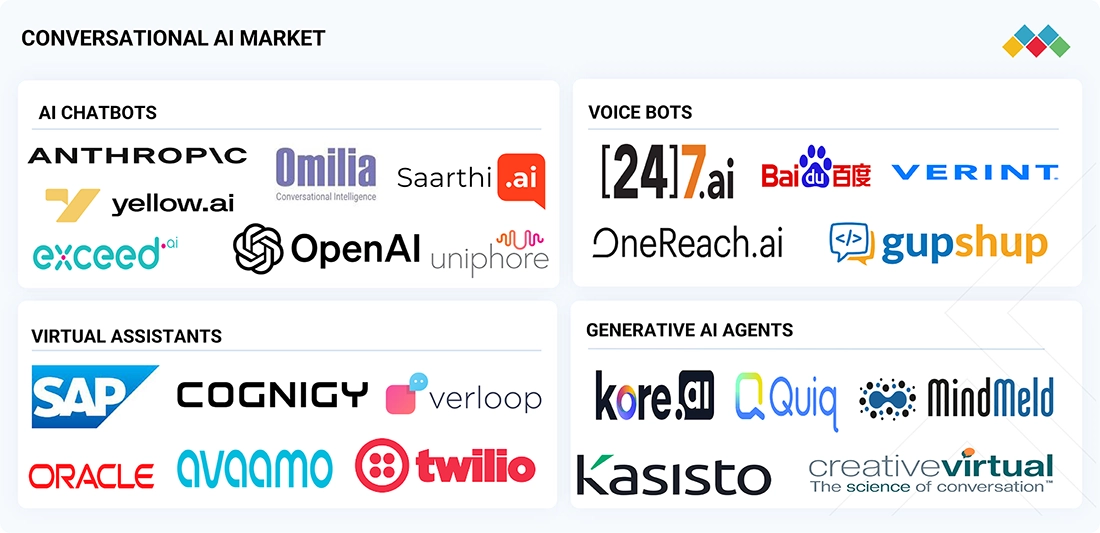
Logos and trademarks shown above are the property of their respective owners. Their use here is for informational and illustrative purposes only.
MARKET SEGMENTS
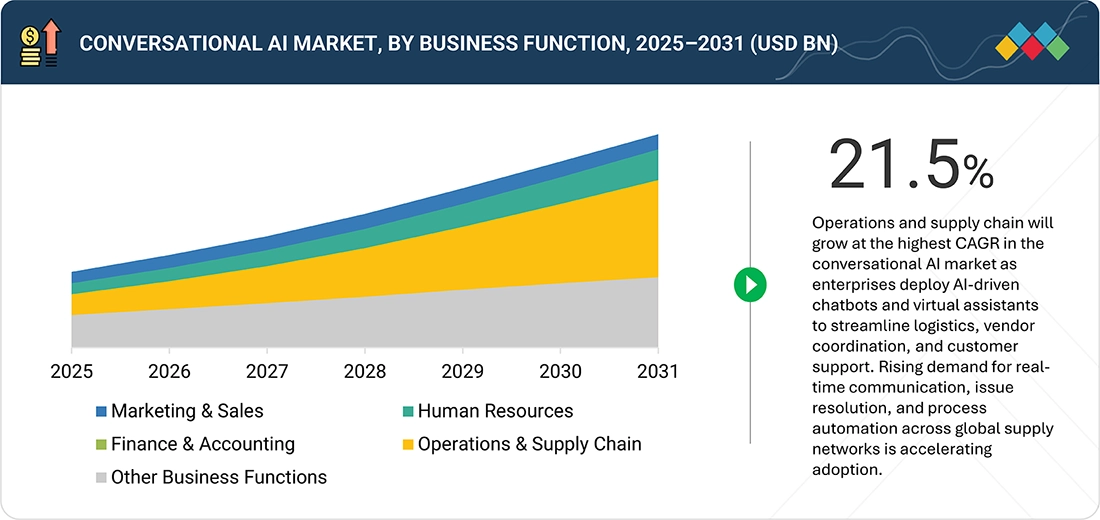
Source: Secondary Research, Interviews with Experts, MarketsandMarkets Analysis
Conversation AI Market, By Offering
Professional and managed services are accelerating adoption by reducing complexity in deploying and optimizing AI solutions. These services allow enterprises to operationalize conversational AI at scale, continuously improve models, and ensure alignment with compliance and business objectives, particularly in complex or regulated environments.
Conversation AI Market, By Product Type
Generative AI agents are redefining conversational intelligence by enabling context-aware, multi-turn interactions and automated decision support. Organizations are leveraging these agents to streamline operations, deliver personalized guidance, and support dynamic business processes, making them essential for industries requiring precision, adaptability, and operational scale.
Conversation AI Market, By Business Function
Operations and supply chain functions are rapidly adopting conversational AI to monitor workflows, anticipate disruptions, and facilitate coordination across teams and partners. AI agents help organizations optimize resource allocation, reduce manual errors, and improve process resilience, transforming operational functions into data-driven competitive advantages.
Conversation AI Market, By End User
Healthcare and life sciences organizations are adopting conversational AI to enhance patient engagement, streamline clinical workflows, and optimize supply chain operations. Generative AI agents support virtual consultations, documentation automation, and intelligent coordination, driving improved outcomes, operational efficiency, and compliance in high-stakes, regulated environments.
REGION
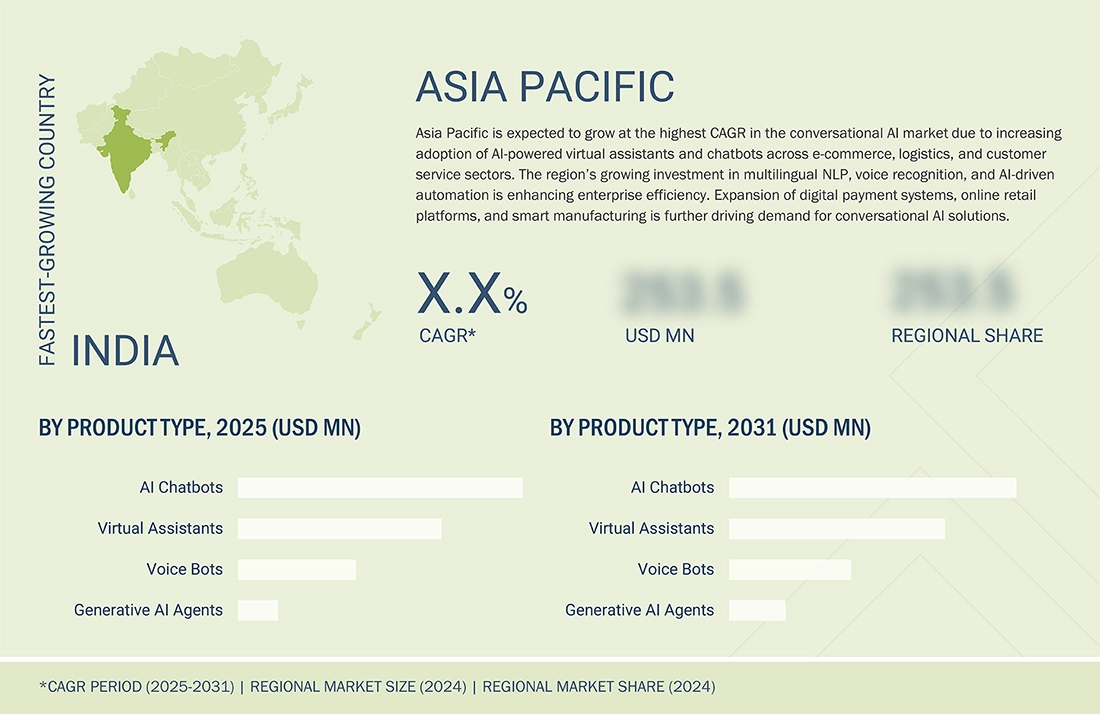
Asia Pacific to be fastest-growing region in global Conversational AI Market during forecast period
The Asia Pacific region is poised for rapid growth in the conversational AI market, driven by technological innovation, increasing digital transformation, and a rising number of tech-savvy consumers. Countries like China, India, Japan, and South Korea are investing heavily in artificial intelligence, supported by government initiatives, growing startup ecosystems, and the adoption of smart devices. The proliferation of smartphones, social media, and messaging platforms has created fertile ground for conversational AI tools such as chatbots and virtual assistants. Moreover, the region's diverse languages and cultures are encouraging the development of multilingual AI systems, further accelerating adoption.
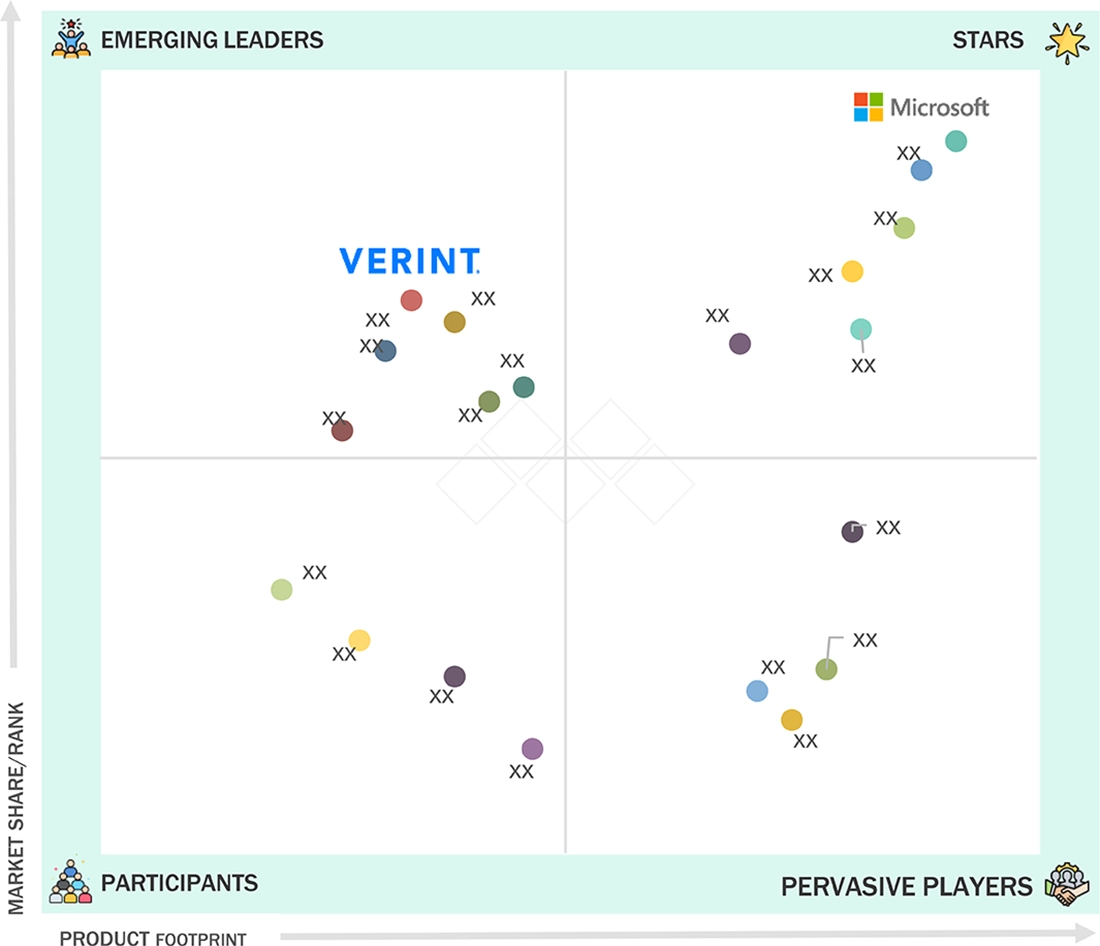
Conversational AI Market: COMPANY EVALUATION MATRIX
In the Conversational AI market matrix, Microsoft (Star) leads with its robust suite of AI-powered conversational platforms, including Azure Cognitive Services and Power Virtual Agents, enabling organizations to deploy scalable, intelligent, and context-aware solutions across enterprises. Its innovations in large language models, multimodal AI, and real-time communication tools reinforce its dominance in shaping the future of human-machine interaction. Verint (Emerging Leader) is gaining momentum with its specialized solutions for customer engagement, voice analytics, and automation, helping organizations optimize operations and enhance experiences. Its strong domain expertise in contact center AI and rapid innovation position it as a fast-rising force in the conversational AI landscape.
Source: Secondary Research, Interviews with Experts, MarketsandMarkets Analysis
KEY MARKET PLAYERS
MARKET SCOPE
| REPORT METRIC | DETAILS |
|---|---|
| Market Size in 2025 (Value) | USD 17.05 BN |
| Market Forecast in 2032 (value) | USD 49.80 BN |
| Growth Rate | 19.60% |
| Years Considered | 2020–2031 |
| Base Year | 2024 |
| Forecast Period | 2025–2031 |
| Units Considered | USD Billion |
| Report Coverage | Revenue forecast, company ranking, competitive landscape, growth factors, and trends |
| Segments Covered |
|
| Regions Covered | North America, Asia Pacific, Europe, the Middle East & Africa, and Latin America |
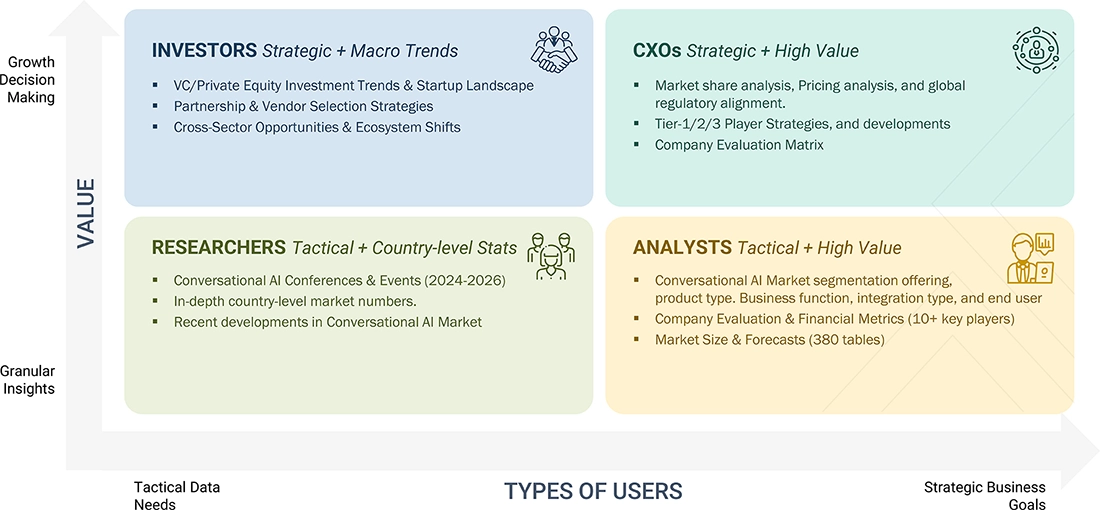
WHAT IS IN IT FOR YOU: Conversational AI Market REPORT CONTENT GUIDE
DELIVERED CUSTOMIZATIONS
We have successfully delivered the following deep-dive customizations:
| CLIENT REQUEST | CUSTOMIZATION DELIVERED | VALUE ADDS |
|---|---|---|
| Leading Conversational AI Vendor |
|
|
| Leading Conversational AI Vendor |
|
|
RECENT DEVELOPMENTS
- May 2025 : Kore.ai and Microsoft announced a strategic partnership to accelerate enterprise AI transformation. This integrates Kore.ai's conversational and generative AI capabilities with Microsoft's cloud and AI services, enabling enterprises to deploy AI-powered solutions at scale. The partnership focuses on enhancing employee and customer experiences through intelligent automation and seamless integration within existing Microsoft environments.
- April 2025 : Microsoft Copilot Studio introduced a limited research preview of the "computer use" feature, enabling AI agents to interact directly with websites and desktop applications—navigating menus, clicking buttons, and entering data—effectively automating tasks even in systems lacking APIs. Additionally, new Microsoft Graph connectors for Guru and GitLab enhance integration capabilities, and support for customer-managed keys has been added to bolster data security. Other enhancements include advanced approvals in agent workflows, ROI analysis via Viva Insights, and improved analytics for autonomous agents.
- April 2025 : IBM introduced the AI Agent for Customer Service within the watsonx Orchestrate platform. This feature, currently in technology preview for select customers, enables businesses to build and manage AI agents tailored to their specific needs, enhancing operational efficiency and customer service capabilities.
- April 2025 : Google Cloud and Verizon collaborated to enhance customer experience through the integration of Google's generative AI technologies, including Vertex AI, Gemini models, and the Customer Engagement Suite. This collaboration has led to the development of advanced conversational AI tools that improve both customer and agent interactions.
- April 2025 : Kore.ai partnered with Inception, a G42 company, to co-develop AI-powered solutions aimed at accelerating enterprise AI adoption in the UAE and globally. This combines Kore.ai's conversational and generative AI technologies with Inception's expertise in AI product development, supporting the UAE's ambition to become a global AI leader by 2031.
Table of Contents
 Exclusive indicates content/data unique to MarketsandMarkets and not available with any competitors.
Methodology
The research study for the conversational AI market involved extensive secondary sources, directories, journals, and paid databases. Primary sources were mainly industry experts from the core and related industries, preferred conversational AI providers, third-party service providers, consulting service providers, end users, and other commercial enterprises. In-depth interviews with primary respondents, including key industry participants and subject matter experts, were conducted to obtain and verify critical qualitative and quantitative information and assess the market’s prospects.
Secondary Research
In the secondary research process, various sources were referred to identify and collect information for the study. The secondary sources included annual reports, press releases, investor presentations of companies, white papers, journals, certified publications, and articles from recognized authors, directories, and databases. The data was also collected from other secondary sources, such as AI conferences and related magazines. Additionally, the conversational AI spending of various countries was extracted from respective sources. Secondary research was used to obtain key information about the industry’s value chain and supply chain to identify key players by solution, service, market classification, and segmentation according to the offerings of major players and industry trends related to solutions, applications, verticals, and regions, and key developments from both market and technology-oriented perspectives.
Primary Research
In the primary research process, various primary sources from both the supply and demand sides were interviewed to obtain qualitative and quantitative information on the market. The primary sources from the supply side included various industry experts, including Chief Experience Officers (CXOs); Vice Presidents (VPs); directors from business development, marketing, and conversational AI expertise; related key executives from conversational AI solution vendors, SIs, managed service providers, and industry associations; and key opinion leaders.
Primary interviews were conducted to gather insights, such as market statistics, revenue data collected from solutions and services, market breakups, market size estimations, market forecasts, and data triangulation. Primary research also helped understand various trends related to technologies, applications, data types, service types, software types, verticals, and regions. Stakeholders from the demand side, such as Chief Information Officers (CIOs), Chief Technology Officers (CTOs), Chief Strategy Officers (CSOs), and end users using conversational AI solutions, were interviewed to understand the buyer’s perspective on suppliers, products, service providers, and their current usage of conversational AI, which would impact the overall conversational AI market.

Note: Tier 1 companies account for annual revenue of >USD 10 billion; tier 2 companies’ revenue ranges
between USD 1 and 10 billion; and tier 3 companies’ revenue ranges between USD 500 million–USD 1 billion
Source: MarketsandMarkets Analysis
To know about the assumptions considered for the study, download the pdf brochure
Market Size Estimation
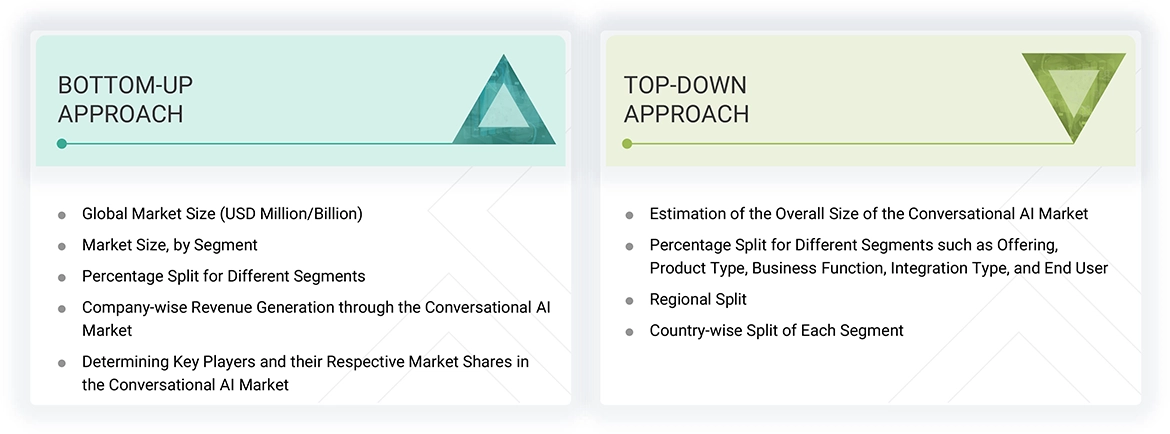
Multiple approaches were adopted to estimate and forecast the conversational AI market. The first approach involves estimating the market size by summing up the companies’ revenue generated by selling solutions and services.
Market Size Estimation Methodology - Top-down approach
In the top-down approach, an exhaustive list of all the vendors offering solutions and services in the conversational AI market was prepared. The revenue contribution of the market vendors was estimated through annual reports, press releases, funding, investor presentations, paid databases, and primary interviews. Each vendor's offerings were evaluated based on the breadth of solutions according to software type, service type, product type, business function, integration type, and end user. The aggregate of all the companies’ revenue was extrapolated to reach the overall market size. Each subsegment was studied and analyzed for its global market size and regional penetration. The markets were triangulated through both primary and secondary research. The primary procedure included extensive interviews for key insights from industry leaders, such as CIOs, CEOs, VPs, directors, and marketing executives. The market numbers were further triangulated with the existing MarketsandMarkets repository for validation.
Market Size Estimation Methodology - Bottom-up approach
In the bottom-up approach, the adoption rate of conversational AI solutions and services among different end users in key countries with respect to their regions contributing the most to the market share was identified. For cross-validation, the adoption of conversational AI solutions among industries, along with different use cases with respect to their regions, was identified and extrapolated. Use cases identified in different regions were given weightage for the market size calculation.
Based on the market numbers, the regional split was determined by primary and secondary sources. The procedure included the analysis of the conversational AI market’s regional penetration. Based on secondary research, the regional spending on Information and Communications Technology (ICT), socio-economic analysis of each country, strategic vendor analysis of major conversational AI providers, and organic and inorganic business development activities of regional and global players were estimated. With the data triangulation procedure and data validation through primary interviews, the exact values of the overall conversational AI market size and segments’ size were determined and confirmed using the study.
Conversational AI Market : Top-Down and Bottom-Up Approach
Data Triangulation
After arriving at the overall market size using the market size estimation processes explained above, the market was split into several segments and subsegments. To complete the overall market engineering process and arrive at the exact statistics of each market segment and subsegment, data triangulation and market breakup procedures were employed, wherever applicable. The overall market size was then used in the top-down procedure to estimate the size of other individual markets via percentage splits of the market segmentation.
Market Definition
Conversational AI enables machines to engage in human-like interactions by understanding, processing, and generating natural language through text or speech. It powers applications such as chatbots, virtual assistants, and voice-enabled devices, allowing them to interpret user intent, provide relevant responses, and carry out tasks in real-time. This technology leverages natural language processing (NLP), machine learning, and speech recognition to create seamless and dynamic communication between humans and machines.
Stakeholders
- Conversational AI software providers
- Conversational AI service providers
- Third-party administrators
- Business analysts
- Cloud service providers
- Consulting service providers
- Enterprise end users
- Distributors and value-added resellers (VARs)
- Government agencies
- Independent Software Vendors (ISVs)
- Managed service providers
- Market research and consulting firms
- Support & maintenance service providers
- System Integrators (SIs)/Migration service providers
- Technology providers
Report Objectives
- To define, describe, and forecast the conversational AI market by offering, product type, business function, integration type, and end user
- To provide detailed information related to major factors (drivers, restraints, opportunities, and industry-specific challenges) influencing the market growth
- To analyze the micro markets with respect to individual growth trends, prospects, and their contribution to the total market
- To analyze the opportunities in the market for stakeholders by identifying the high-growth segments of the conversational AI market
- To analyze opportunities in the market and provide details of the competitive landscape for stakeholders and market leaders
- To forecast the market size of segments for the five main regions: North America, Europe, Asia Pacific, the Middle East & Africa, and Latin America
- To profile the key players and comprehensively analyze their market ranking and core competencies
- To analyze competitive developments, such as partnerships, product launches, and mergers & acquisitions, in the conversational AI market
Available Customizations
With the given market data, MarketsandMarkets offers customizations as per your company’s specific needs. The following customization options are available for the report:
Product Analysis
- Product quadrant, which gives a detailed comparison of the product portfolio of each company.
Geographic Analysis as per Feasibility
- Further breakup of the North American conversational AI market
- Further breakup of the European market
- Further breakup of the Asia Pacific market
- Further breakup of the Middle Eastern & African market
- Further breakup of the Latin American conversational AI market
Company Information
- Detailed analysis and profiling of additional market players (up to five)
Key Questions Addressed by the Report
What is conversational AI?
Conversational AI refers to technologies that enable machines to understand, process, and respond to human language in a natural way. It powers applications like chatbots, virtual assistants, and voice-enabled devices. Using natural language processing (NLP), machine learning, and speech recognition, it allows for real-time, human-like interactions. The goal is to simulate conversation and improve user experience across digital platforms.
How secure is conversational AI?
Security depends on the platform. Most enterprise-grade solutions offer end-to-end encryption, user authentication, and data anonymization. However, organizations must ensure compliance with regulations like GDPR, HIPAA, and CCPA when deploying these systems.
What industries are adopting conversational AI the most?
Conversational AI is being adopted across a variety of industries, but it is particularly prevalent in e-commerce, healthcare, finance, and telecommunications. In e-commerce, conversational AI enhances shopping experiences through personalized recommendations and virtual shopping assistants. Healthcare providers use it for appointment scheduling and patient triage, while financial institutions apply it to streamline banking services and fraud detection. The flexibility and scalability of conversational AI make it applicable to virtually any industry looking to enhance customer interaction.
What is the projected size of the global conversational AI market by 2031?
According to MarketsandMarkets, the global conversational AI market is projected to grow from USD 17.05 billion in 2025 to USD 49.80 billion by 2031.
What is the expected CAGR of the conversational AI market during the forecast period?
The market is expected to grow at a CAGR of 19.6% from 2025 to 2031.
What is the Conversational AI market segmentation?
According to MarketsandMarkets, the market is segmented by Product Type (AI Chatbots, Voice Bots, Virtual Assistants, Gen AI Agents), Business Function (Sales & Marketing, Operations & Supply Chain, Finance & Accounting, HR), Integration Type, and End User
What deployment modes are analyzed in the conversational AI market?
The deployment modes include Cloud and On-premises. Cloud-Based deployment mode to grow at higher CAGR during the forecast period.
What are the key technologies used in conversational AI as per the report?
The technologies include ML, NLP & Deep Learning, and Speech Recognition.
Which offering segment is expected to hold the largest market share?
The software segment is expected to register the largest market share in the conversational AI market during the forecast period due to its critical role in enabling intelligent interactions and seamless integration across platforms.
Who are the End Users of Conversational AI according to the report?
According to the Report by MarketsandMarkets, end users include Enterprises such as BFSI, Retail & e-Commerce, Healthcare & Life Sciences, Technology & Software, Telecommunications, Media & Entertainment, Travel & Hospitality, Government & Defense, Energy & Utilities, Automotive, Transportation & Logistics, Others.
Which region is expected to dominate the conversational AI market?
According to MarketsandMarkets, North America is expected to dominate the market during the forecast period.
What key factors are driving the growth of the conversational AI market?
According to MarketsandMarkets, growth is driven by the rise in Increasing integration of AI chatbots in messaging services, Omnichannel deployment and reduced chatbot development cost, Growing language coverage and accessibility, Rising demand to implement AI-powered digital experience across government sector
How does the report categorize services in the conversational AI market?
The services are categorized into professional & managed services. Further the report categorizes the professional service as consulting & advisory, integration & deployment, support & maintenance, training & education.
What trends are shaping the conversational AI market?
Conversational AI is shaped by trends like the rise of large language models, which improve understanding and response quality. Multimodal interactions combining text, voice, and visuals are becoming more common, enhancing user engagement. Advances in context awareness help AI maintain more natural, coherent conversations. Personalization through user data is increasing, allowing tailored experiences. Lastly, ethical AI and privacy concerns are driving development toward transparent and secure systems.
How do organizations choose the right conversational AI solution?
Organizations choose the right conversational AI solution by first identifying their specific goals, such as improving customer support or automating sales. They evaluate the solution’s ability to understand their target audience’s language and handle complex queries. Integration capabilities with existing systems and ease of deployment are also key factors. Additionally, they consider scalability, customization options, and data privacy compliance. Finally, cost-effectiveness and vendor support play important roles in the decision.
Need a Tailored Report?
Customize this report to your needs
Get 10% FREE Customization
Customize This ReportPersonalize This Research
- Triangulate with your Own Data
- Get Data as per your Format and Definition
- Gain a Deeper Dive on a Specific Application, Geography, Customer or Competitor
- Any level of Personalization
Let Us Help You
- What are the Known and Unknown Adjacencies Impacting the Conversational AI Market
- What will your New Revenue Sources be?
- Who will be your Top Customer; what will make them switch?
- Defend your Market Share or Win Competitors
- Get a Scorecard for Target Partners

Custom Market Research Services
We Will Customise The Research For You, In Case The Report Listed Above Does Not Meet With Your Requirements
Get 10% Free Customisation
Still Researching the
Conversational AI Ecosystem?
See the competitors, opportunity evaluation, and growth signals shaping it - Instantly!
Generate 15+ consulting-grade strategic intelligence outputs - from competitor analysis to board-ready strategy decks, tailored to your Conversational AI growth question.






Growth opportunities and latent adjacency in Conversational AI Market